by Erika Gaffney, Art Herstory Founder
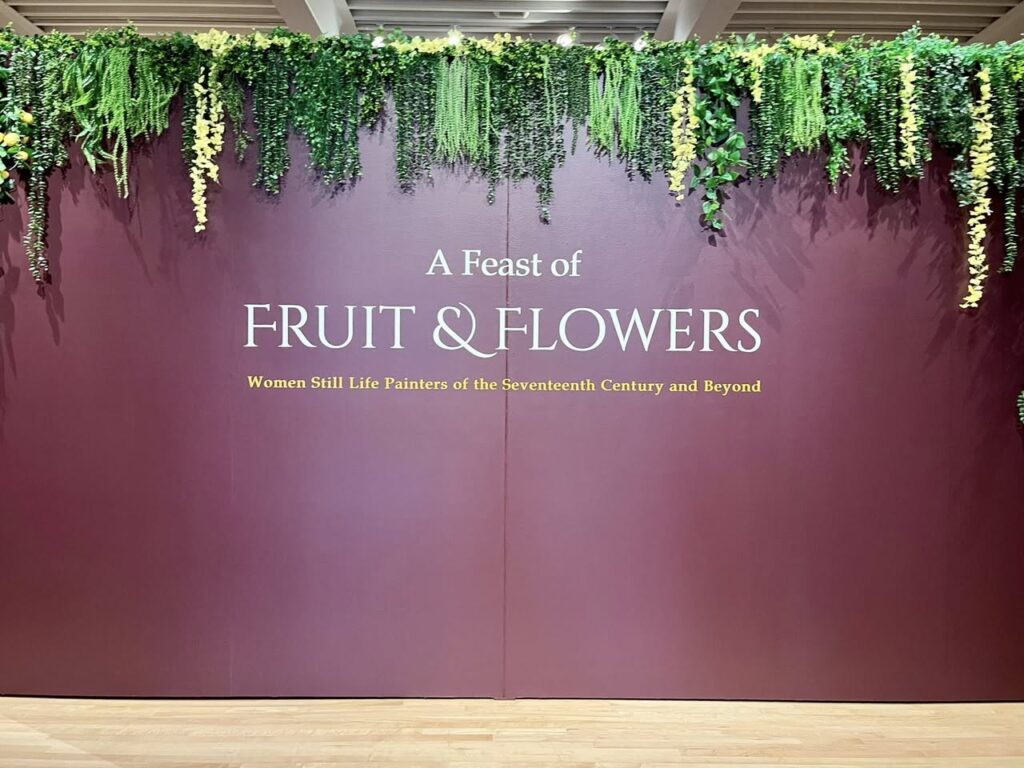
This winter there is a real treat in store for art lovers living in or visiting the North Country. The Hyde Collection in Glens Falls, New York presents A Feast of Fruit and Flowers: Women Still Life Painters of the Seventeenth Century and Beyond—which truly is a feast for the eyes! Kudos and thanks to the organizers for conceiving this original, interesting, and (above all) beautiful exhibition.
The show explores the important role that women artists played in the development of the still-life genre in seventeenth-century Europe. The organizers have brought together centuries-old objects held in institutions across the United States. Some loans are from relatively nearby museums—for example, in Massachusetts or New York City. Others are from as far away as California. Thus, visitors have the opportunity to see paintings and drawings that they would otherwise have to travel a distance to see. Even better, here the viewer is able to see in close proximity works that would not otherwise share space.
Most of the works on view are from the seventeenth century, with a few from the eighteenth and nineteenth centuries and one from the twentieth century. But as the Hyde’s overall program this season makes clear, the connection between the still life genre and women artists is not a thing of the past. Alongside A Feast of Fruit and Flowers, the museum has organized exhibitions of still life art by contemporary women. The museum presents Sharon Core: 1606 to the Sixties; Nina Katchadourian: Fake Plants and Other Curiosities; and the installation Tanya Marcuse “Woven No. 16”.
Overview
Bryn Schockmel, the curator of A Feast of Fruit and Flowers, has been studying early modern women artists since at least 2021. Her research made her aware of the instrumental role women played in the development of still life as a genre. Many exhibitions in recent years have highlighted early modern women artists. There have also been shows of still life art by historic male and female artists. But A Feast of Fruit and Flowers is unique in its focus on historic women still life painters, per se.
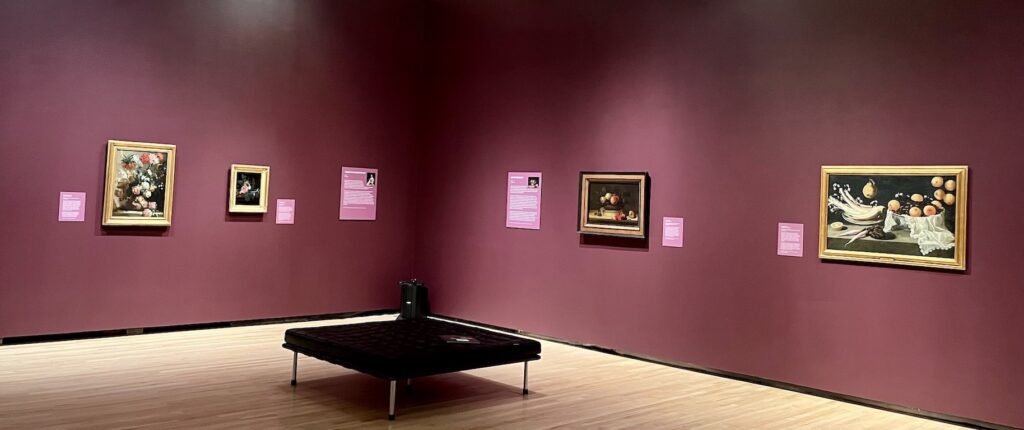
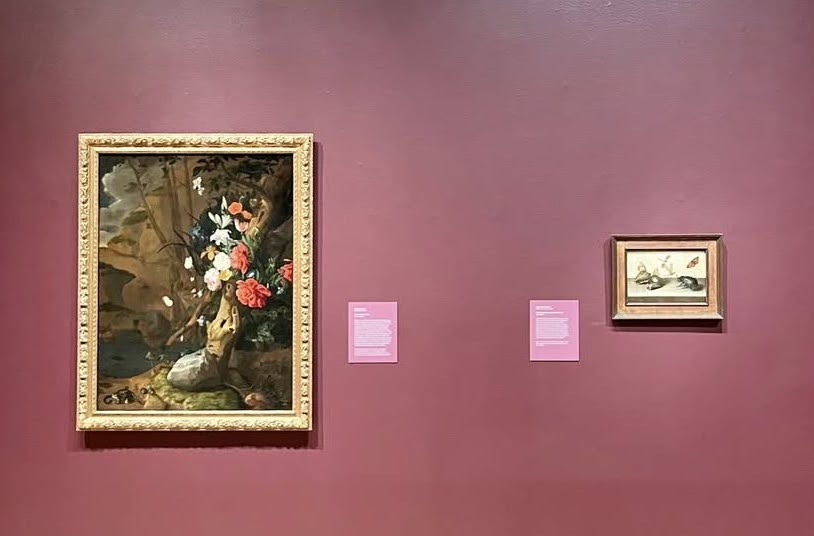
The scale of the show is intimate; it features 17 objects by 14 women artists. The gold-framed oil paintings and watercolors are hung to good effect on mulberry-colored walls. There is also one large-format printed book—a second edition of Maria Sibylla Merian‘s Dissertation in Insect Generation and Metamorphosis in Suriname—in a glass-enclosed floor case. The majority of the artworks on display are from the seventeenth century. An “epilogue” of five works from later periods illustrates women’s ongoing contribution to the evolution of the still life genre.
Seventeenth-century still lifes
The early modern portion of the show includes paintings by Fede Galizia, Margaretha de Heer, Louise Moillon, Josefa de Óbidos, Maria van Oosterwyck (or Maria van Oosterwijck), Clara Peeters, Isabella Peeters (no relation, as far as we know), and Rachel Ruysch. In addition to the Maria Sibylla Merian Metamorphosis book, there is a hand-colored engraving of a drawing by the artist, and two watercolor drawings by Merian’s daughter, Johanna Herolt.
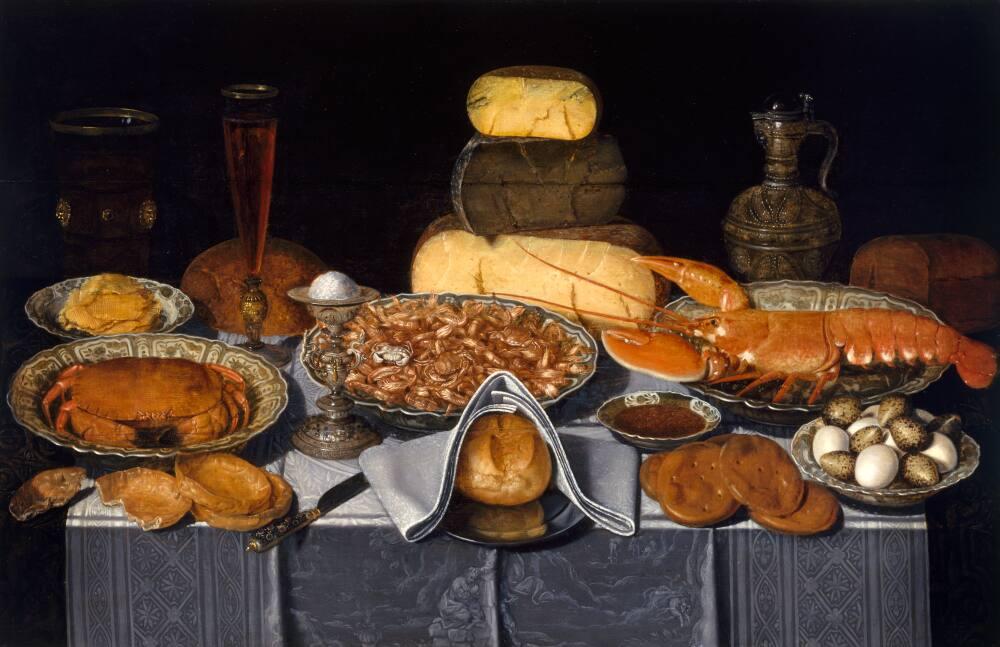
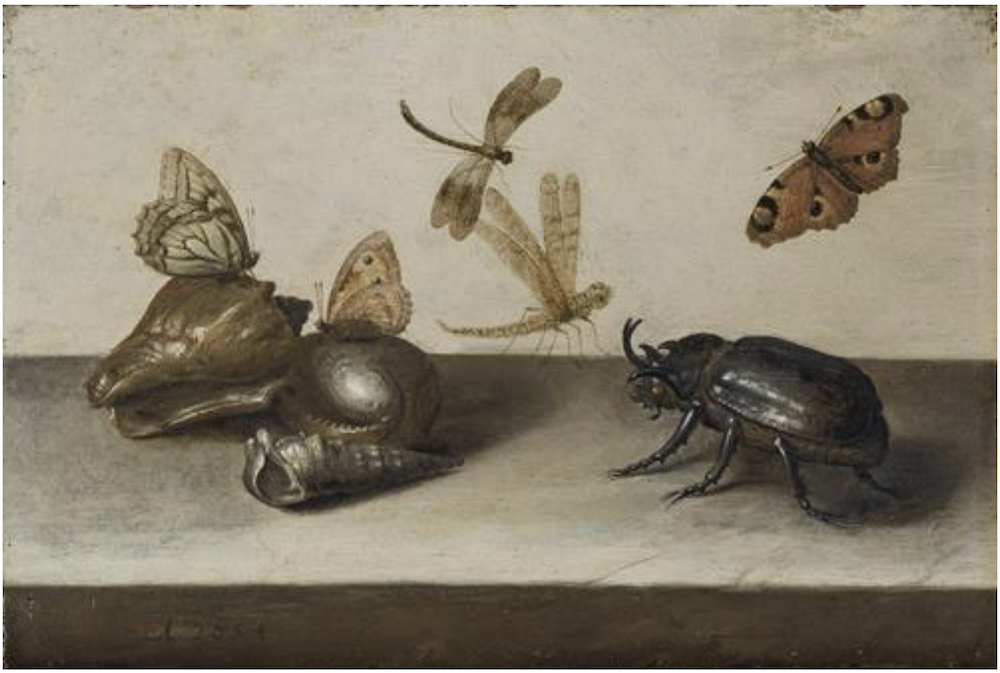
Most of the works on display reflect the show’s title: they feature flowers, or fruit (and sometimes vegetables), or both. But there are a couple of exceptions. In Still Life with Crab, Shrimps, and Lobster, by Clara Peeters, the artist depicts a rich assortment of foods—including eggs, baked goods, and cheese as well as the specific seafoods named in the title—on a beautifully appointed table or sideboard. And Margaretha de Heer’s small, delicate painting Still Life with Insects and Shells seems as much a natural history illustration as an artwork.
The wall texts place the women artists in their familial and societal contexts. Given that many of the artists came from artistic families, the text necessarily refers to male relatives who were also artists. The organizers do an admirable job in these cases of keeping the spotlight on the female artist in question, without sacrificing important contextual information.
It is interesting to consider that some early modern women artists, such as Rachel Ruysch and Maria van Oosterwyck, focused solely on still life throughout their careers. For others, still life is one element in a multi-faceted body of work. The output of both Josefa de Óbidos and Fede Galizia, for example, encompasses a diversity of religious and secular subjects, including not only still life paintings but also portraits, altarpieces, and smaller devotional works.
An “epilogue” of art from later centuries
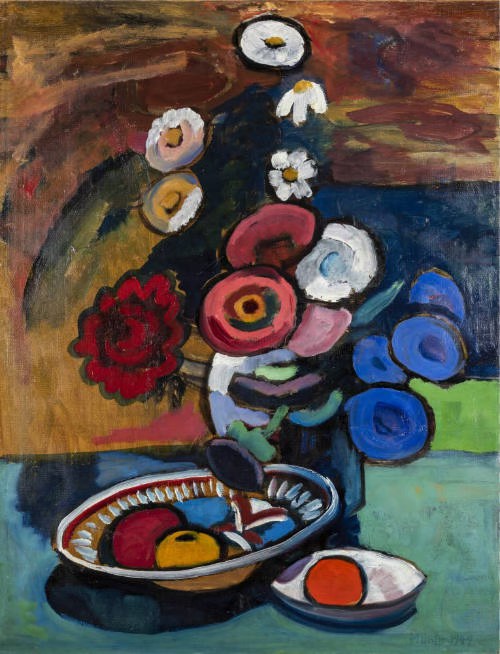
The show concludes with an epilogue of more modern examples of still life painting. This segment starts off with two watercolor drawings by eighteenth-century artist Elizabeth Blachrie Blackwell. Blackwell was the author-illustrator of A Curious Herbal, the first book of its kind by a woman. Next, the viewer encounters a flower painting by British painter Mary Moser, one of the two women among the artist-founders of London’s Royal Academy of Arts. A work by French painter Victoria Dubourg—who trained with another woman artist, Fanny Chéron—represents the nineteenth century. The show concludes, appropriately, with a painting titled Fruits and Flowers, by the celebrated twentieth-century German artist Gabriele Münter.
Still lifes by contemporary artists
Visitors to A Feast of Fruit and Flowers will not want to miss these complementary Hyde Collection exhibitions that showcase the talent of contemporary artists:
- Sharon Core: 1606 to the Sixties presents the work of New York artist Sharon Core. Core photographs elaborate studio sets she builds that meticulously reconstruct still life paintings by Rachel Ruysch, Pierre Auguste Renoir, Vincent van Gogh, and others, using period props she collects and heirloom varieties of flowers she grows in her greenhouse. Her Early American series delves into the still life motifs of the Early Republic. A separate Hyde Collection gallery displays work Core created by applying the same artistic process to Pop Art classics of the 1960s. On view through February 1, 2026.
- On view in The Hyde’s Rotunda Gallery is the monumental photograph Woven Nº 16, by Tanya Marcuse. Marcuse creates intricate compositions using organic materials from the land around her Hudson Valley studio. The resulting photographs recall the millefleur decorations of medieval and Renaissance tapestries. On view through February 1, 2026.
- Nina Katchadourian: Fake Plants and Other Curiosities features sculptures and photographs from the artist’s Fake Plants series. Nina Katchadourian sculpted her imagined flora and fauna from paper food packaging, disposable medical masks, sponges, toothpicks, and other discarded common materials already designated as worthless. Look for Katchadourian’s sculptures throughout the Hyde House! On view through March 8.
Collateral—books, Art Herstory cards, and more
- Within the exhibition the organizers have thoughtfully constructed a Still Life Studio. Here, visitors—young or older—may use objects in the room to construct still life compositions. The museum supplies art materials for those who wish to commit their composition to paper.
- On February 28, 2026, The Hyde Collection presents the lecture Among the First: Italian Women Artists as Originators. The speaker is Eve Straussman-Pflanzer, curator and head of Italian and Spanish paintings at the National Gallery of Art.
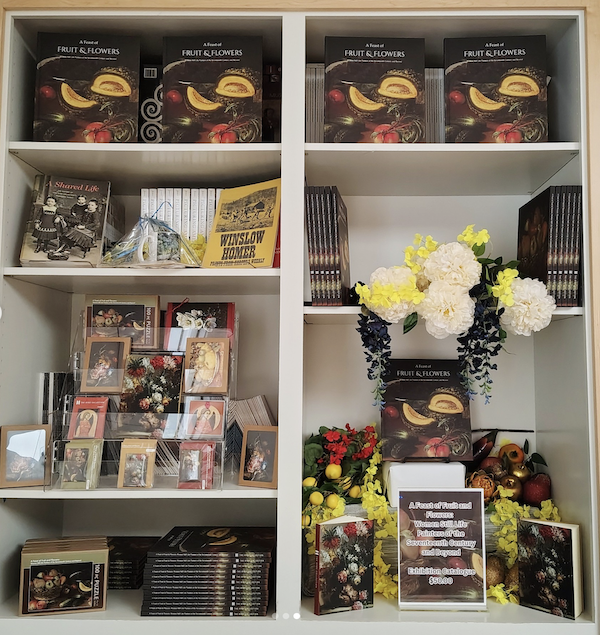
- The show’s exhibition catalog is lavishly illustrated. This book reproduces early modern artworks by women that A Feast of Fruit and Flowers could not include, as well of every object in the show. The text—contributed by curator Bryn Schockmel and also some guest authors—is authoritative, yet accessibly written. It is available for purchase in the museum store, or online.
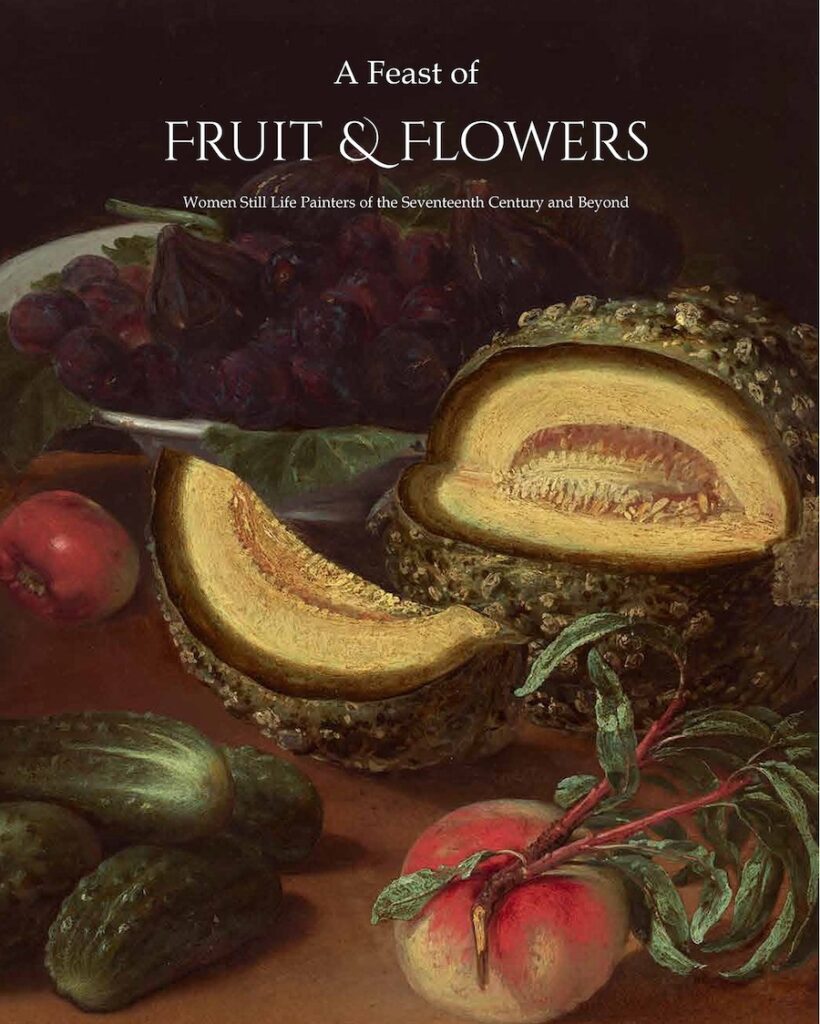
(On the subject of books, the series Illuminating Women Artists contains volumes about four of the artists who feature in A Feast of Fruit and Flowers: Clara Peeters; Maria Sibylla Merian; Louise Moillon; and Josefa de Óbidos.)
- Look for Art Herstory cards in the shop at The Hyde Collection! The store now carries two custom sets of Art Herstory boxed note cards. Both sets feature still life art by women of past centuries. Read about the retail collaboration here.
- The museum’s permanent collection includes works by several women artists, including Dorothy Dehner, Mary Hecht, Malvina Hoffman, Anna Hyatt Huntington, Louise Nevelson, Betty Parsons, Janet Scudder, Rebecca Smith, and Susan Stromberg. Many of these works are not on view currently. But, look for at least two Huntington sculptures in the historic Hyde House.
- Other current art shows feature some of the artists that this exhibition showcases.
- Women Artists from Antwerp to Amsterdam, 1600–1750 includes artworks by Margaretha de Heer, Johanna Herolt, Maria Sibylla Merian, Maria van Oosterwyck, Clara Peeters, and Rachel Ruysch. The National Museum of Women in the Arts hosts the show through January 11, 2026. It then moves to the Museum of Fine Arts in Ghent as Unforgettable: Women Artists from Antwerp to Amsterdam, 1600–1750, where it runs from March 7–May 31, 2026.
- At the Guggenheim, Gabriele Münter: Contours of a World runs through April 26, 2026.
A Feast of Fruit and Flowers: Women Still Life Painters of the Seventeenth Century and Beyond is on at The Hyde Collection through March 8, 2026.
Erika Gaffney is Founder of Art Herstory. Follow Erika on Bluesky, LinkedIn and Facebook.
More Art Herstory blog posts you might enjoy
Art Herstory Cards at the Hyde Collection Museum Shop
Museum Exhibitions about Historic Women Artists: 2026
A Year for Dutch and Flemish Women Artists
Dutch and Flemish Women Artists—A Major Exhibition at the National Museum of Women in the Arts, by Erika Gaffney
Rachel Ruysch: The Art of Nature, by Stephanie Dickey
Making Her Mark Leaves its Mark at the Art Gallery of Ontario, by Isabelle Hawkins
Louise Moillon: A pioneering painter of still life, by Lesley Stevenson
Books, Blooms, Backer: The Life and Work of Catharina Backer, by Nina Reid
Alida Withoos: Creator of beauty and of visual knowledge, by Catherine Powell
A Clara Peeters for the Mauritshuis, by Quentin Buvelot
The Floral Art of Emily Cole, by Erika Gaffney
Rachel Ruysch’s Vase of Flowers with an Ear of Corn, by Lizzie Marx
Women and the Art of Flower Painting, by Ariane van Suchtelen