Here we list all the new books about women artists—from the past, and also from the present—that have come to our attention, published in the third quarter of this calendar year. Each description is drawn from the blurb on the publisher’s website. Do you know of other titles that should be on this list? Please let us know by comment or by email (Erika@artherstory.net).
For young readers
Daring: The Life and Art of Elisabeth Vigée Le Brun, by Jordana Pomeroy. Publisher: Getty Publications, 2025.
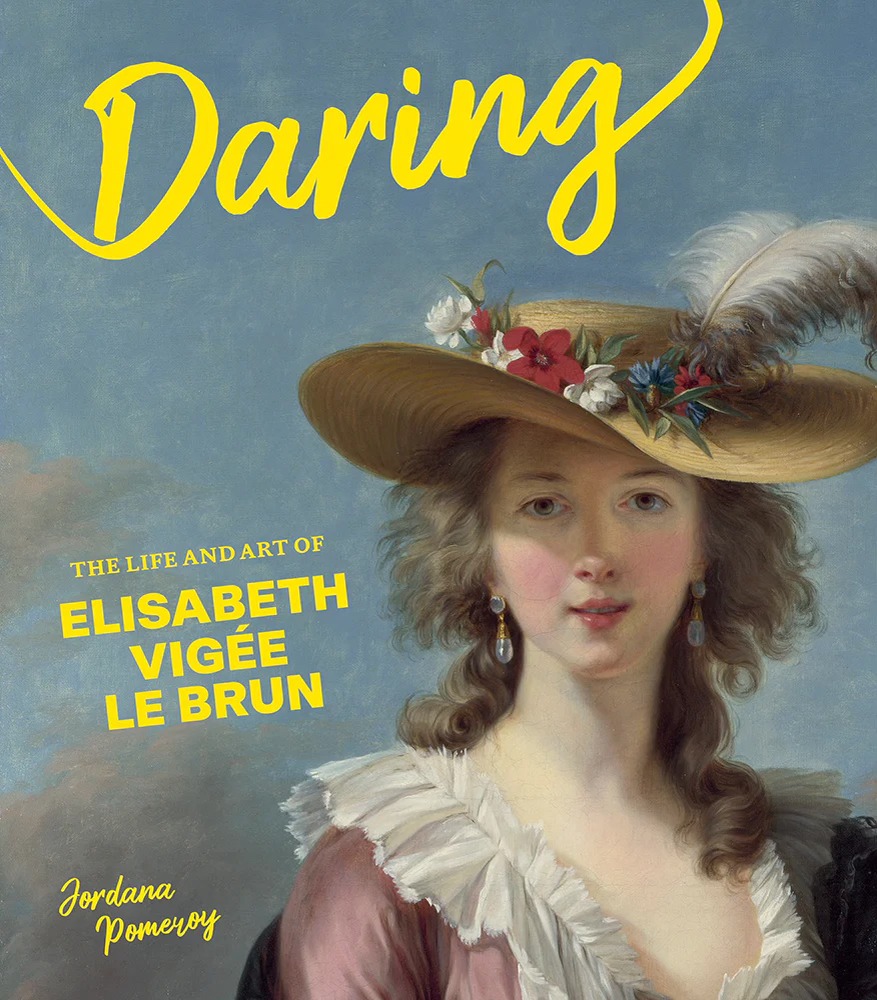
This book presents the dramatic life story of one of the greatest portrait painters of all time. Supremely talented and strategically charming, Elisabeth Vigée Le Brun (1755–1842) overcame tragedy and broke gender barriers to reach the height of success as a portrait painter, first in Paris, and then across Europe. After losing her father at age twelve and facing financial insecurity, she fought to gain access to artistic training and opportunity. She was pressured to marry at age twenty, to an art dealer who both helped and harmed her career. Vigée Le Brun deployed her intelligence and beauty to attract powerful clients, who relied on her to style the personal identities they projected to the world.
Read Franny Moyle’s review for The Art Newspaper here.
Maria Sibylla Merian: Pioneering Entomologist and Ecologist, Suzanne Valadon: Muse of Montmartre, Frida Kahlo: The Love of Mexican Folk Art, and The Magical World of Yayoi Kusama, by Serene Greene. Publisher: Art Literacy Academy, 2025.
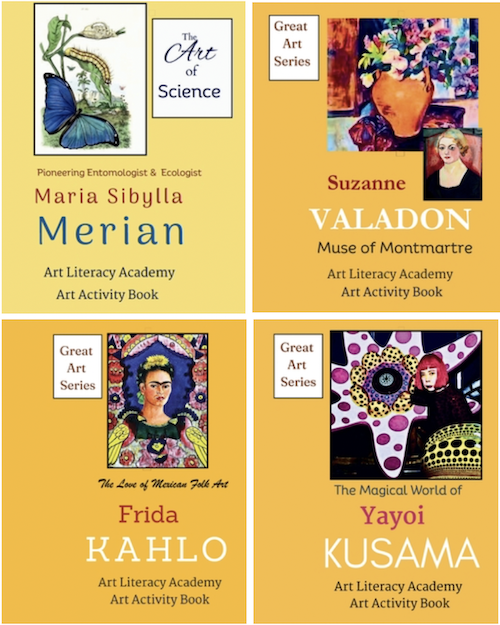
Follow in the footsteps of visionary artists, while also drawing inspiration from contemporary masters and the artistic traditions of world cultures. These activity coloring books are a journey through the history of art, inviting readers to bring their own creative touch to each page. The series includes four books (so far?) about women artists: Maria Sibylla Merian, Suzanne Valadon, Frida Kahlo, and Yayoi Kusama.
Fiction
I Am You, by Victoria Redel. Publisher: SJP Lit, 2025.
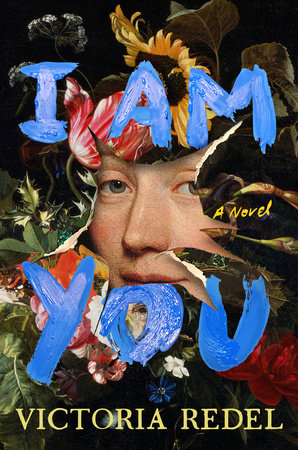
At eight years old, Gerta Pieters is forced to disguise herself as a boy and sent to work for a genteel Dutch family. When their brilliant and beautiful daughter Maria sees through Gerta’s ruse, she insists that Gerta accompany her to Amsterdam and help her enter the elite, male-dominated art world. While Maria rises in the ranks of society as a painting prodigy, Gerta makes herself invaluable in every way: confidante, muse, lover. But as Gerta steps into her own talents, their relationship fractures into a complex web of obsession and rivalry—and the secrets they keep threaten to unravel everything. A mesmerizing historical novel, I Am You is a meditation on gender, an ode to artistic creation, and an unforgettable love story that reimagines the life of renowned still life painter Maria van Oosterwijck during the Dutch Golden Age.
The Lost Masterpiece, by B. A. Shapiro. Publisher: Hachette, 2025.
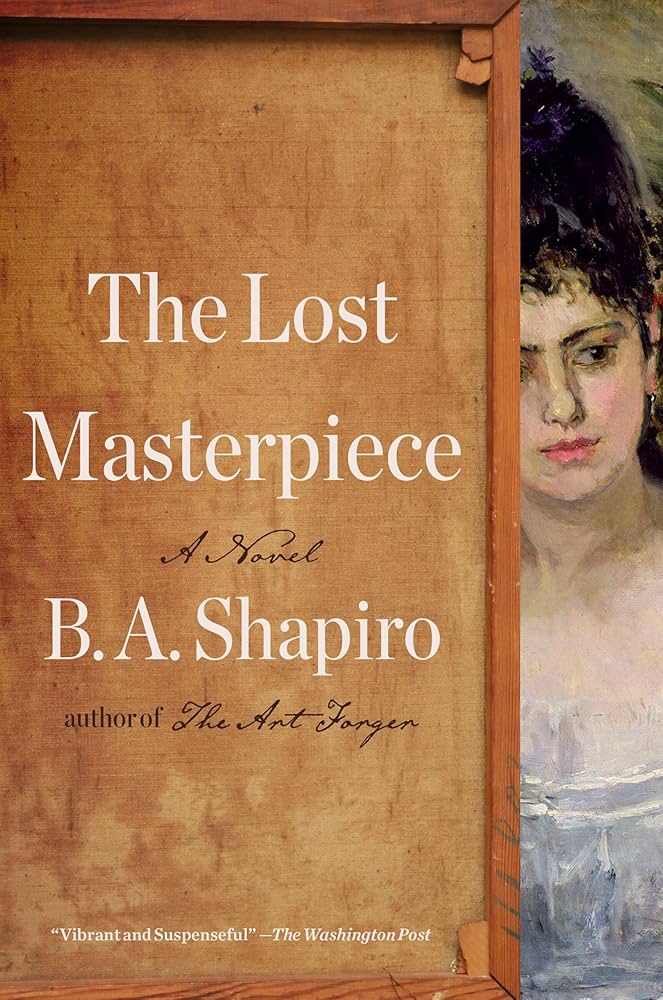
This gripping novel full of plot twists embeds readers in a circle of famous painters in late-nineteenth-century Paris. It centers on the Impressionist artist Berthe Morisot—and alsothe story of Morisot’s great-great-great-great granddaughter, Tamara Rubin. The Lost Masterpiece is a story of love, adultery, betrayal, family secrets, and the grueling birth of Impressionism, taking the reader on a whirlwind adventure from the streets of Paris in the late 1800s and the studio Berthe Morisot shared with Manet, Degas, and Renoir to the present day. Shapiro brings Morisot’s world to life, tracing her work through generations of descendants and introducing us to a painter as brilliant and original as her male counterparts across 150 years of triumphs, struggles, passions, animosities, and malevolence.
Adult non-fiction
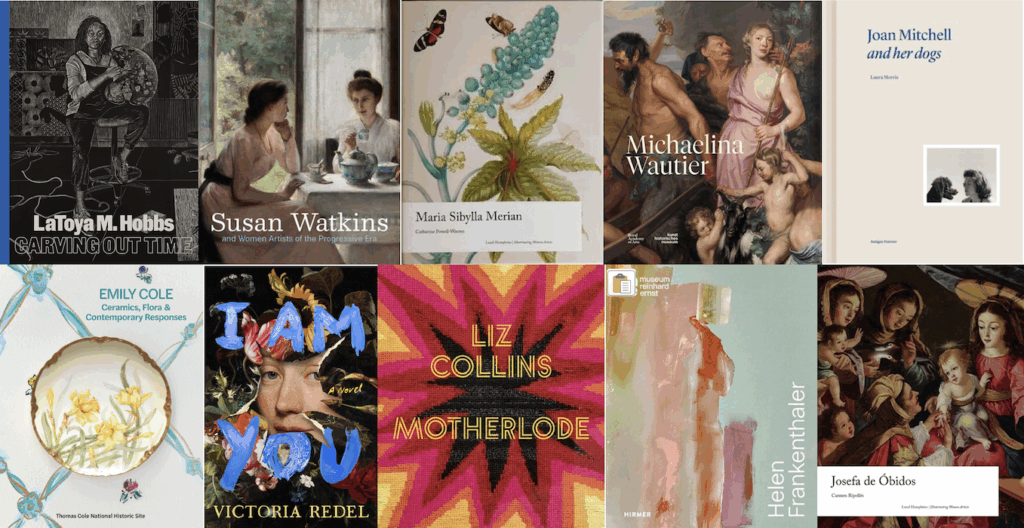
Josefa de Óbidos, by Carmen Ripollés. Publisher: Lund Humphries, 2025; North American publisher, Getty Publications.
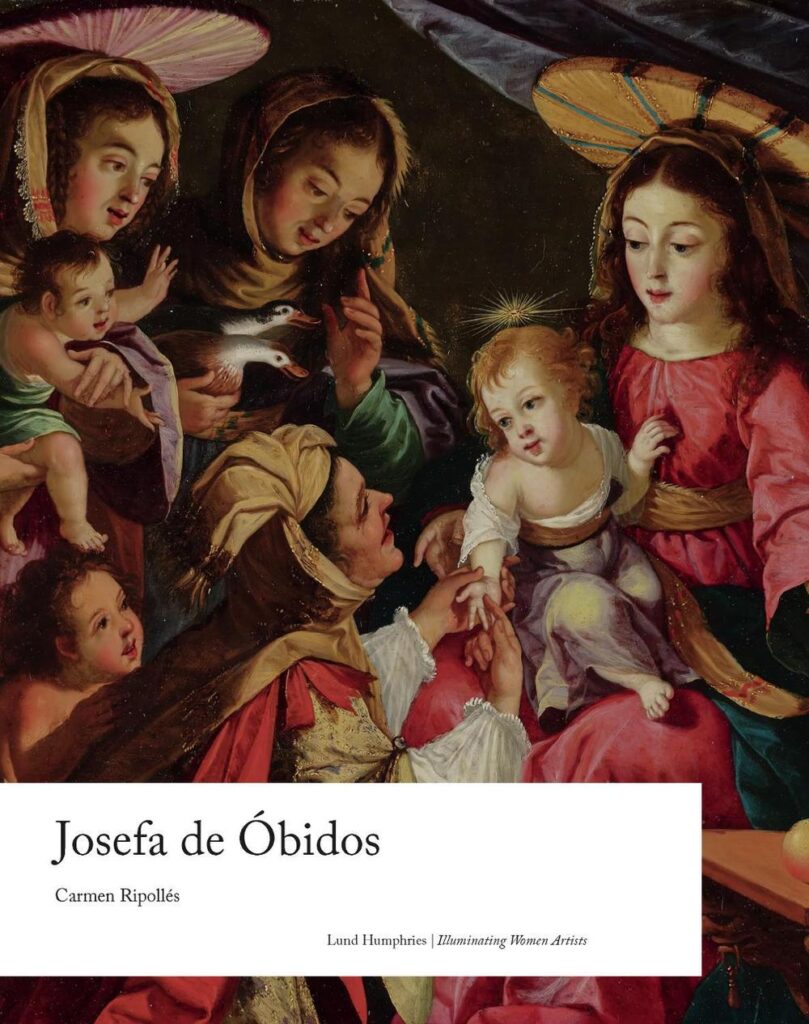
Josefa de Ayala, known as Josefa de Óbidos (ca. 1630–1684), was among the most celebrated artists of the Portuguese Baroque. A versatile artist, her paintings feature a range of sacred and secular subjects. Over the course of her exceptional career, she produced engravings and painted church altarpieces, defying traditional gender conventions with the scope and breadth of her work. Josefa de Óbidos brings Óbidos’s diverse accomplishments to life in this riveting introduction to the English-speaking world. It examines the artist’s place within a broader context, positioning her alongside other early modern female practitioners. This book tells the remarkable story of a woman who rose to wealth as a landowner and left an indelible mark on the visual culture of the Portuguese empire.
Maria Sibylla Merian, by Catherine Powell-Warren. Publisher: Lund Humphries, 2025; North American publisher, Getty Publications.
The career and achievements of Maria Sibylla Merian (1647–1717) are well-documented. While her status as an entomologist and naturalist has garnered the most attention, Merian has not yet received her full due as an artist. Raised by a family of illustrators and publishers, she learned how to draw, mix paints, create prints, and paint in watercolor from her stepfather. In Maria Sibylla Merian, author Catherine Powell-Warren examines Merian through an art historical lens to better understand her life as a woman and illustrator in the early modern Dutch Republic. This volume highlights Merian’s artistic range, financial successes, and historical significance. Considering the obstacles women artists faced in this period, Merian’s achievements—not least her management of a successful artists’ studio and for-profit workshop—were extraordinary.
Artemisia, Texts by Asia Graziano, Sheila Barker, Gregory Buchakjian, and Claudio Strinati. Publisher: Scripta Maneant, 2025; available in North America from Simon & Schuster.
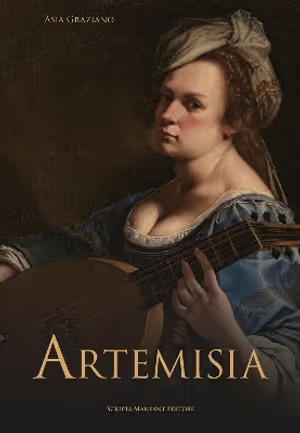
Artemisia Gentileschi has been the subject of much attention in recent decades. Research dedicated to her has, however, often returned a stereotyped and reductive image of the artistic universe and personality of the painter. The professional figure of Gentileschi, who was able to move with great success in what we now call the art system, finally finds new dignity. Unpublished attributions from private collections are flanked by the painter’s masterpieces, reconstructing the framework of the international commissions that consecrated her as a protagonist of the European Baroque, in the most complete and up-to-date volume dedicated to the artist. Text in English and Italian.
The Club: Where American Women Artists Found Refuge in Belle Époque Paris, by Jennifer Dasal. Publisher: Bloomsbury, 2025.
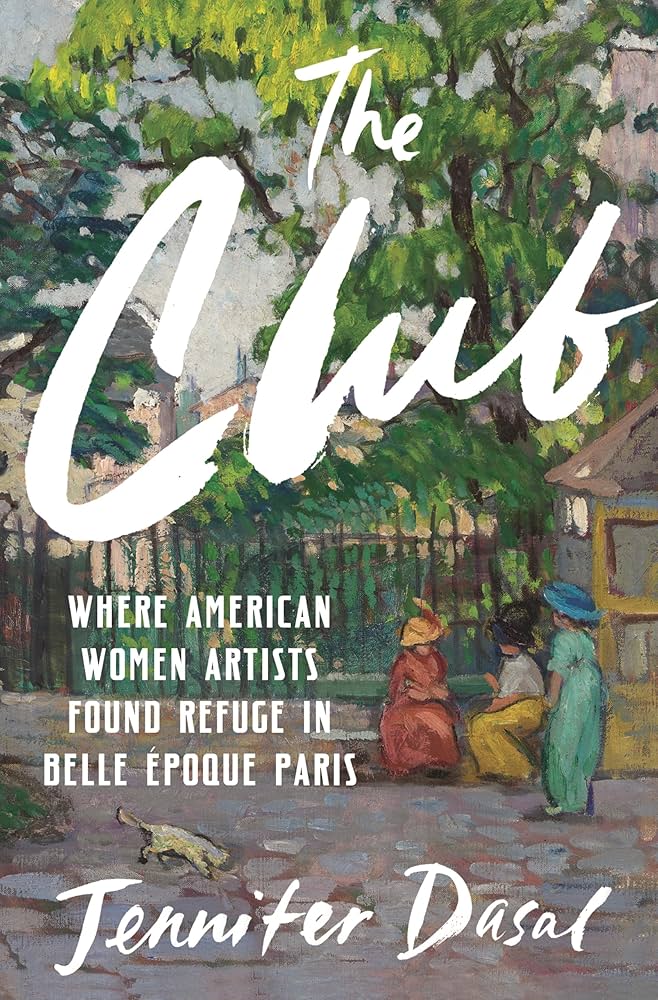
In Belle Époque Paris, the Eiffel Tower was newly built, France was experiencing remarkable political stability, and American women were painting the town and gathering at a female-only Residence known as The American Girls’ Club in Paris. Opened in 1893, The Club was the center of expatriate living and of dedication to a calling in the fine arts, and singularly harbored a generation of independent, talented, and driven American women. A captivating, colorful new history, The Club presents the never-before-told story of the Club, the philanthropists who created it, and the artists it housed. These women’s lives reveal the power of the Club itself, and the way that having a safe home for single women of ambition allowed them to grow as teachers, artists, suffragists, and people.
Emily Mason: Unknown to Possibility, Edited by Elisa Wouk Almino. Publisher: Rizzoli Electa, 2025.
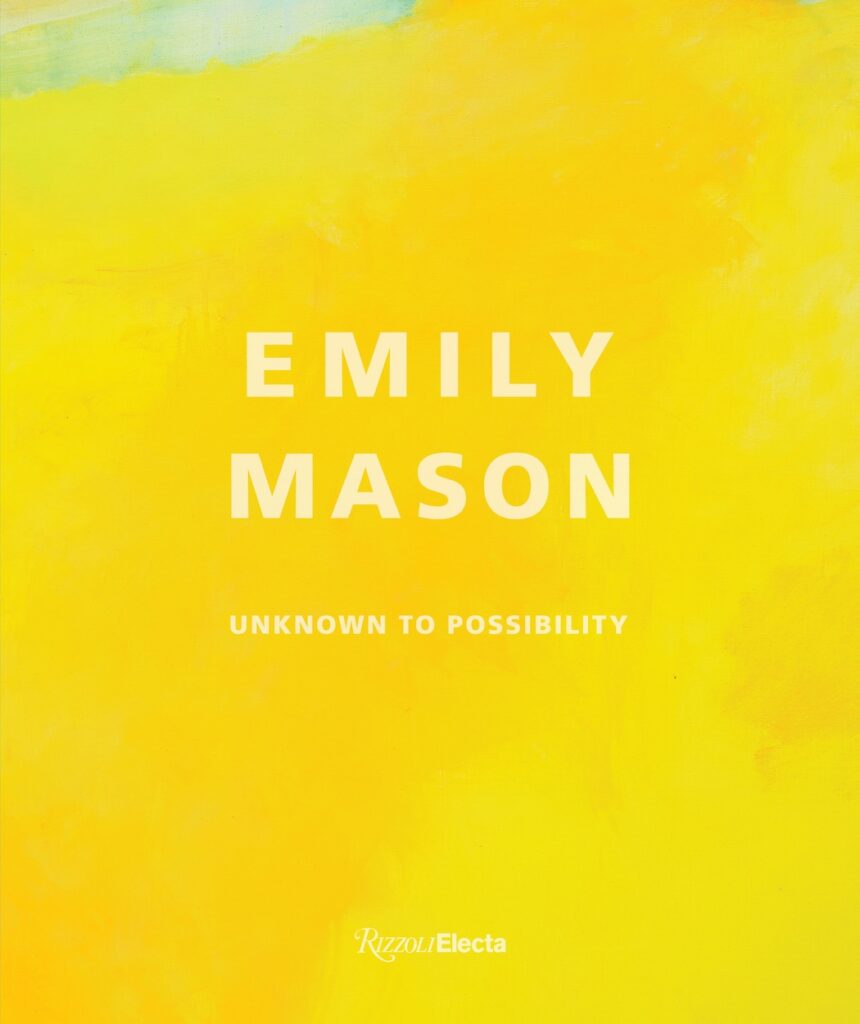
Emily Mason: Unknown to Possibility is the most definitive volume on the life and art of the post–New York School abstract painter, whose work is marked by vibrant color and improvisational brushwork. Born in Greenwich Village, Mason developed her distinctive approach to Abstract Expressionism and Color Field painting. Rediscovering an this important artist, the book reaffirms Mason’s place among the most influential abstract painters of her time. Essays explore her significant oils on paper, prints, and clayboards, showcasing her technical prowess and adaptability. Personal writings offer insights into Mason’s reflections and experiences, enriching the understanding of her legacy.
Joan Mitchell and her Dogs, by Laura Morris and Martin Bethenod. Publisher: Editions Norma, 2025.
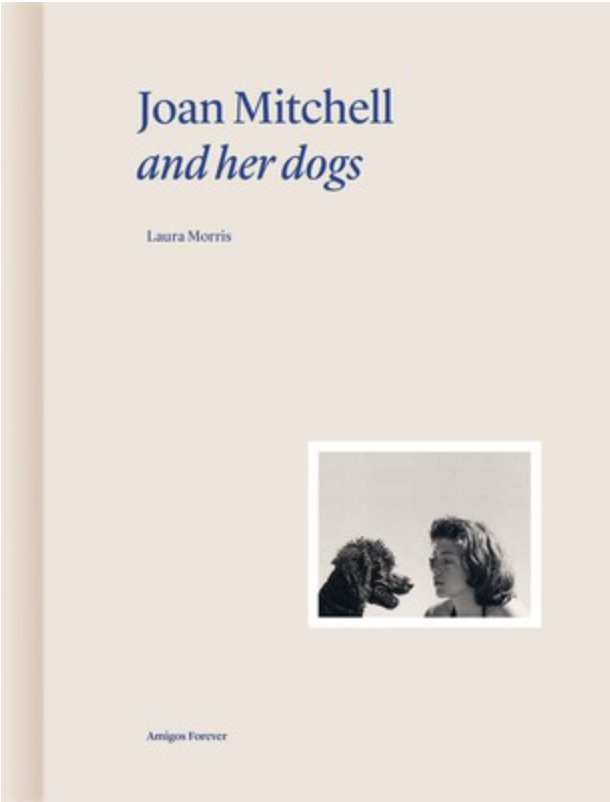
“Dogs are objects of love (I suppose people could be? Sometimes)” wrote Joan Mitchell. The artist had at least nine dogs during her lifetime. From her first dog, the adored Georges du Soleil, to Skye Terriers Idée, Isabelle, and Ibertelle (“Bertie”), Brittany Spaniel Patou, German Shepherds Iva, Marion, and Madeleine, and not forgetting Prunelle and Belle-Bête; all of them cherished companions in her life and work, all of them celebrated here. Joan Mitchell and her dogs: a love story.
Ono-isms, Edited by Larry Warsh. Publisher: Princeton University Press, 2025.
Ono-isms is a collection of provocative and powerful quotations from influential artist, musician, songwriter, and peace activist Yoko Ono, providing a richer understanding of this important cultural icon. Gathered from interviews, books, song lyrics, social media, and other sources, this nuanced book sheds new light on a complex and multifaceted artist who has shaped our culture in countless ways. The quotations—close to 300 in all—are arranged by subject: art, life, creativity, nature and the environment, love, music, women in society, and peace and social justice. The book also features an introduction and a chronology of Ono’s life and work.
Exhibition catalogs
Michaelina Wautier, Edited by Gerlinde Gruber, Katlijne Van der Stighelen, and Julien Domercq. Publisher: Royal Academy of Arts, 2025.
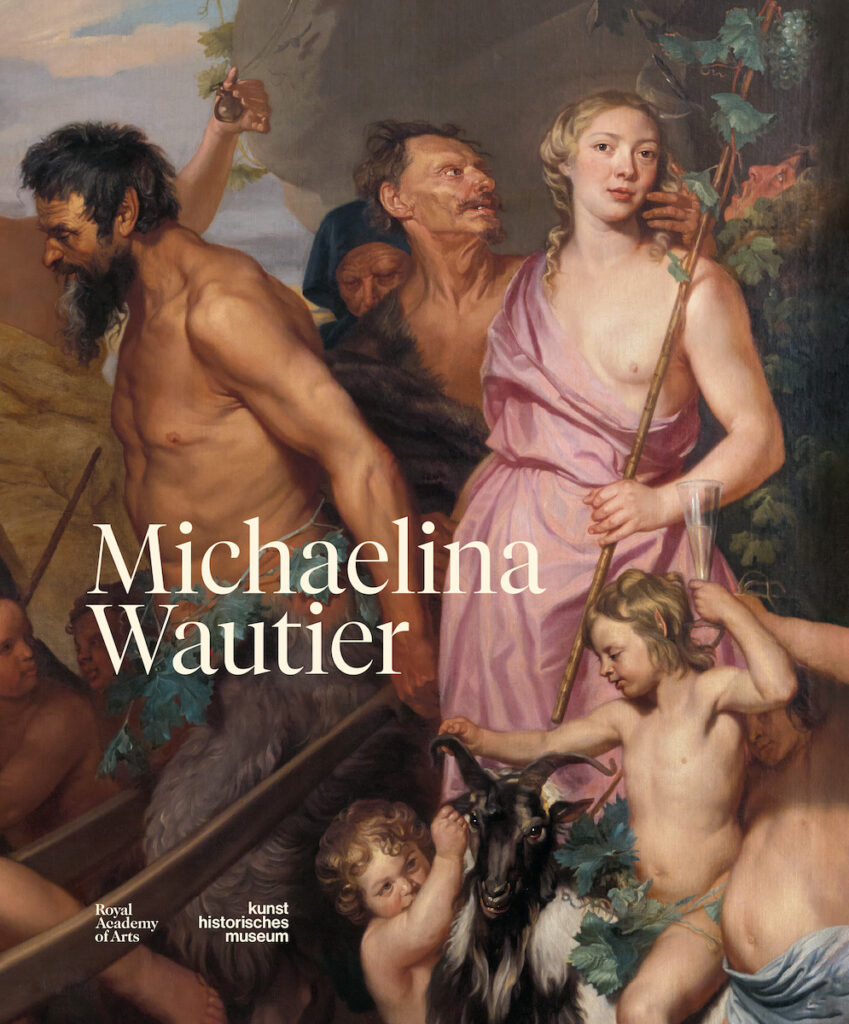
Michaelina Wautier (c. 1614–1689), though one of the foremost women painters of her age, is a name unfamiliar even to connoisseurs of Old Master painting. Born in Mons, Wautier pursued a successful career in Brussels, where the art-loving Archduke Leopold Wilhelm, Governor of the Habsburg Netherlands, held court. This book explores the surviving portraits, history paintings, genre scenes and still lifes that can be identified as Wautier’s. Handsomely produced by the Kunsthistorisches Museum in collaboration with the Royal Academy, this volume brings together all the latest scholarship on the artist, alongside several exciting new attributions.
Emily Cole: Ceramics, Flora and Contemporary Responses, Edited by Kate Menconeri and Amanda Malmstrom. Publisher: Thomas Cole National Historic Site, 2025.
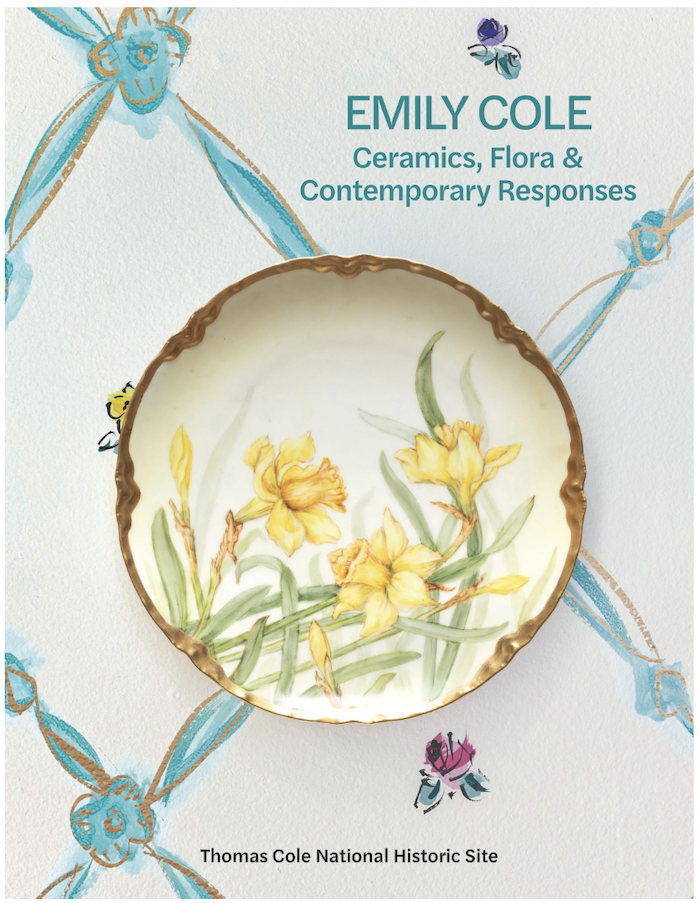
This beautifully illustrated 60-page book includes an in-depth essay on Emily Cole by Amanda Malmstrom; a critical essay on ceramics and women’s labor in the nineteenth century by Jenni Sorkin, and an essay and conversation with the contemporary artists by Kate Menconeri. Additionally, it features excerpts from Misty Cook’s Medicine Generations and special full-page color plates of individual artworks and site-responsive installations within the 19th-century artist’s home and studio.
A Room of Her Own: Women Artist-Activists in Britain, 1875–1945, Edited by Alexis Goodin. Publisher: Yale University Press in association with The Clark Art Institute, 2025.
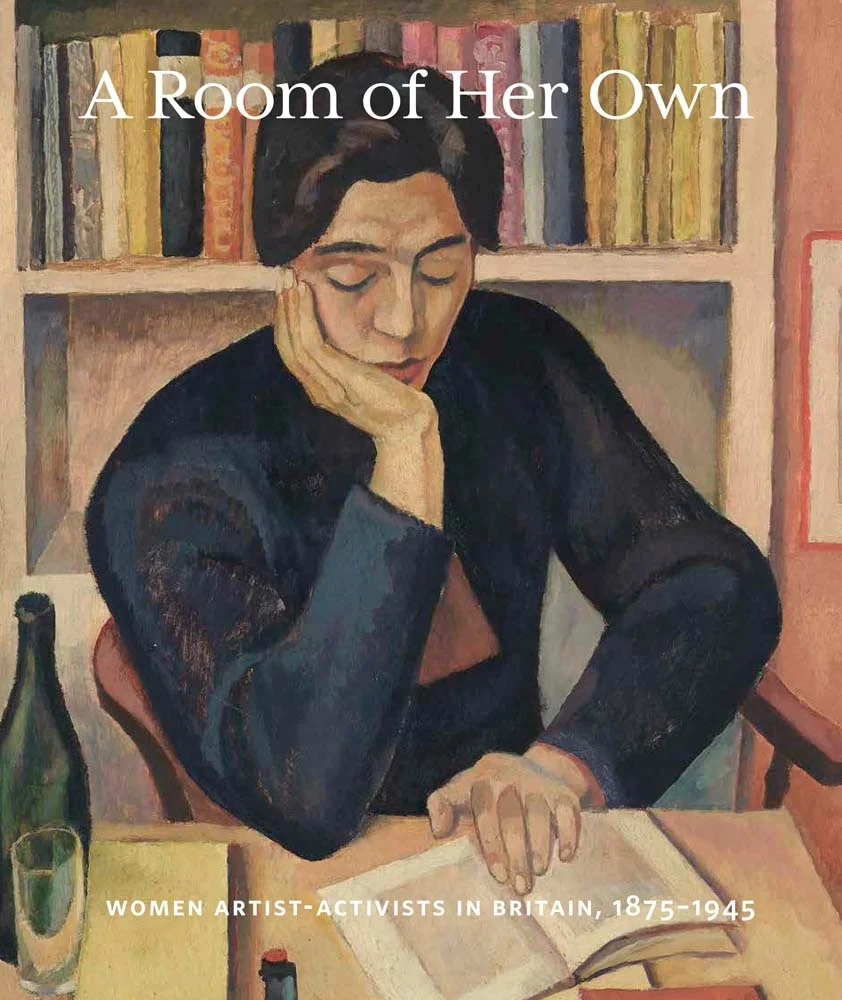
Women artists working in Britain between 1875 and 1945 learned to deftly negotiate private and public spaces to advance their artistic goals. This book foregrounds the homes, studios, schools, guilds, and exhibition sites that galvanized these artists, taking inspiration from Virginia Woolf’s “A Room of One’s Own” (1929). Contributions by established and emerging scholars situate the artists within broader nineteenth- and twentieth-century political, social, and artistic contexts. Authors consider the ways in which artists such as Vanessa Bell, Nina Hamnett, Anna Alma-Tadema, Laura Sylvia Gosse, Louise Jopling, Evelyn De Morgan, and May Morris, among others, created and promoted their art during rapidly changing times. The result is an illuminating examination of the interconnectivity of women artists and activists in Great Britain from the Victorian era through the Second World War
Susan Watkins and Women Artists of the Progressive Era, Edited by Corey Piper. Publisher: Yale University Press in association with the Chrysler Museum of Art, 2025.
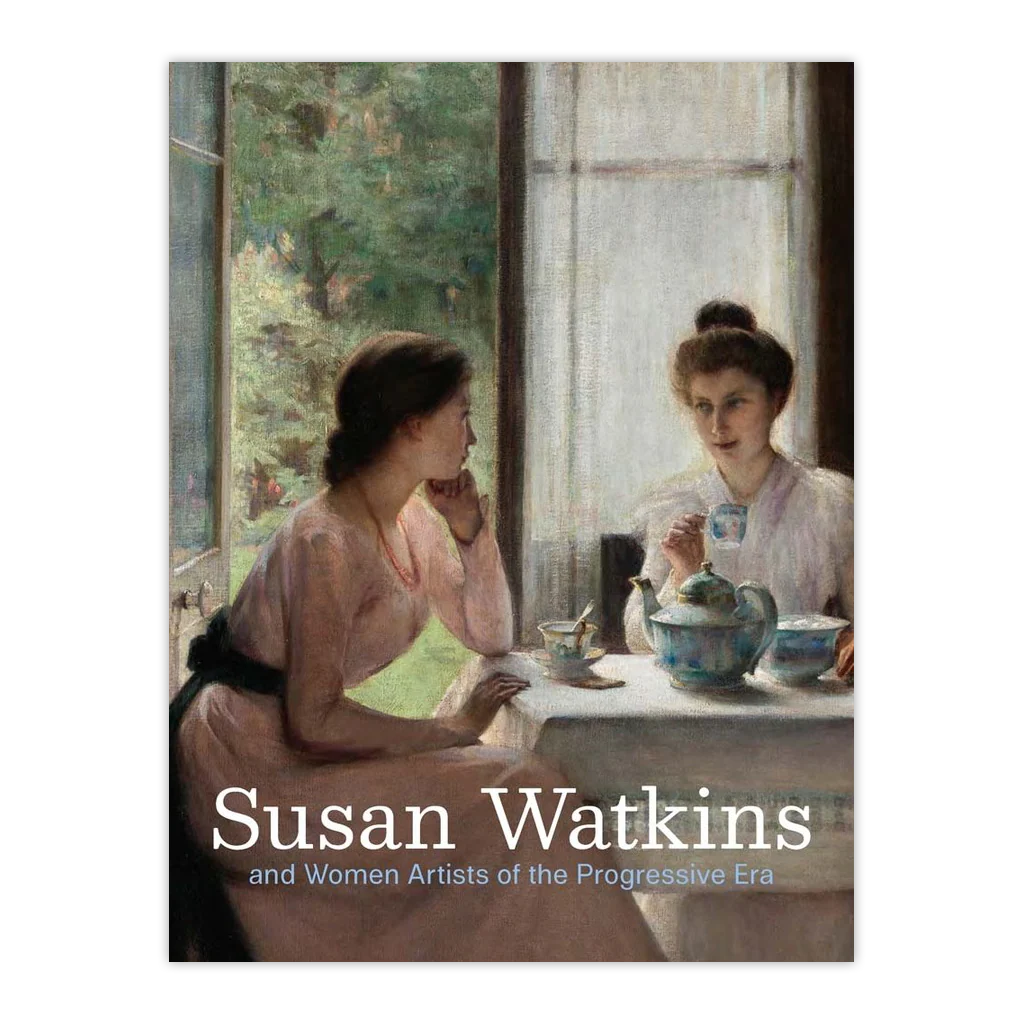
In a career that spanned only a little more than 15 years, American artist Susan Watkins (1875–1913) reached the heights of her profession, exhibiting regularly at the Paris Salon and earning accolades among the American art press. This study looks closely at Watkins’s story. It considers how women artists of the era overcame barriers within the institutions that structured the professional art world, often through training and exhibiting at established and traditional settings. Exploring what artistic and commercial success looked like for Watkins and her contemporaries, scholars reexamine Watkins’s achievements and highlight the overlooked progressive nature of her art. Beautifully illustrated, the book offers a new way to understand the stakes and accomplishments of women artists working at the turn of the 20th century.
Irma Stern: A Modern Artist between Berlin and Cape Town, Edited by Lisa Hörstmann and Lisa Marei Schmidt. Publisher: Hirmer Verlag, 2025.
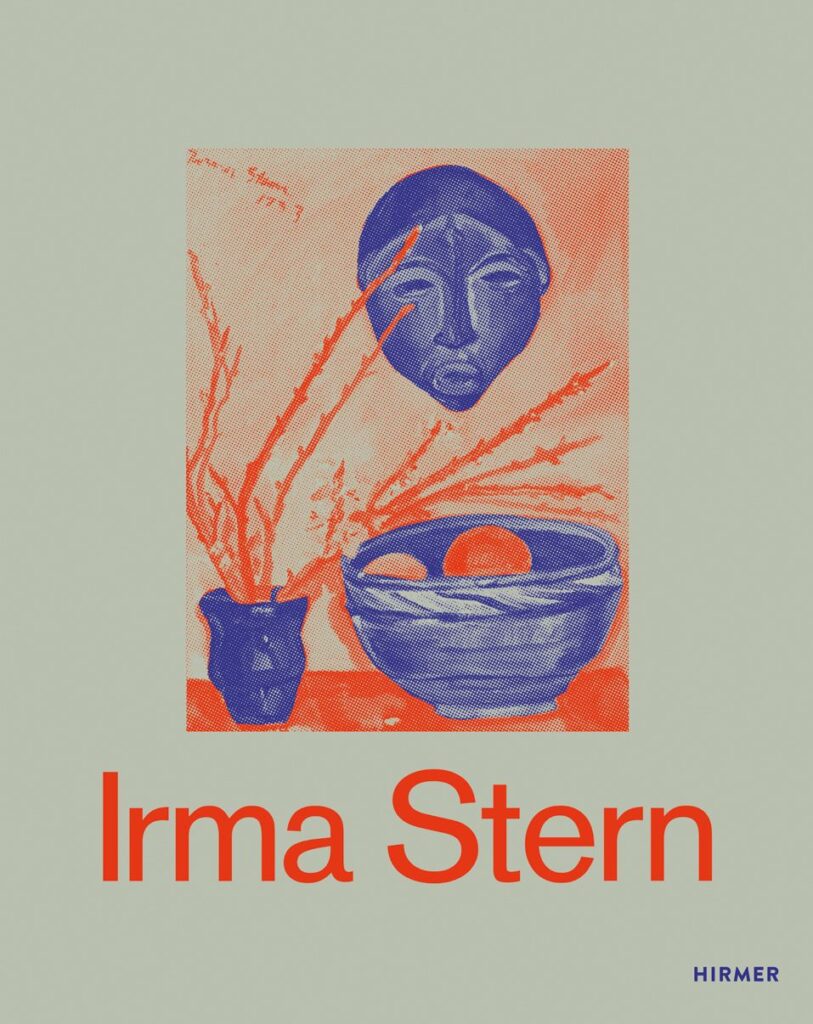
The German–South African artist Irma Stern (1894–1966) was a well-known figure in the Berlin art scene after the First World War. She was forced to leave Germany forever in 1933 due to Nazi persecution of the Jews. While marginalized as a woman and threatened by antisemitism, she was also a beneficiary of South Africa’s apartheid regime. Her complex body of work was shaped both by emancipation and by cultural appropriation. In Stern’s art, motifs from her South African homeland meet the expressionism of the Brücke artists. In the interwar period she was celebrated in Berlin for her “exotic” paintings, and later became a prominent artist in South Africa. This richly illustrated volume focuses on her highly expressive portraits. It addresses questions regarding the contexts in which the works were created and how they are seen today.
Helen Frankenthaler: Move and Make, Edited by Reinhard and Sonja Ernst-Stiftung. Publisher: Hirmer Verlag, 2025.
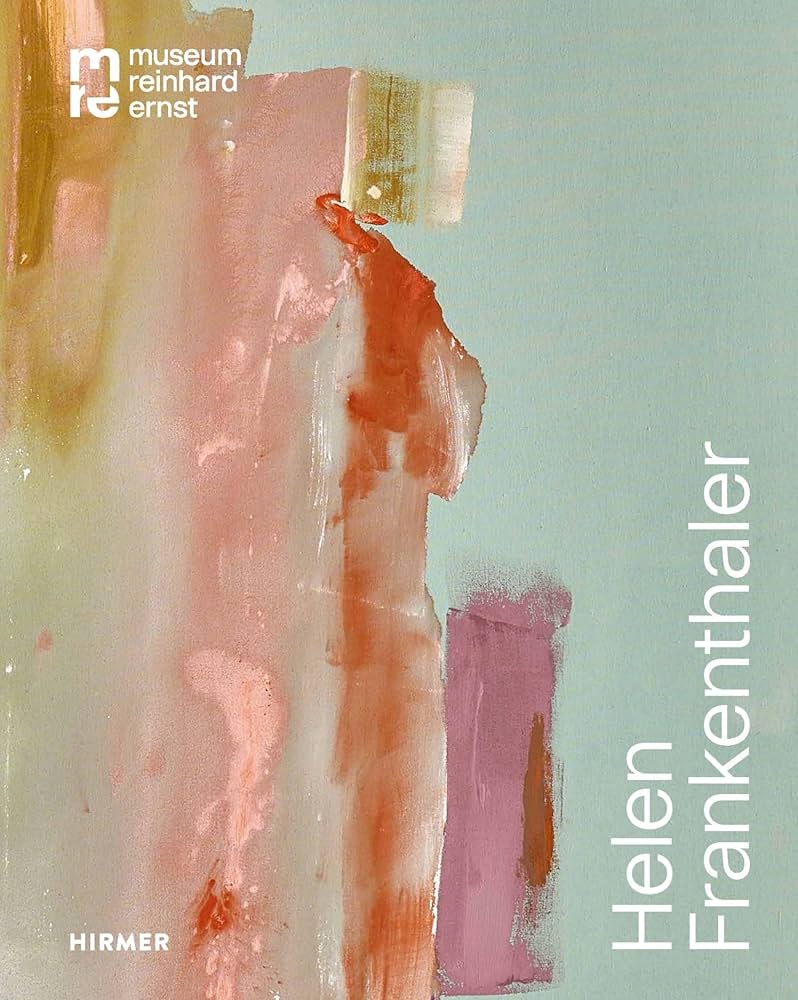
Helen Frankenthaler’s (1928–2011) radical approach to paint and material makes images pulsate with color. During the postwar period in the United States, she was a leading figure in abstract art. This volume brings together nearly 50 works, providing a comprehensive overview of the world’s largest private collection of Helen Frankenthaler’s art—on display at the recently opened Museum Reinhard Ernst in Wiesbaden.
Helen Chadwick: Life Pleasures, Edited by Laura Smith. Publisher: Thames & Hudson, 2025.

Helen Chadwick (1953–1996) embraced the sensuous aspects of the natural world, breaking taboos of the “traditional” or “beautiful.” Her sculpture, performance, and photography is radical, provocative, and often steeped in humor, and employs unusual, sometimes grotesque materials. Although Chadwick’s work was widely exhibited during her lifetime, attention to it declined following her unexpected death in 1996. It is only relatively recently that its significance has been acknowledged afresh. Coinciding with a major touring retrospective, this publication spans the breadth of her practice. Merging art and life, with a focus on Chadwick’s interdisciplinary interests and engagement with education, music, and politics, as well as an in-depth study of her art and ideas, the book is a fitting tribute to her vital impact on social and cultural history.
Liz Collins: Motherlode, Edited by Kate Irvin. Publisher: Hirmer Verlag, 2025.
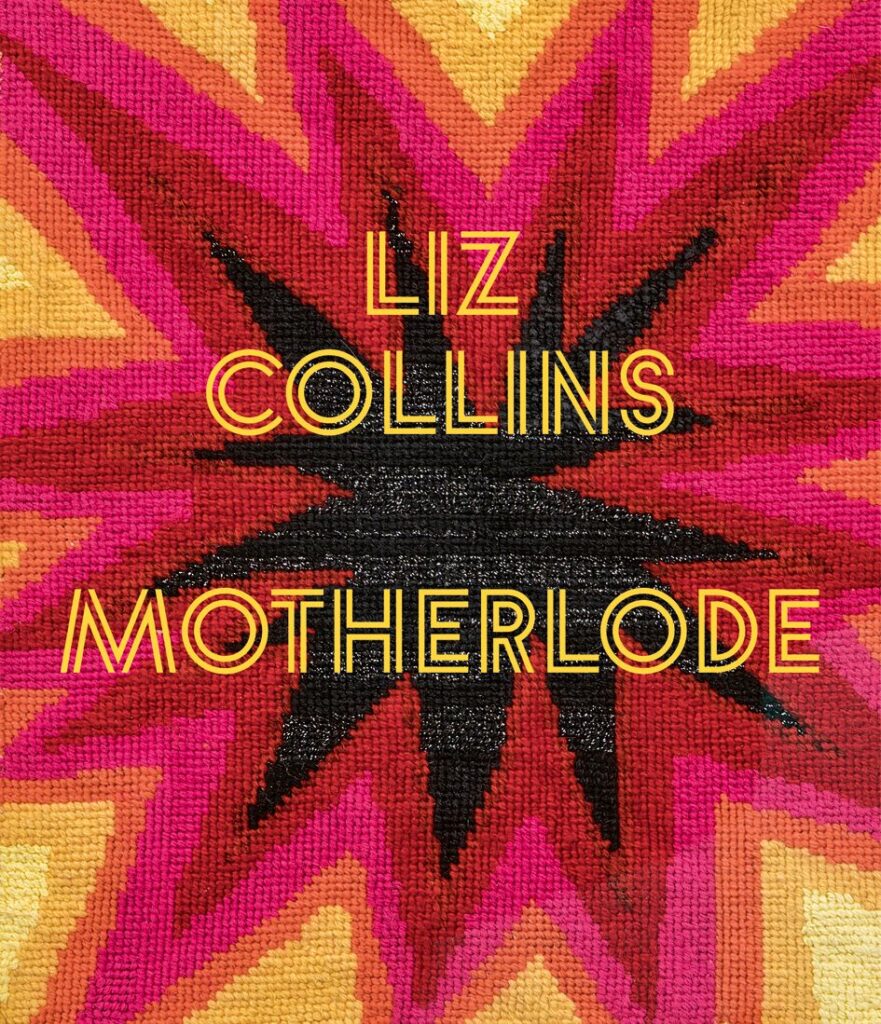
Liz Collins is a queer feminist artist known for her radical deployment of fibre, her activism around labour and gender politics, and her exploration of the borderlands between art, design and craft. Motherlode assembles her work from the late 1990s to the present day, introducing needlework, drawings and including documentation and large-scale sculpture. Contributors survey her life and career, address her unique relationship to craft and labour, and celebrate vital resonances in her work. This groundbreaking volume positions Liz Collins as a singular figure who not only synthesizes fine art, craft and fashion and textile design, but also advocates fiercely for queer and feminist politics.
The Bennett Prize: Rising Voices 4. Publisher: Muskegon Museum of Art, 2025.
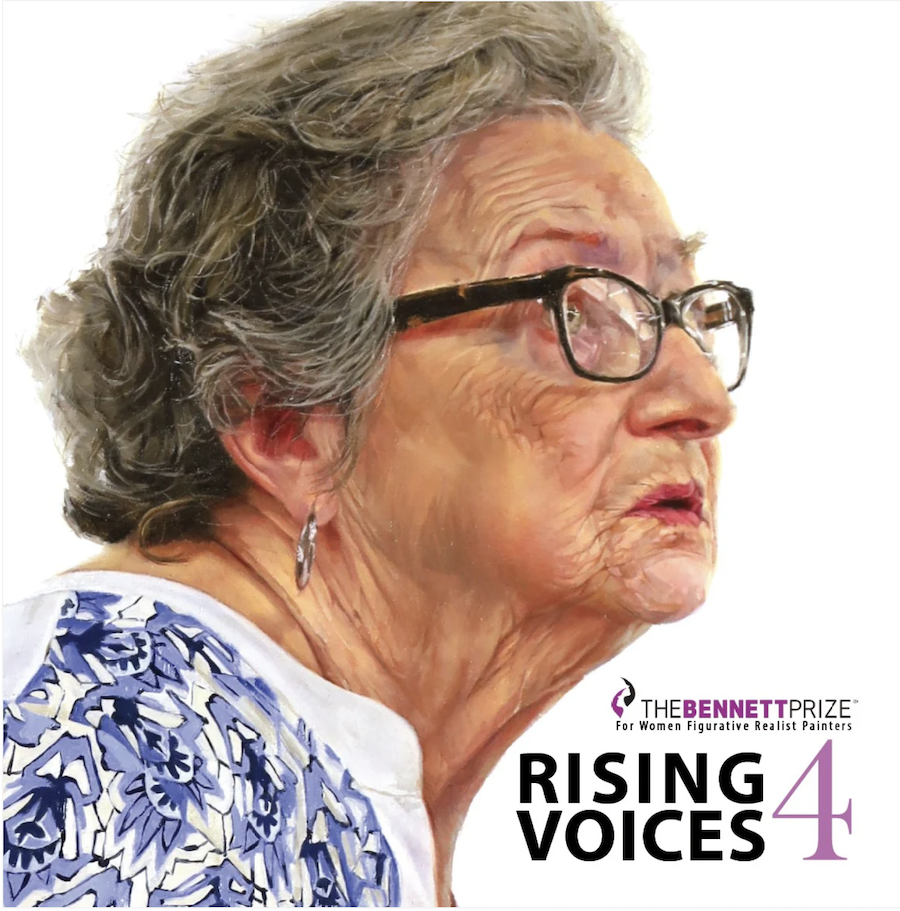
The Bennett Prize: Rising Voices 4 is a juried exhibition of figurative realist paintings by women artists. The Prize, which awards $50,000 and a traveling solo exhibition to one of ten finalists, aims to propel the careers of women figurative realist painters and expand opportunities for women artists. This catalog is the Rising Voices 4 exhibition in book form, including images of all artworks and features for all 10 finalists, as well as Deng Shiqing, who won Rising Voices 3 and premiered her exhibition The Cost of Life alongside Rising Voices 4.
Linda Lighton: Love and War, Edited by Rose Dergan and Sydney Stutterheim. Publisher: Hirmer Verlag, 2025.
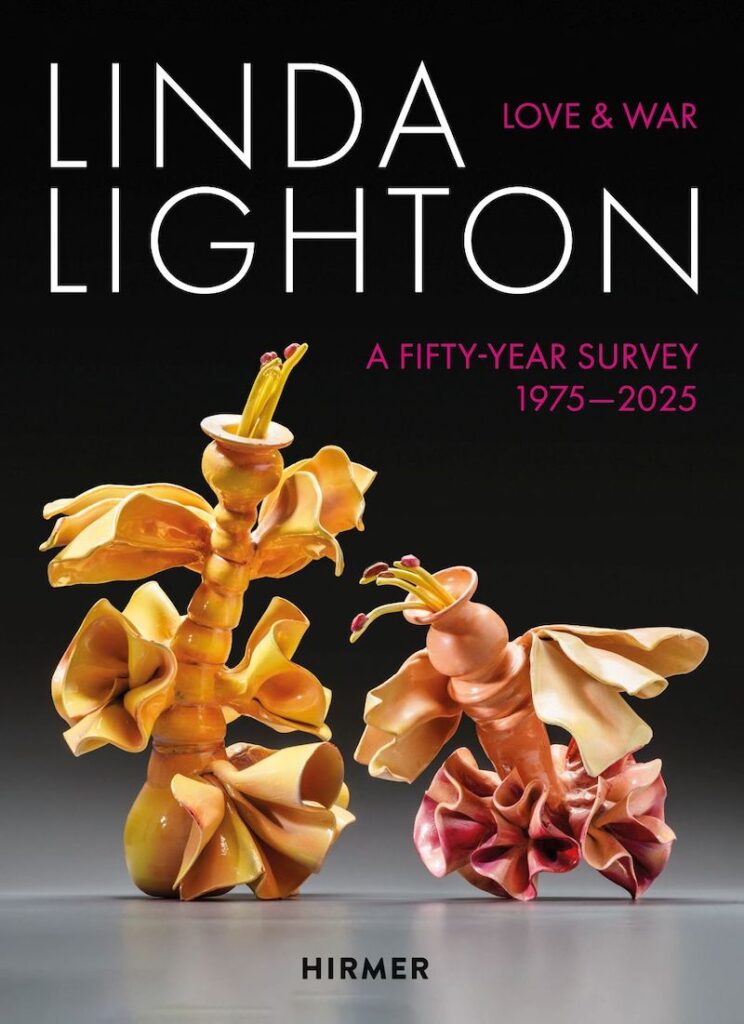
For 50 years, American artist Linda Lighton has created a powerful body of subversive ceramic sculptures that explore desire in all its complex forms. This monographic catalog marks the first substantial survey of her pioneering work, which uses wit and seduction as conceptual weaponry to mine the relationship between sex, power, and politics. Linda Lighton: Love and War is a richly illustrated monograph that gives a comprehensive overview of Linda Lighton’s pioneering career. The book delves into the ways that her highly original and often rebellious work pushes the boundaries of ceramic sculpture. Accompanied by new scholarship on the artist’s practice, this publication situates her sculptures within the context of broader art-historical developments.
Nicole Wittenberg,Texts by Suzanne Hudson, David Salle, and Devon Zimmerman; interview by Jarrett Earnest. Publisher: Phaidon, 2025.
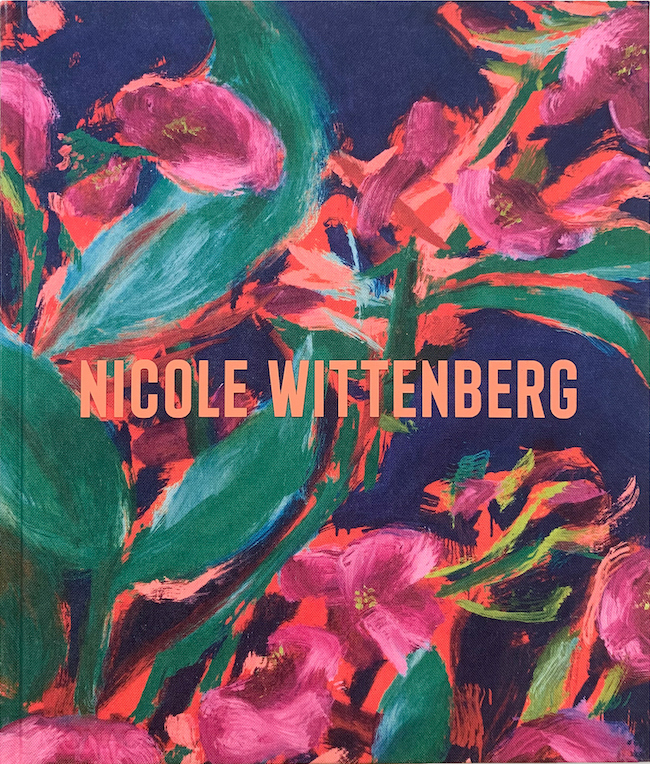
Over the past two decades, Nicole Wittenberg has developed an expressive body of work that includes paintings of landscapes, portraits, and erotica. Weaving together painterly gestures across subject matter—some published here for the first time—the texts in this volume create an insightful portrait of Wittenberg as an artist. Presented in a beautiful cloth case showcasing details of one of her floral compositions, this book explores the full range of Wittenberg’s artistic vision and represents the most significant publication of her work to date.
Caroline Walker: Mothering, Edited by Eleanor Clayton. Publisher: Lund Humphries, 2025.

Scottish artist Caroline Walker (b.1982) is known for her accomplished paintings which offer a lens into the everyday lives of women. Through her large canvases, intimate panels and ink sketches, Walker portrays diverse female subjects in settings that blur the boundaries between public and private worlds, and reveal the complex social, cultural and economic experiences of women living in contemporary society. Walker’s considerable skill in fusing a mastery of her medium with subjects that invite debate has ensured her standing as one of the leading painters working in Britain today. Bringing together work made over the past five years, exploring themes of motherhood and early-years care, this important publication reveals the evolution of Caroline Walker’s highly original artistic language.
LaToya M. Hobbs: Carving Out Time, Edited by Elizabeth M. Rudy. Publisher: Distributed by Yale University Press for Harvard Art Museums, 2025.
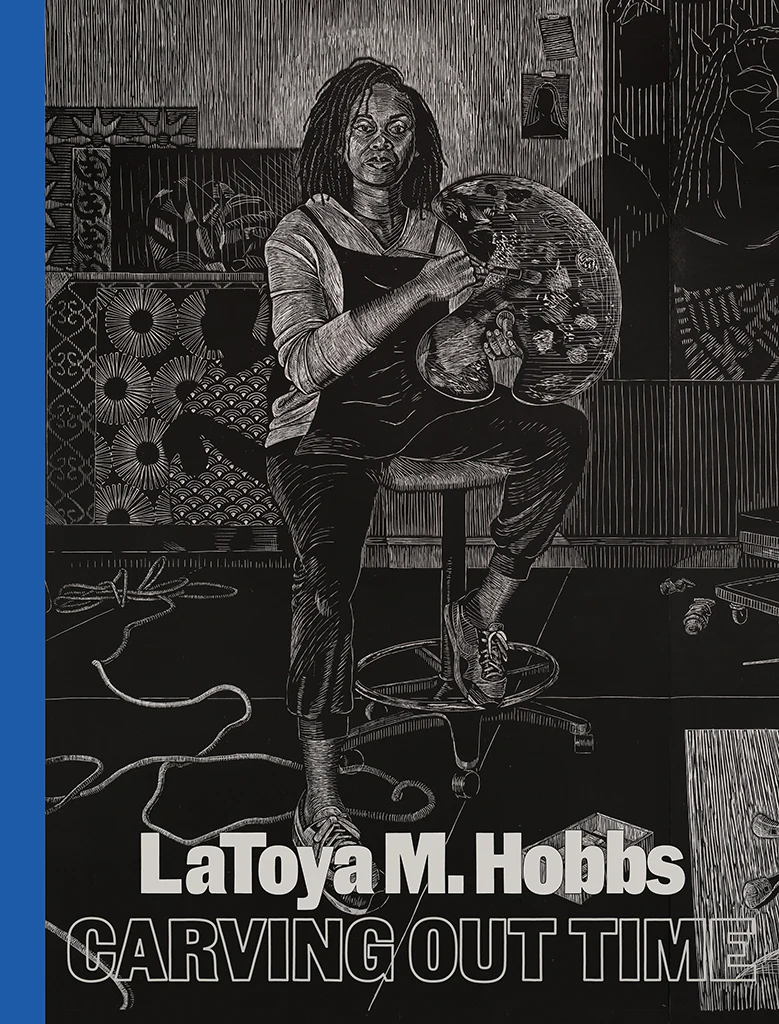
Carving Out Time is a monumental print series by LaToya M. Hobbs (b. 1983), a painter and printmaker based in Baltimore. Unfolding over five scenes, Hobbs’s towering woodcuts depict a day in her life with her husband and their two children. Hobbs extends the intimacy of her private life, centering the negotiations she brokers daily to balance her responsibilities as a wife, mother, educator, and artist. This publication—the first of its kind on the artist—presents the series in full, with commentary on both Hobbs’s practice and broader themes pertinent to her work and to the field of contemporary printmaking. The book serves as an art historical guide to Hobbs’s daily conversation with sculpture, paintings, and prints by visionary Black artists including Jean-Michel Basquiat, Elizabeth Catlett, and Kerry James Marshall living within this print series, depicted on the walls and bookshelves in the family home.
June Leaf: Shooting from the Heart, Contributions by Sam Adams and Allison Kemmerer and Gordon Wilkins. Publisher: Rizzoli Electa, 2025.
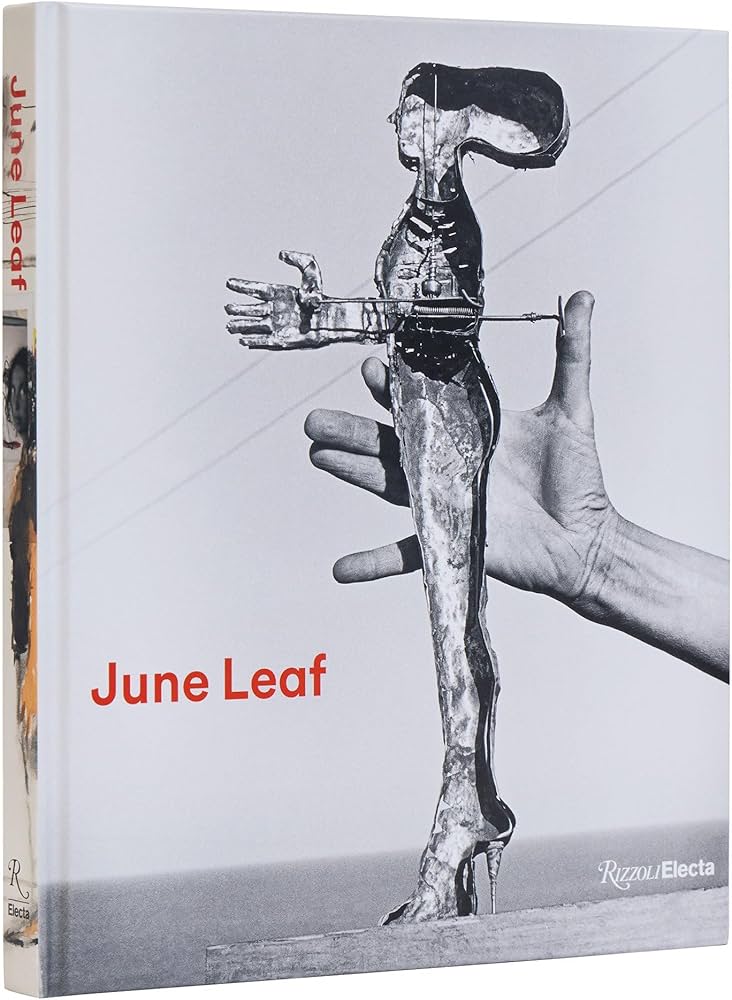
June Leaf’s enchanting and provocative kinetic sculptures, assemblages, paintings, and drawings are intermingled and juxtaposed, revealing the artist’s sustained engagement with such motifs and themes as theater and performance, dance, gender, motion, urban life, mythology, and interpersonal relationships. She skillfully blends mediums and materials in unconventional and intuitive ways, resulting in compositions where playful and combative figures and contraptions emerge from inventive combinations of brass, copper, tin, found metal rods and blades, wood, and paint. This volume features new scholarship alongside reflections by the artist’s peers, Joan Jonas and Kara Walker. Drawing from numerous museum and private collections as well as Leaf’s vast personal archive, it is the most exhaustive survey of her career to date.
Janet Dawson: Far Away, So Close, Edited by Denise Mimmocchi. Publisher: University of Washington Press, 2025.
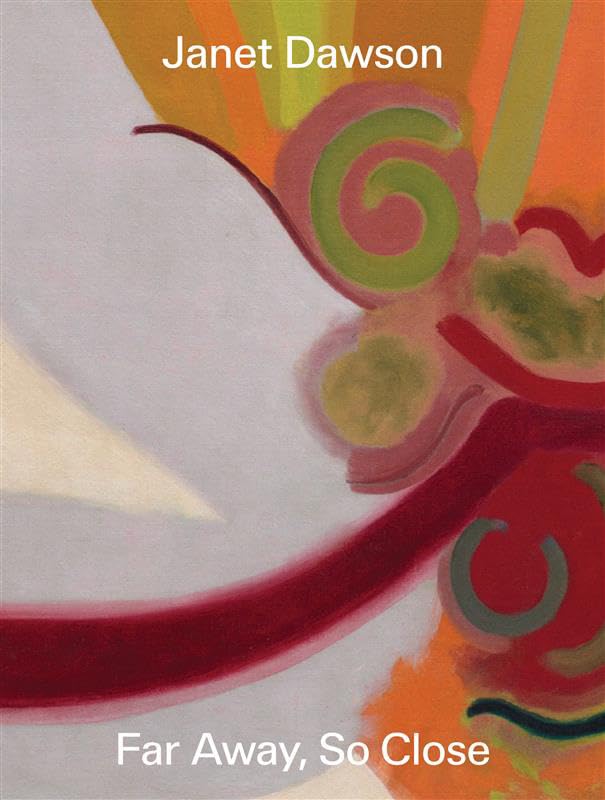
Janet Dawson has moved between abstraction and figuration, formalism and realism over six decades. Consistent to her practice is her investigative vision: her art derives from an immense curiosity about material existence and states of the natural world. The first major monograph on Dawson, Far Away, So Close features more than 80 works created from 1951 to 2018, as well as archival and recent photographs.
Radical Softness: The Responsive Art of Janet Echelman, Edited by Gloria Sutton. Publisher: Princeton Architectural Press, 2025.
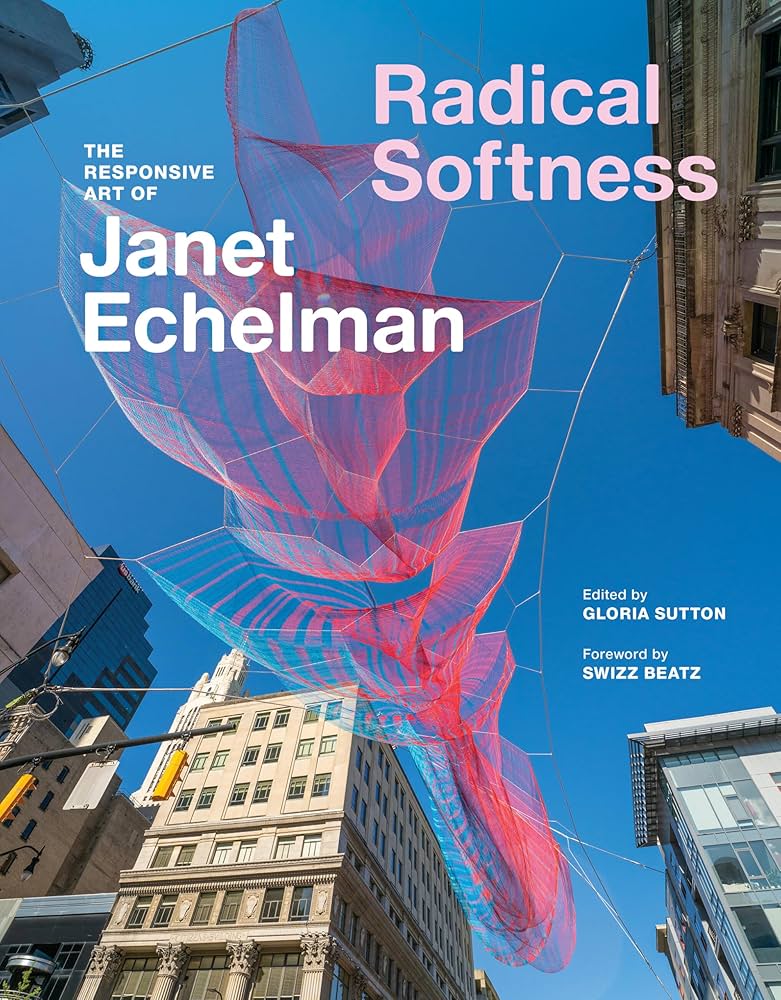
Over the past 25 years, Janet Echelman has created monumentally scaled public sculptures using unlikely materials, from atomized water particles to engineered fiber 15 times stronger than steel. She weaves ancient craft and computational modeling software into an utterly unique art form. Radical Softness is a comprehensive sourcebook that unpacks Echelman’s vital practice. It features mesmerizing color photographs, and contributions that contextualize the interdisciplinary impact of Echelman’s work within the fields of global art history, architecture, computation, and landscape architecture. Radical Softness is a visual compendium of American artist Janet Echelman’s oeuvre, including detailed project documentation, archival source materials, and a fascinating illustrated chronology.
Mary Heilmann: Works on Paper: 1973–2019, Edited with introduction by Alexis Lowry. Publisher: Hauser & Wirth Publishers, 2025.
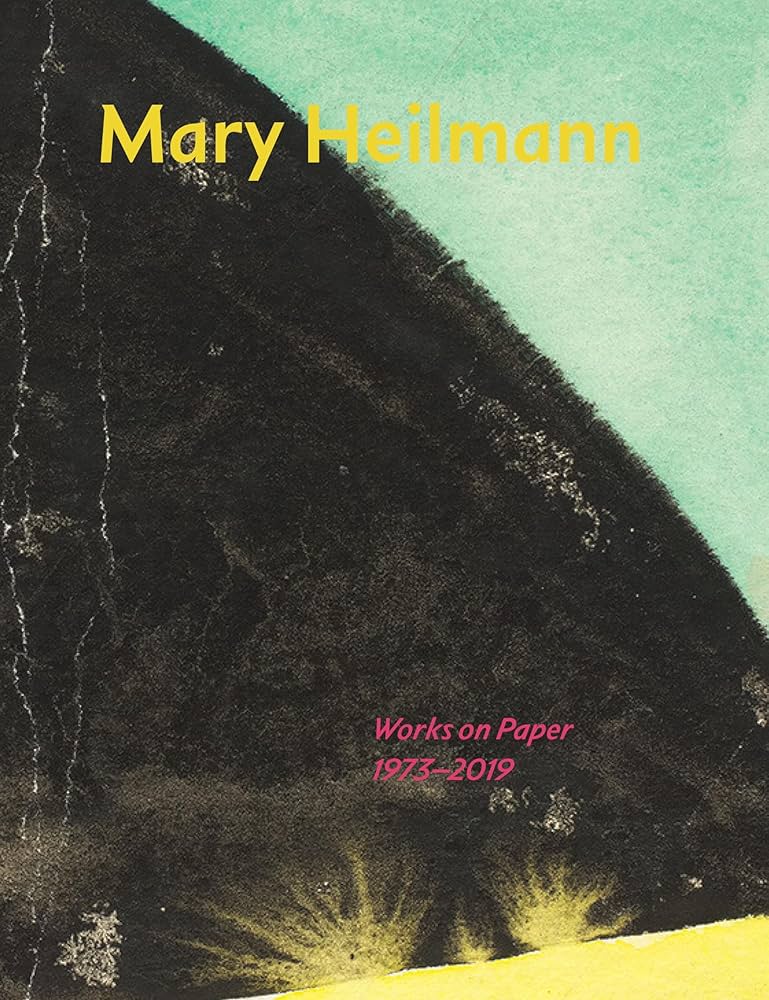
Mary Heilmann’s (born 1940) works on paper are suffused with the same sensibility as her influential abstract paintings, a casual playfulness animating a rigorous attention to form and color, resulting in joyful, evocative geometries. Their suggestive power reflects Heilmann’s process of what she calls “daydreaming”: a conjuring of the sights, sounds and events of past and future travels, the cyclical nature of memory informing her return to various motifs across nearly five decades of work. Mary Heilmann: Works on Paper, 1973–2019 offers a compelling account of this previously underexamined aspect of Heilmann’s practice.
Architects of Being: The Creative Lives of Louise Nevelson and Esphyr Slobodkina, Edited by Catherine Walworth. Publisher: The University of Arkansas Press, 2025.
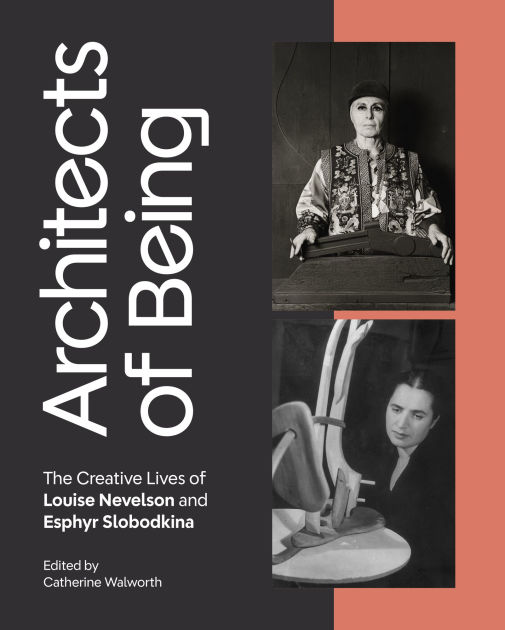
Born just nine years apart in Ukraine and Siberia, respectively, Louise Nevelson and Esphyr Slobodkina were both children of Jewish families who fled Russian governmental repression and conflict. Both made early marriages of convenience or convention that were short-lived. Both went to New York in the 1920s, struggling to become artists amid the Great Depression. Both overcame the accepted modes of making, moving between art forms in expansive, category-defying ways. The parallels are poignant, including their similarly fearless devotion to abstract art in an era that had yet to fully embrace it. Richly illustrated and expertly researched, Architects of Being pays homage to two dauntless artists, celebrating their artistic journeys and architectural affinities. It expands our understanding of how these pioneering figures dissolved boundaries between art forms in ways that prefigured what we see throughout the art world today.
Suzanne Jackson: What is Love, Edited by Jenny Gheith. Publisher: Princeton University Press, 2025.
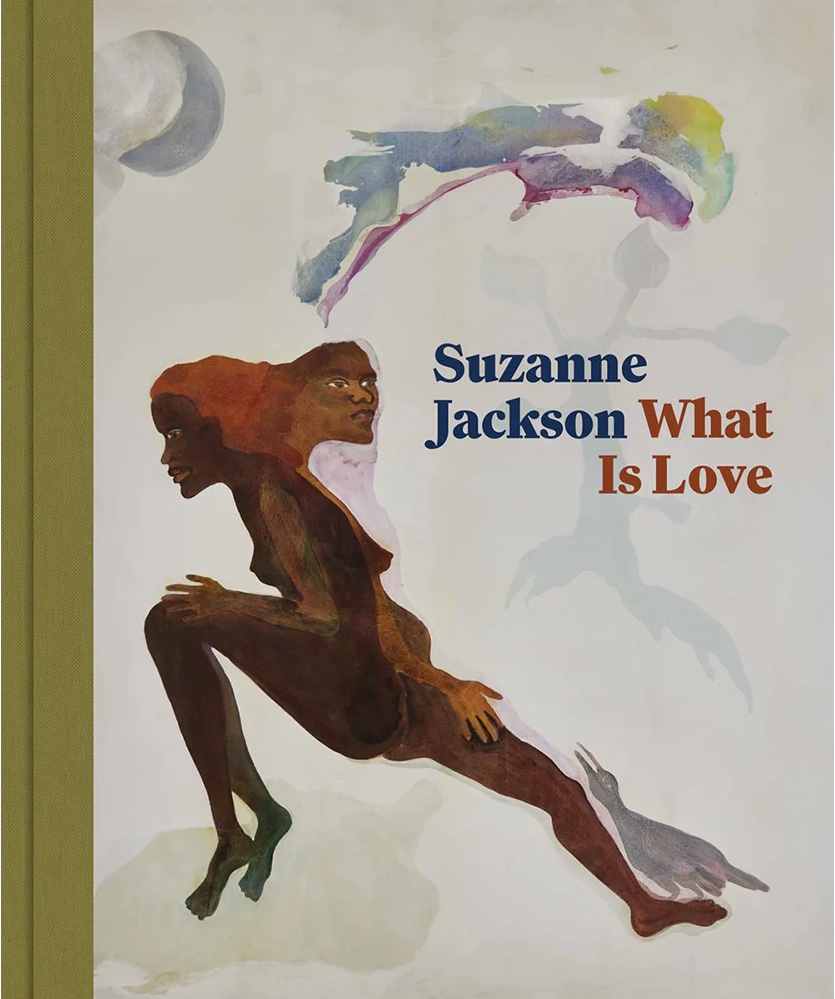
First and foremost a painter, Suzanne Jackson has worked for six decades in a dizzying array of genres, including drawing, printmaking, poetry, dance, and theater design. Suzanne Jackson: What Is Love reveals Jackson’s achievements as a leading and influential artist who has been in dialog with her contemporaries, from Betye Saar and Emory Douglas to Senga Nengudi and Mary Lovelace O’Neal. This wide-ranging book illuminates Jackson’s work and its connections to nature, environmentalism, performance, feminism, and Black and Native traditions. It explores the way her innovative hanging acrylic works break the canvas; the role of dance and set design in Jackson’s practice; and her trailblazing Los Angeles art space Gallery 32, which she ran from 1968 to 1970, and which became a focus for a circle of fellow emerging artists.
Similar Art Herstory posts:
New Books About Women Artists | Oct–Dec 2025
New Books About Women Artists | Apr–June 2025
New Books About Women Artists | Jan–Mar 2025
New Books About Women Artists | Oct–Dec 2024
Recent Books for Young Readers About Women Artists
New Books about Women Artists | July–Sept 2024
New Books about Women Artists | Apr–June 2024
Ten Intriguing Books About Remarkable Women Artists, a guest post by Carol M. Cram