Guest post by Maria Ausherman, teacher, author and independent scholar
Happy birthday to three American women photographers who were born in December: Anne Brigman (1869–1950), Bayard Wootten (1875–1959) and Jessie Tarbox Beals (1870–1942). All were exceptional artists. The three women photographers came from very different American regions. But they each understood that, as Wendell Berry put it in A Poem on Hope, “the world is no better than its places,” and that “its places at last are no better than their people.”
Anne Brigman
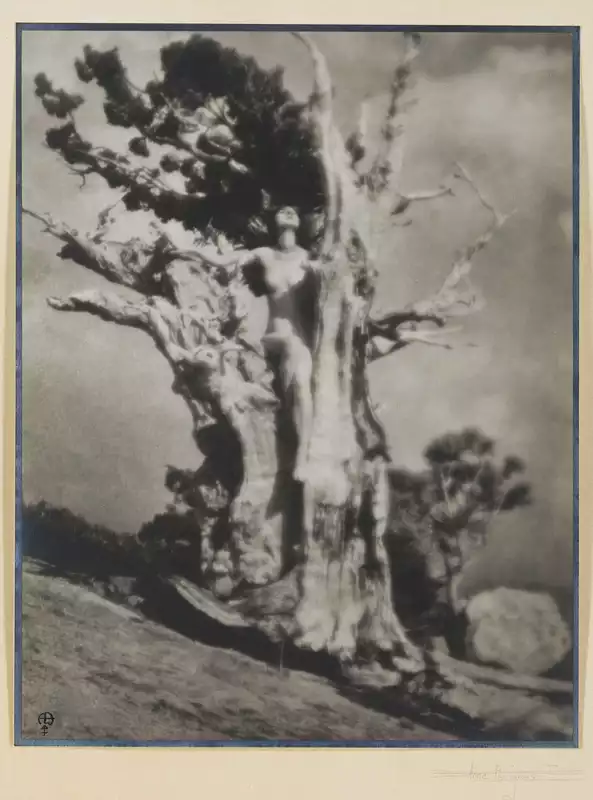
Anne Brigman was born in Hawaii on December 3, 1869. She is celebrated for her poetic landscape photographs that express her rapport with the mystery and grandeur of nature. Depicting the female nude in the wilderness when women were still confined to corsets, she was ahead of her time. Brigman illuminated the personal feminist struggle by showing the interconnectedness of humans and nature.
Calling herself a child of the tropics where “mountain peaks and blue sea, trees and clouds, flowers and fruits and birds were as near and as complementary as one’s right hand is to the left,” Brigman moved with her family from Hawaii to California when she was sixteen. Her first excursion to the Sierra Nevada mountains of northern California in 1905 reminded her of her life high in the valley above Honolulu. It also marked the beginning of her maturation as an artist devoted to direct encounters with nature. Nature was her source of personal liberation and spiritual exploration.
Bayard Wootten
Bayard Wootten was born on December 17, 1876 in New Bern, a small eastern North Carolina riverfront town. She is known today as the state’s most important photographer. Living her entire life in North Carolina, she saw herself as a Southerner most of all, and identified strongly with the people she photographed. “She could go to the mountains and those people are mighty skittish about people they don’t know, but they would invite her to spend the night and have supper. She just had a way of talking to people,” commented one of Wootten’s studio assistants.
During her five decades as a photographer, she opened studios in her hometown and then in the college town of Chapel Hill, where she took thousands of portraits of students there. She photographed soldiers for sixteen years as the first woman in the North Carolina National Guard. She flew in a plane and took the first aerial photographs by a woman of the countryside below. Her six publications feature photographs of historic architecture and gardens throughout North Carolina.
Jessie Tarbox Beals
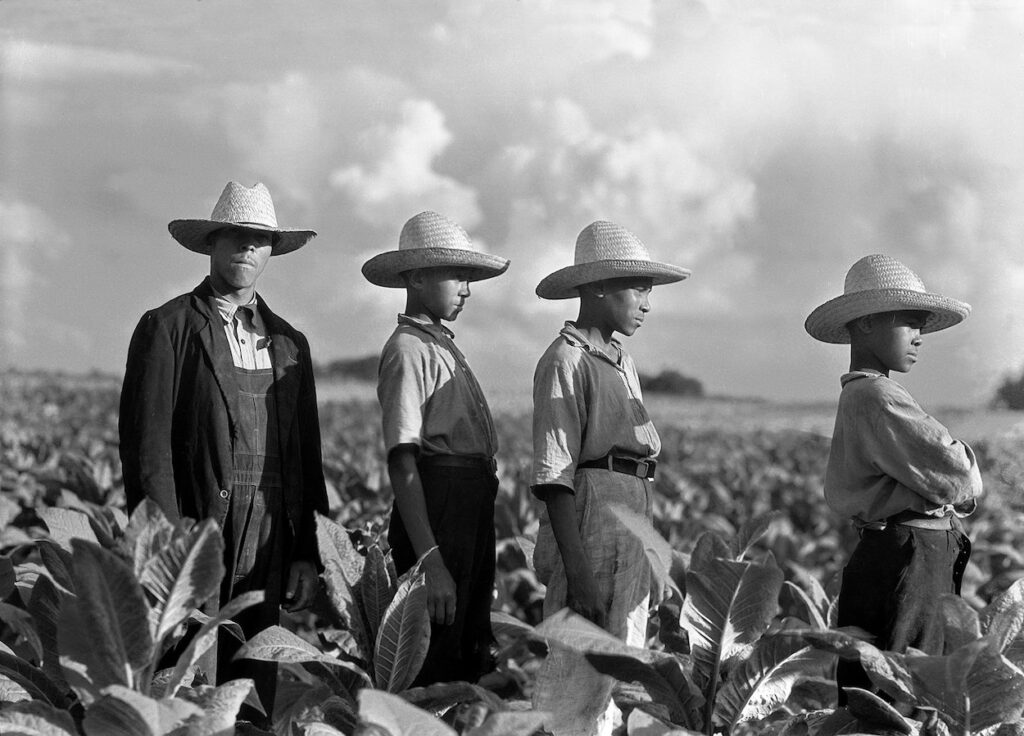
Jessie Tarbox Beals, born on December 23, 1870 in Ontario, Canada, began her career at 17 years old as a teacher in a one-room schoolhouse. She soon turned to photography, experimenting with different processes and taking pictures around her home. At the 1893 World’s Columbian Exposition in Chicago, she met and was inspired by two famous female photographers, Frances Benjamin Johnston and Gertrude Käsebier. Upon returning home, she decided to photograph new places.
She stopped teaching after her marriage and became a full-time newspaper photographer in Buffalo, New York. “If one is the possessor of health and strength, a good news instinct … and the ability to hustle, which is the most necessary qualification, one can be a news photographer.”
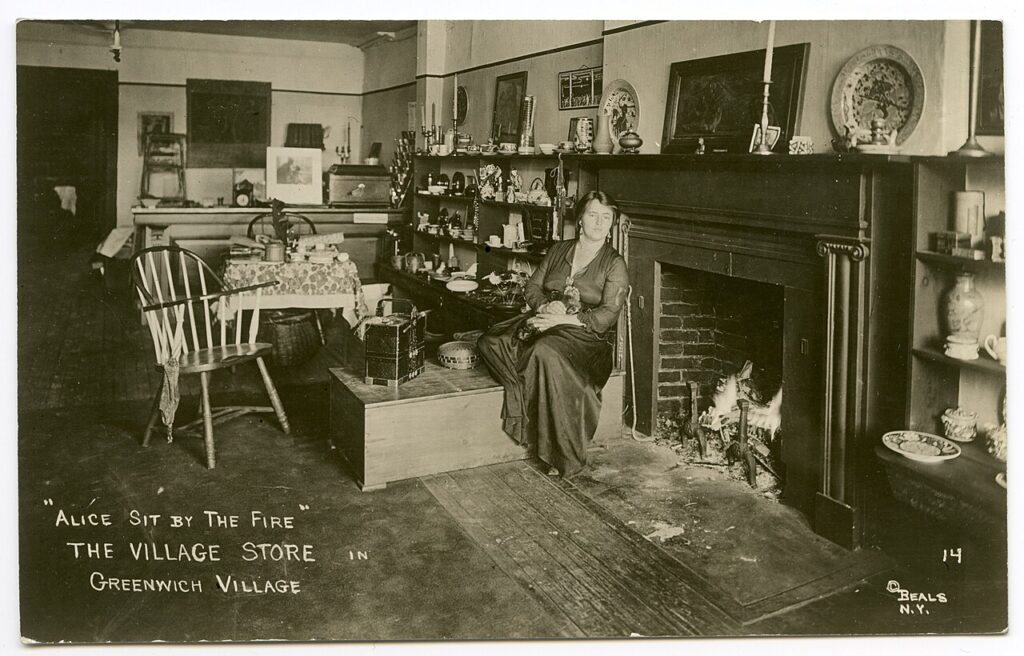
After she and her husband moved to New York City, they grew apart and divorced. In 1917, she moved to Greenwich Village with her daughter, opened a tea room and art gallery of her work and began documenting the neighborhood. One of the first female photojournalists, she accepted all kinds of assignments from news events, garden estates, and world fairs to portraits of celebrities and street life of the urban poor.
Maria Ausherman is an author, teacher, and independent scholar interested in the intersection of fine arts and documentation. Her book Behind the Camera: American Women Photographers Who Shaped How We See the World presents the stories of women who stepped out of the bounds of physical and social expectations to pursue a personal vision through photography. She is also the author of Absolutely Amazing American Artists: Fidelia Bridges; Absolutely Amazing American Artists: Sarah Miriam Peale; Masters of Shape: The Lives and Art of American Women Sculptors; and The Photographic Legacy of Frances Benjamin Johnston. Maria is co-author of Georgia O’Keeffe’s Hawai’i.
More Art Herstory guest posts you might enjoy
Emma Stebbins, Anne Whitney and Vinnie Ream: American Women Sculptors of the Nineteenth Century, by Maria Ausherman
A Quiet Eye—The Unique Achievement of Sylvia Shaw Judson, by Rowena Loverance
Esther Pressoir: Imagining the Modern Woman, by Suzanne Scanlan
Women Artists from Savannah at the Telfair Academy Museum, by Julie Allen
Susie M. Barstow: Redefining the Hudson River School, by Nancy Siegel
Laura Seymour Hasbrouck, A Painter of the Hudson River School, by Lili Ott
Portraying May Alcott Nieriker, by Julia Dabbs
Celebrating Eliza Pratt Greatorex, an Irish-American Artist, by Katherine Manthorne
The Ongoing Revival of Matilda Browne, American Impressionist, by Alexandra Kiely
The Floral Art of Emily Cole, by Erika Gaffney
Illuminating Sarah Cole, by Kristen Marchetti
Women Artists at the Cape Ann Museum, by Erika Gaffney