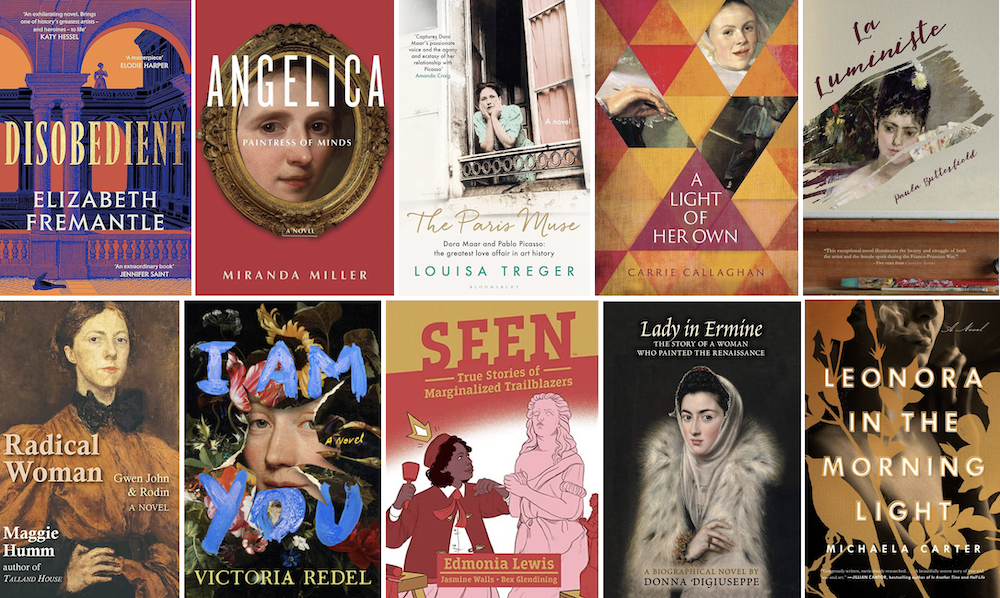
Just in time for summer reading, we present a list of recent fiction books about specific, mostly historic women artists—from the distant past to the 21st century. This post includes novels published from 2018, the year of Art Herstory’s inception, to the present. We list them in chronological order according to the year of the featured artist’s birth. The blurb on the publisher’s website is the basis for each description. If you know of other titles that should be on this list, please let us know by comment or by email (Erika@artherstory.net).
Sofonisba Anguissola (c. 1532–1625)
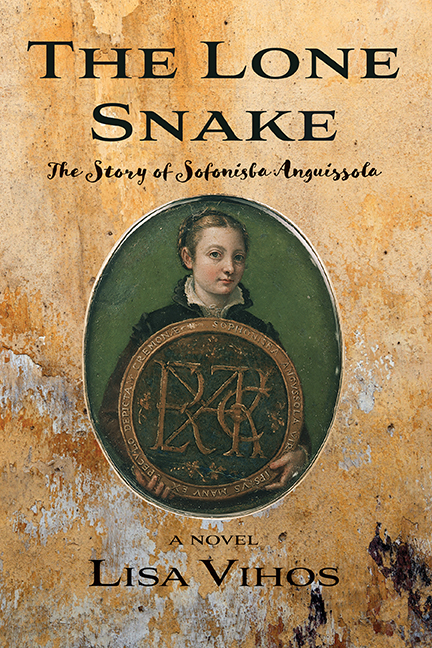
The Lone Snake: The Story of Sofonisba Anguissola, by Lisa Vihos. Publisher: Water’s Edge Press, 2022.
In The Lone Snake, Lisa Vihos brings Renaissance artist Sofonisba Anguissola to life as a woman yearning for recognition in a world not ready for her. Vihos’ portrait of life in the 16th century is a rich tapestry. It blends art history, romance, and verse to tell a timeless tale of what it means to create.
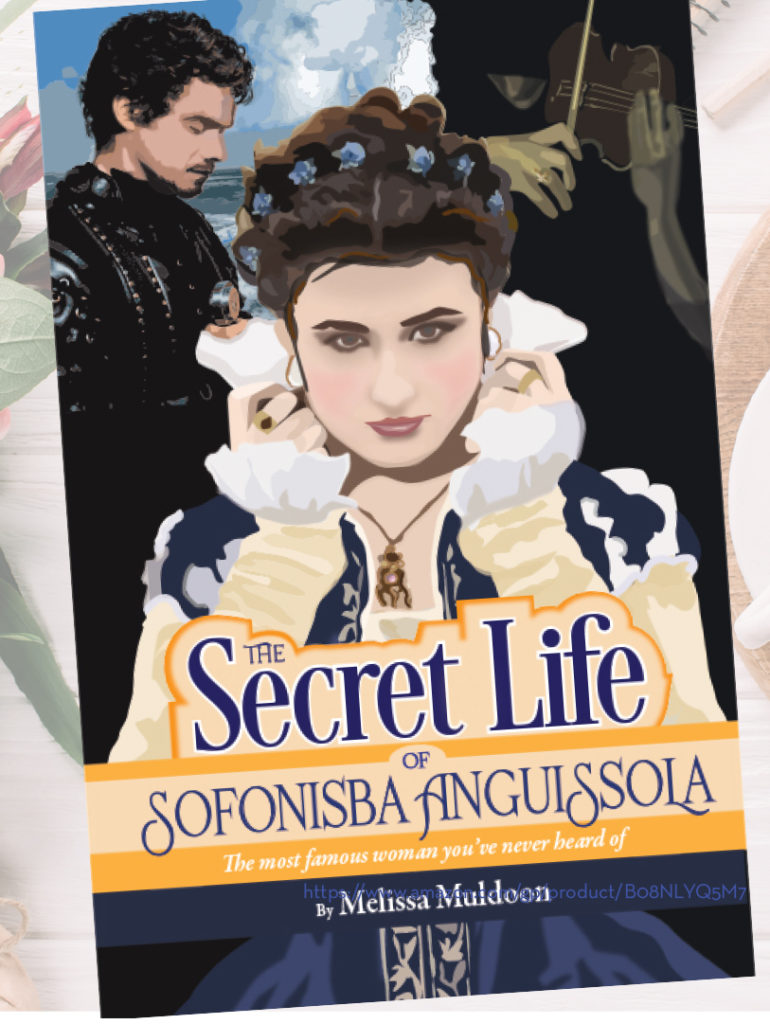
The Secret Life of Sofonisba Anguissola, by Melissa Muldoon. Publisher: Matta Press, 2020.
Set in the 16th century, The Secret Life of Sofonisba Anguissola tells the love story of a woman’s passion for art… and for a man. Sofonisba Anguissola served in the Spanish court of King Philip II, where she taught his queen to paint. In a saga filled with intrigue, jealousy, buried treasure, unrequited love, espionage, and murder, Sofonisba’s story is played out against the backdrop of Italy, Spain, and Sicily. Throughout her life, she encounters talented artists, authoritative dukes, mad princes, religious kings, spying queens, vivacious viscounts, and dashing sea captains—even a Barbary pirate. But of all the people who fell in love with Sofonisba, only one captured her heart.
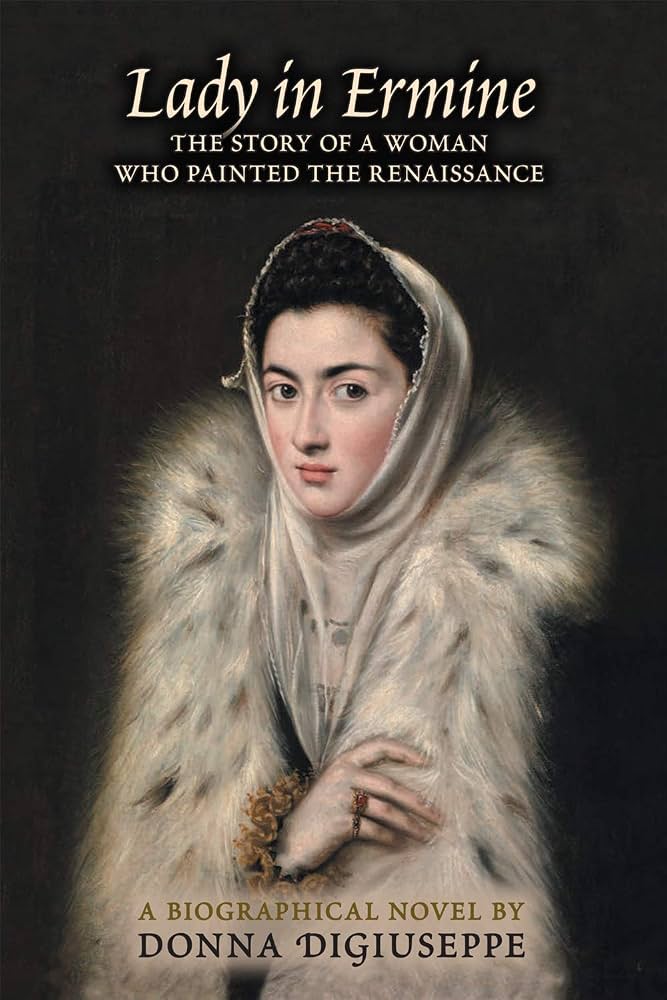
Lady in Ermine: The Story of a Woman Who Painted the Renaissance, by Donna DiGiuseppe. Publisher: Bagwyn Books, 2019.
As a girl in Lombardy, Sofonisba Anguissola trains to paint with mannerist masters. Though society frowns upon women having such ambition, Sofonisba’s father unwaveringly encourages her. A royal tour by Prince Philip of Spain inspires her lifelong dream: to perfect the king’s portrait and show his truth on canvas, the highest calling for a Renaissance portraitist. Sofonisba’s travels take her to the heart of the royal court in Madrid, and beyond. This is her story.
Artemisia Gentileschi (1593–after 1654)
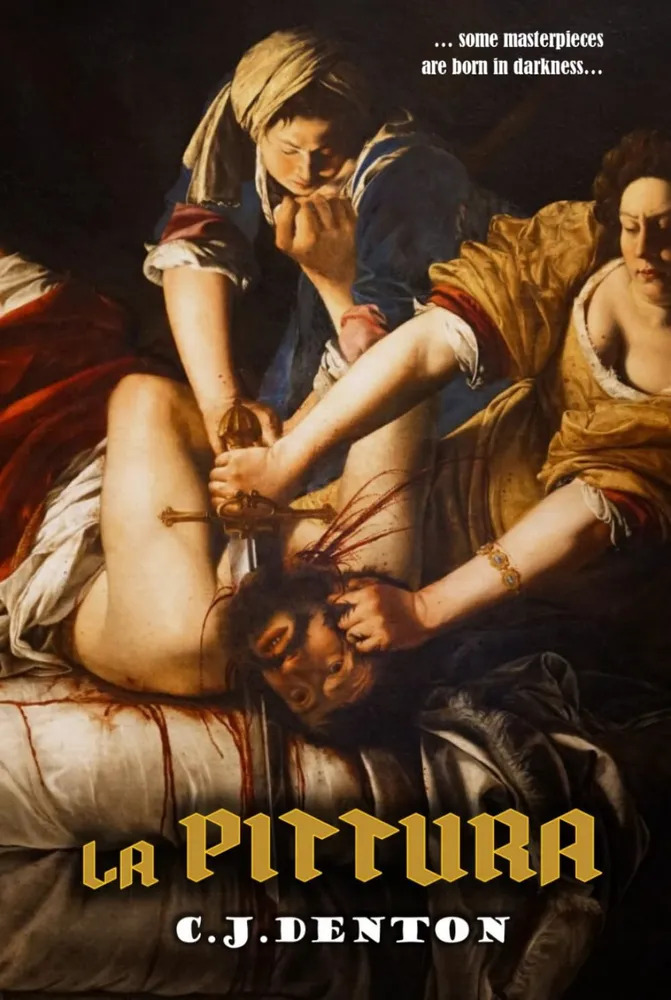
La Pittura, by C.J. Denton. Publisher: APS Books, 2026.
At 18 years old, Artemisia Gentileschi is an extraordinarily gifted painter, working in a world where talent matters, but so do money, reputation and the approval of powerful men. Following the notorious trial of Agostino Tassi, Artemisia leaves Rome for Florence and begins the difficult business of becoming known for what she does rather than what was done to her. Drawing on the artist’s remarkable real life and paintings, La Pittura is a historical thriller of murder and intrigue, but also of ambition, friendship, family and the considerable difficulty of making a living from art. La Pittura imagines another story running beneath the one history has preserved: at its heart is a woman too often remembered for what was done to her, rather than for everything she did afterwards.
Read the author’s Art Herstory guest post Beyond Blood, Battle Scars and Beheading: How Artemisia Gentileschi Became Painting Itself here.
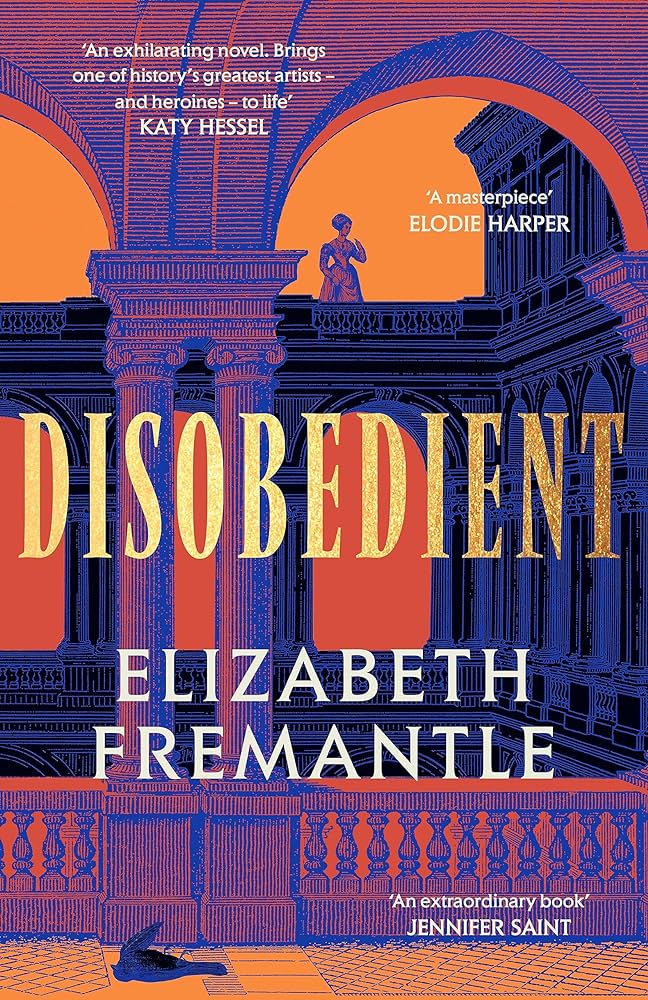
Disobedient, by Elizabeth Fremantle. Publisher: Penguin Random House, 2023; available in the US from Pegasus via Simon & Schuster.
This novel tells the powerful story of Artemisia Gentileschi, one of the most celebrated female painters in 17th-century Europe. It follows the events of a single year that culminate in the city’s most infamous trial, during which Artemisia was forced to defend her character under brutal, and public, testimony. The experience shaped her art; Artemisia went on to create fierce biblical paintings that recognizes and celebrates women’s strength and agency.
Read reviews in the Independent, DailyArt Magazine, The Worm Hole, and Foreword Reviews. Selected by The Sunday Times as one of the twelve best historical fiction novels of 2023.
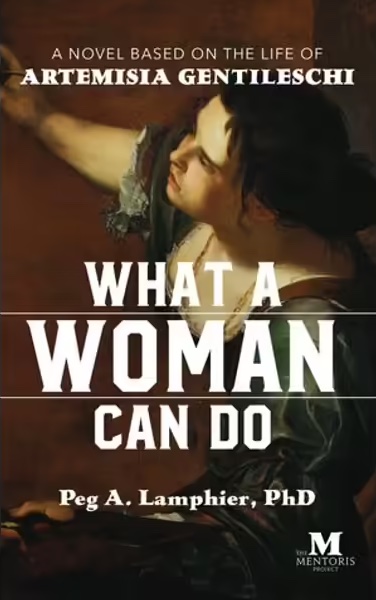
What a Woman Can Do: A Novel Based on the Life of Artemisia Gentileschi, by Peg A. Lamphier. Publisher: Barbera Foundation, 2021.
Though she was “just a girl,” Artemisia Gentileschi’s father recognized and nurtured his daughter’s raw talent and escorted her into the male-dominated elite circle of 17th-century fine artists. Later dishonored in the most humiliating way and betrayed by her father for the sake of his own reputation and fortune, the Caravaggio-inspired teenager summoned the fortitude to confront the monster who had stolen her virtue in a very public months-long trial.
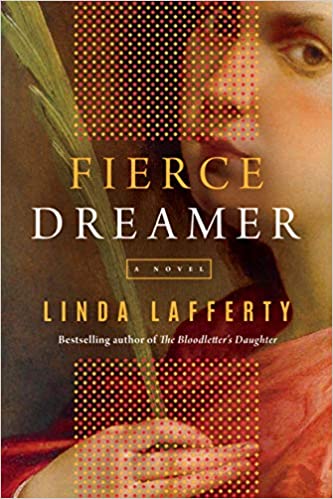
Fierce Dreamer: A Novel, by Linda Lafferty. Publisher: Lake Union Publishing, 2020.
Born in the bustling artist quarter of Rome, Artemisia, daughter of renowned painter Orazio Gentileschi, is unavoidably drawn into a profession unheard of for women. With an innate grasp of color, light, and composition, and inspired by the mercurial Caravaggio, the fiery Artemisia embraces her calling with a precocious brilliance. But as a young woman, she also finds herself oppressed by a powerful patriarchy, and she is forced to endure emotional and physical abuse at the hands of men. Until a shattering act of violence unleashes Artemisia’s righteous fury.
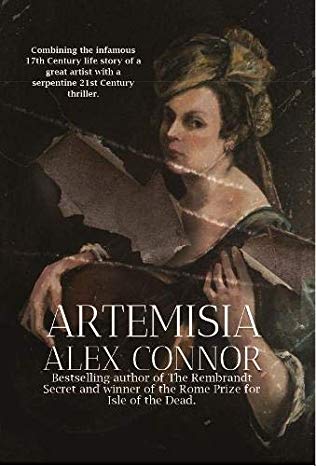
Artemisia, by Alex Connor. Publisher: Fantastic Fiction, 2019.
Three 17th-century notebooks are left to Cornelia Stein in London. They tell the story of the most infamous female artist who ever lived. The notebooks interest not only museums but spark a feeding frenzy in the art world. Collectors are desperate to obtain the priceless artefact—whatever the cost. And so the lives of two women—one from 17th century, one from the 21st century—mesh. Artemisia talks of sex, triumph and death, as she fights with her patrons and protects her family. At the same time Cornelia Stein finds herself in unexpected danger as she defies the male bastions of the art world to ensure Artemisia’s legacy.
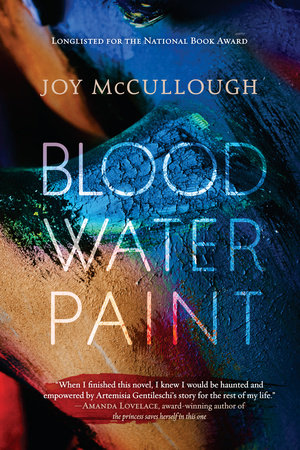
Blood Water Paint, by Joy McCullough. Publisher: Dutton Books for Young Readers, 2018 (paperback, Penguin Random House, 2019).
Joy McCullough’s bold novel in verse is a portrait of an artist as a young woman, filled with the soaring highs of creative inspiration and the devastating setbacks of a system built to break her. McCullough weaves Artemisia’s heartbreaking story with the stories of the ancient heroines, Susanna and Judith, who become not only the subjects of two of Artemisia’s most famous paintings but sources of strength as she battles to paint a woman’s timeless truth in the face of unspeakable and all-too-familiar violence.
Judith Leyster (1609–1660)
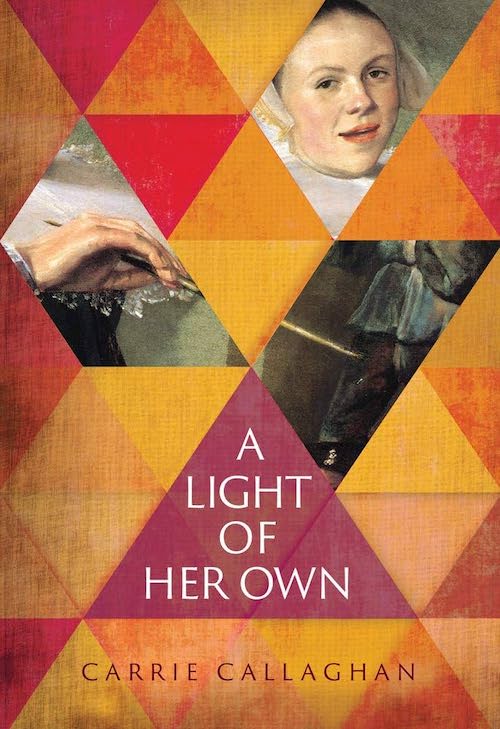
A Light of Her Own, by Carrie Callaghan. Publisher: Amberjack Publishing (now Chicago Review Press), 2018.
In Holland 1633, a woman’s ambition has no place. Judith is a painter, dodging the law and whispers of murder to try to become the first woman admitted to the Haarlem painters guild. Maria is a Catholic in a country where the faith is banned, hoping to absolve her sins by recovering a lost saint’s relic. Both women’s destinies will be shaped by their ambitions, running counter to the city’s most powerful men, whose own plans spell disaster. A vivid portrait of a remarkable artist, A Light of Her Own is a richly-woven story of grit against the backdrop of Rembrandt and an uncompromising religion.
Elisabetta Sirani (1638–1665)
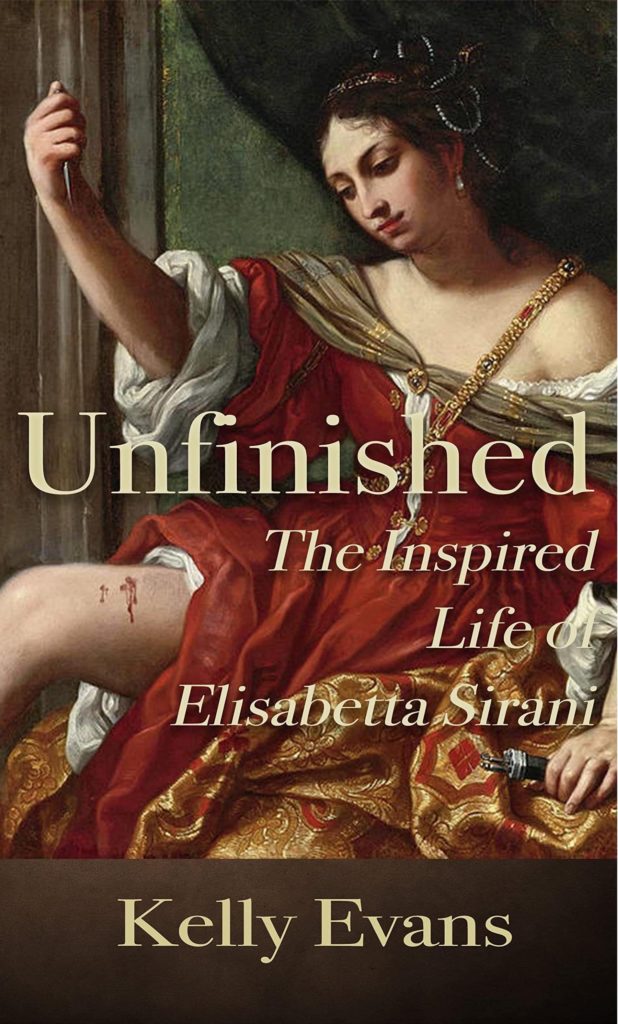
Unfinished: The Inspired Life of Elisabetta Sirani, by Kelly Evans. Publisher: Eska Publisher, 2022.
They called her La Maestra. Elisabetta Sirani was a talented and prolific artist in 17th-century Italy. Trained by her father, she was running his studio by the time she was 16. She earned her first official commission the following year. Over her short career she produced more than 200 artworks. She had patrons that included royalty and noble Italian families. And she founded one of the first art schools in Europe exclusively for women. When she died at age 27 of a mysterious ailment, all of Bologna mourned.
Maria van Oosterwijck (1630–1693)
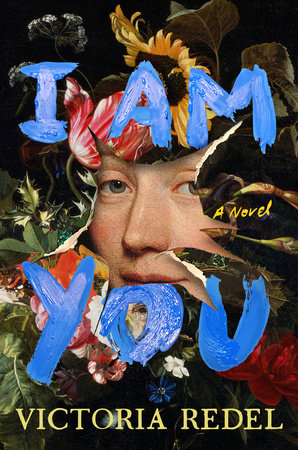
I Am You, by Victoria Redel. Publisher: SJP Lit, 2025.
At eight years old, Gerta Pieters is forced to disguise herself as a boy and sent to work for a genteel Dutch family. Their brilliant and beautiful daughter Maria sees through Gerta’s ruse. She insists that Gerta accompany her to Amsterdam and help her enter the elite, male-dominated art world. Maria rises in the ranks of society as a painting prodigy. Gerta makes herself invaluable in every way: confidante, muse, lover. But as Gerta steps into her own talents, their relationship fractures into a complex web of obsession and rivalry—and the secrets they keep threaten to unravel everything. A mesmerizing historical novel, I Am You is a meditation on gender and an ode to artistic creation. It is also an unforgettable love story that reimagines the life of renowned still life painter Maria van Oosterwijck during the Dutch Golden Age.
Angelica Kauffman (1741–1807)
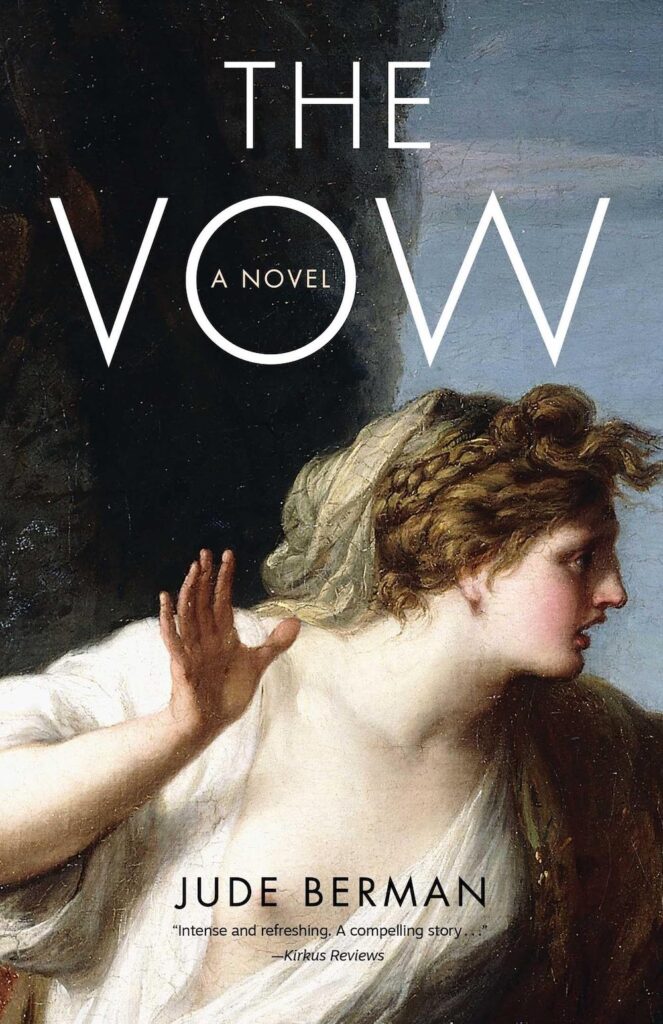
The Vow, by Jude German. Publisher: She Writes Press, 2024.
Accused of dressing as a boy to study in the prestigious galleries of 18th-century Italy, child prodigy Angelica Kauffman has set high goals for herself. She is determined to become a history painter, a career off-limits to women. To ensure her success, she has vowed never to marry. Time and time again, Angelica faces the insurmountable obstacles and great personal sacrifices that come with being an independent woman. The vows she makes, big and small, are repeatedly challenged. Will she break free from the many oppressive social dictates of her time and learn to “paint with her soul”? Or is a vow of a different sort necessary if she is to answer the deepest call of her heart?
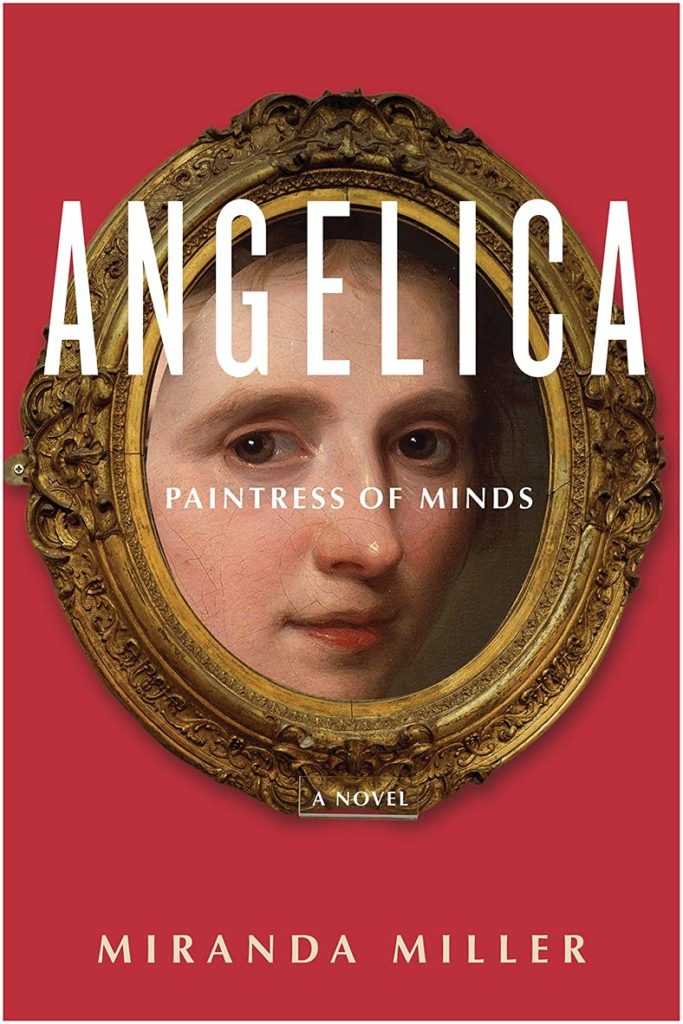
Angelica, Paintress of Minds, by Miranda Miller. Publisher: Barbican Press, 2020.
The sparky, true life novel tells the life story of a woman who battled misogyny to become one of the greatest artists of the 18th century. Angelica Kauffman is so successful that when she comes to England as a young woman in 1766 a word is coined: Angelicamad. After 15 triumphant years in London she is terrified by the Gordon Riots and returns to Italy. In her studio, Angelica stares at her self portraits and relives her journey from a poor background to international fame. She draws us into her fascinating past through the portraits she has painted of her friends, including Antonio Canova, Germaine de Stael, Emma Hamilton and Goethe.
Adélaïde Labille-Guiard (1749–1803)

The Portraitist, by Susanne Dunlap. Publisher: She Writes Press, 2022.
Based on a true story, this is the tale of Adélaïde Labille-Guiard’s fight to take her rightful place in the competitive art world of 18th-century Paris. When at last Adélaïde receives a massive commission from a member of the royal family, the timing couldn’t be worse. It is 1789, and her world is turned upside down by political chaos and revolution. With danger around every corner in her beloved Paris, she must find a way to adjust to the new order, carving out a life and a career all over again.
Berthe Morisot (1841–1895)
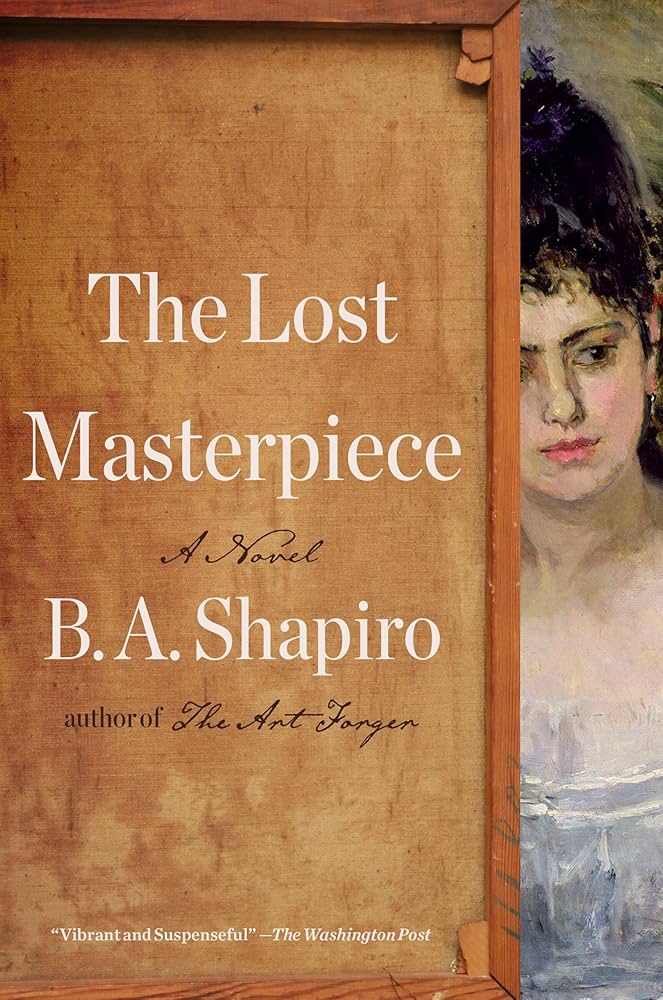
The Lost Masterpiece, by B. A. Shapiro. Publisher: Hachette, 2025.
This gripping novel full of plot twists embeds readers in a circle of famous painters in late 19th-century Paris. It centers on the Impressionist artist Berthe Morisot—and alsothe story of Morisot’s great-great-great-great granddaughter, Tamara Rubin. The Lost Masterpiece is a story of love, adultery, betrayal, family secrets, and the grueling birth of Impressionism. It takes the reader on a whirlwind adventure from the streets of Paris in the late 1800s and the studio Berthe Morisot shared with Manet, Degas, and Renoir to the present day. Shapiro brings Morisot’s world to life, tracing her work through generations of descendants and introducing us to a painter as brilliant and original as her male counterparts across 150 years of triumphs, struggles, passions, animosities, and malevolence.
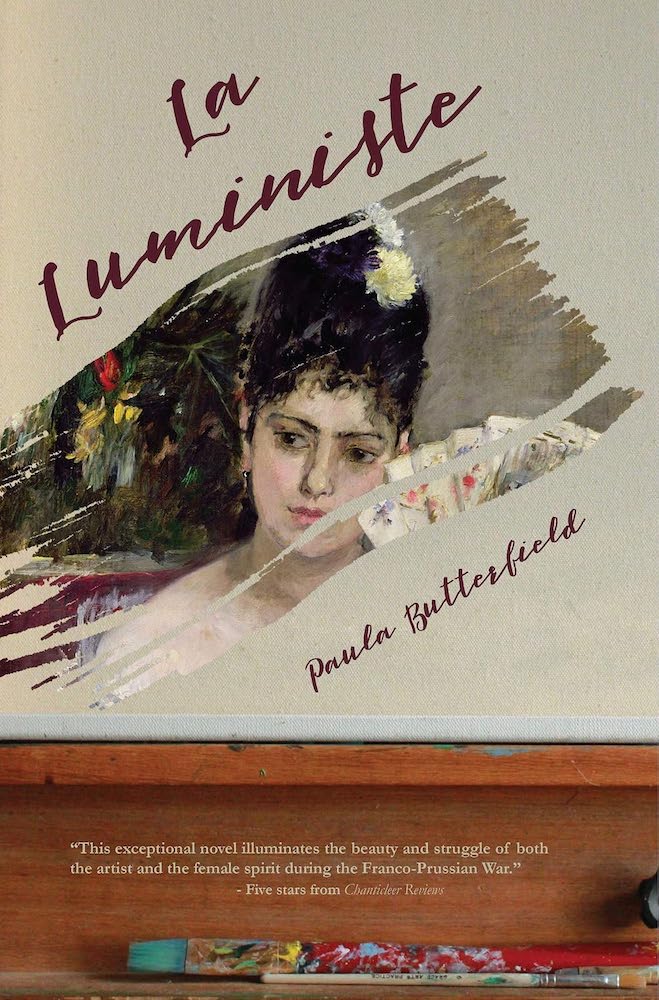
La Luministe, by Paula Butterfield. Publisher: Regal House Publishing, 2019.
Above all, Berthe Morisot yearns to be a professional artist. Chafing under the tutelage of traditional masters, Berthe is mesmerized by Paris’ most revolutionary artist, the debonair Édouard Manet, whose radical paintings reflect a brash modern style. Berthe consents to model for Édouard and in the process falls deeply in love, an affair that both must keep hidden from the world, for Édouard is married to another. As the city of Paris is convulsed by the Franco-Prussian war, and dark family secrets are revealed, the lovers are driven apart. Berthe, after enduring the horrors of a city under siege and suffering from recurring depression, marries Édouard’s brother, the mercurial Eugène Manet. Quiet married life is not for Berthe, however, and she—along with her infamous contemporaries, which include Degas, Cézanne, and Monet—develop the radical painting style that challenges the stifling traditionalism of the Salon: Impressionism.
Edmonia Lewis (1844–1907)
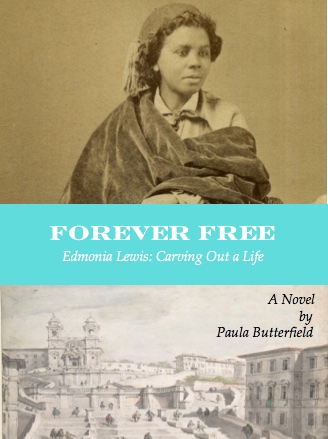
Forever Free: Edmonia Lewis, Carving Out a Life, by Paula Butterfield. Publisher: Channillo, 2024.
This true story of a Civil War-era, mixed-race woman carving out her identity is as relevant today as it was when she first created a figure from a block of marble. Born in a wigwam, Edmonia finds her way to Oberlin College. She is on track to become the first woman of African descent in the U.S. to earn a bachelor’s degree. Her goal is derailed when she endures a murder charge and a beating at the hands of racist vigilantes. An outsider in every way, Edmonia ultimately overcomes the obstacles of her race and sex to become an internationally renowned sculptor who creates her true companions—the first images of Native American and African-American subjects. Although Edmonia Lewis was unique, many of the challenges she faced are universal.
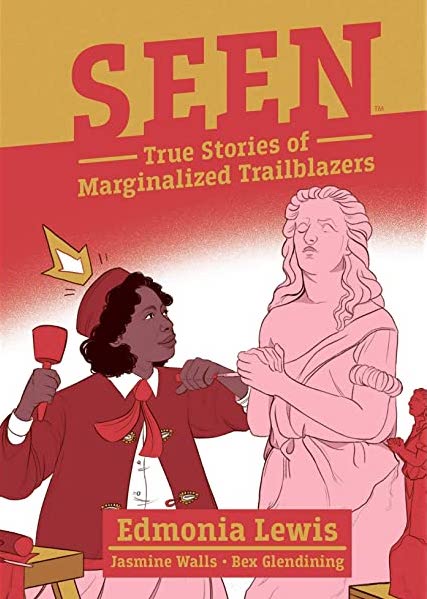
Seen: Edmonia Lewis, by Jasmine Walls, illustrated by Bex Glendining. Publisher: BOOM! Box, 2020; distributed by Simon & Schuster.
“Sometimes the times were dark and the outlook was lonesome, but where there is a will, there is a way. I pitched in and dug at my work until now I am where I am.” Meet Edmonia Lewis, the woman who changed America during the Civil War by becoming the first sculptor of African-American and Native American heritage to earn international acclaim. Jasmine Walls and Bex Glendining present the true story of courage, determination and perseverance through one of America’s most violent eras to create true beauty that still reverberates today.
Gwen John (1876–1939)
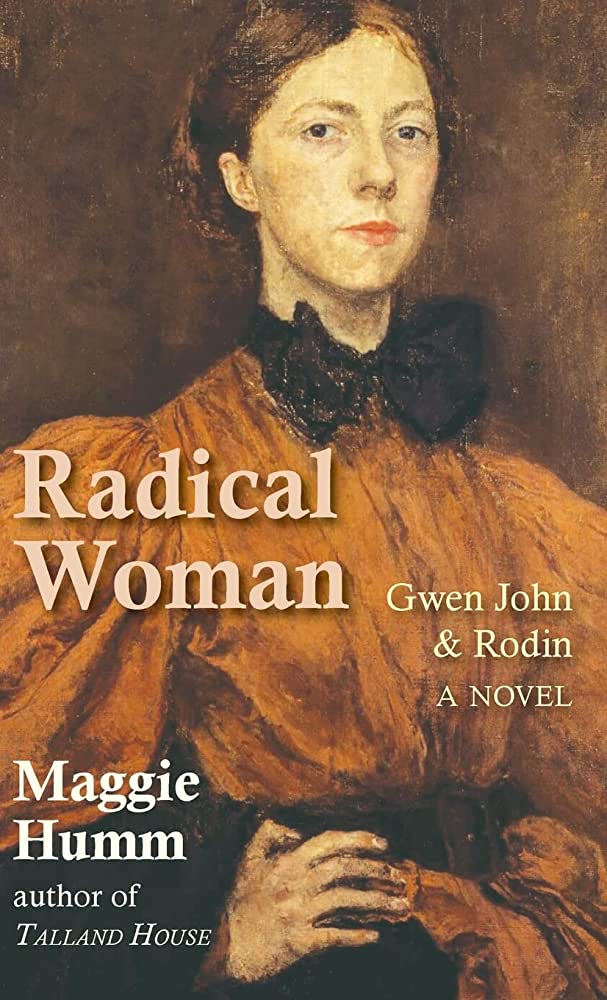
Radical Woman: Gwen John and Rodin, by Maggie Humm. Publisher: Edward Everett Root, 2023.
This work of historical romance literary fiction is told in the first-person present tense. It explores Gwen’s journey from a naïve young woman to a self-confident and celebrated artist. Both Rodin and Gwen John were radical artists who challenged the conventions of art and respectability in the early years of the 20th century. Here Gwen steps out from the shadows cast first by her brother Augustus John the painter, and then by Rodin, to play her part in the furthering the cause of female artists to be treated as equals by their male counterparts. The novel is largely set in London and Paris between 1897 and 1917. It focuses on pivotal moments which transform the artist’s life.
Claude Cahun (1894–1954)
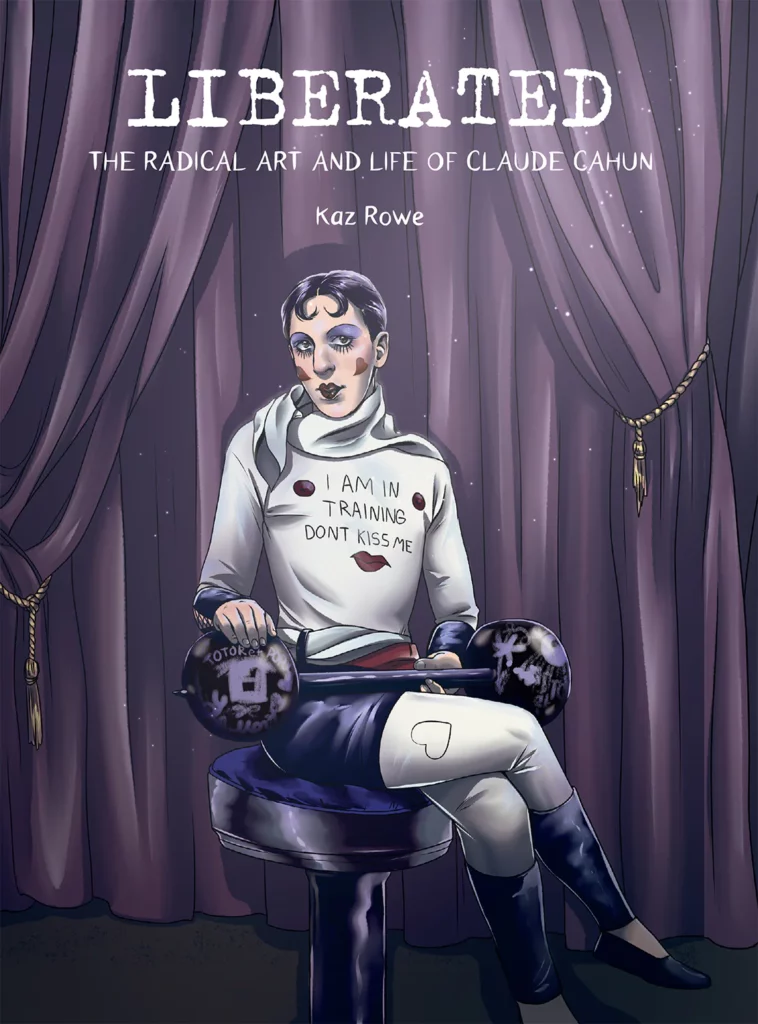
Liberated: The Radical Art and Life of Claude Cahun, by Kaz Rowe. Publisher: Getty Publications, 2023.
At the turn of the 20th century in Nantes, France, Lucy Schwob met Suzanne Malherbe, and lightning struck. The two became partners both artistically and romantically and transformed themselves into the creative personas Claude Cahun and Marcel Moore. Together, the couple embarked on a radical journey of Surrealist collaboration that would take them from conservative provincial France to the vibrancy of 1920s Paris to the oppression of Nazi-occupied Jersey during World War II, where they used art to undermine the Nazi regime. Featuring 10 photographs by Cahun and Moore, this graphic biography by cartoonist Kaz Rowe brings Cahun’s inspiring story to life.
Dorothea Lange (1895–1965)
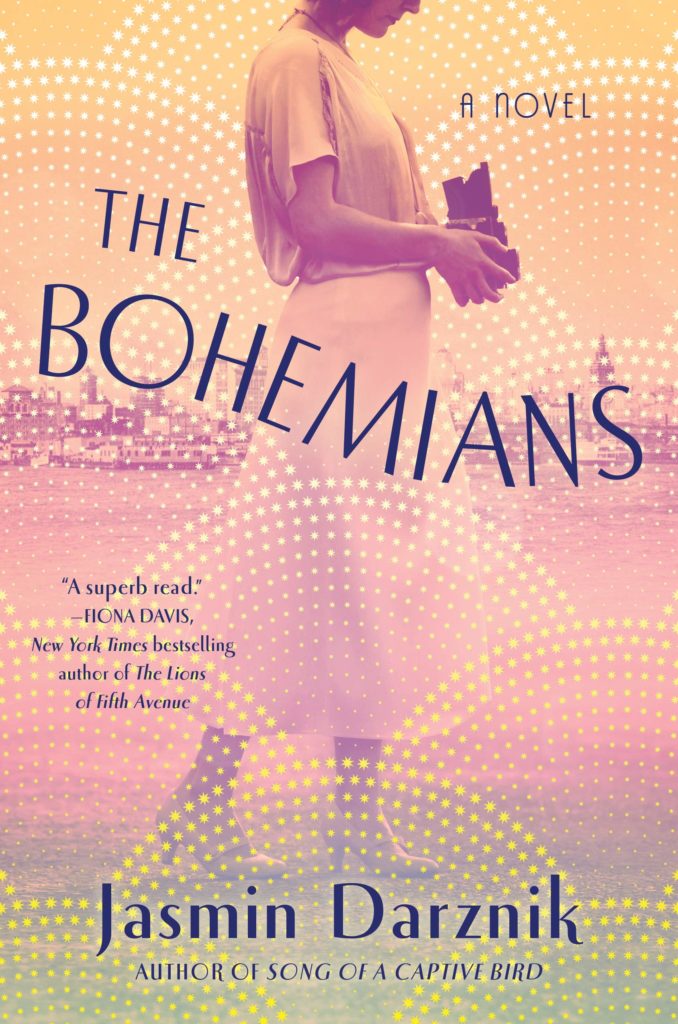
The Bohemians, by Jasmin Darznik. Publisher: Penguin Random House, 2021.
American photographer Dorothea Lange is the protagonist of The Bohemians, which captures a glittering and gritty 1920s San Francisco. The novel includes a cast of unforgettable characters, including cameos from such legendary figures as Mabel Dodge Luhan, Frida Kahlo, Ansel Adams, and D. H. Lawrence. The novel follows Dorothea’s story, as her sense of purpose is awakened and she grows into the figure we know from history—the artist whose iconic Depression-era photographs like “Migrant Mother” broke the hearts and opened the eyes of a nation.
Jeanne Hébuterne (1898–1920)
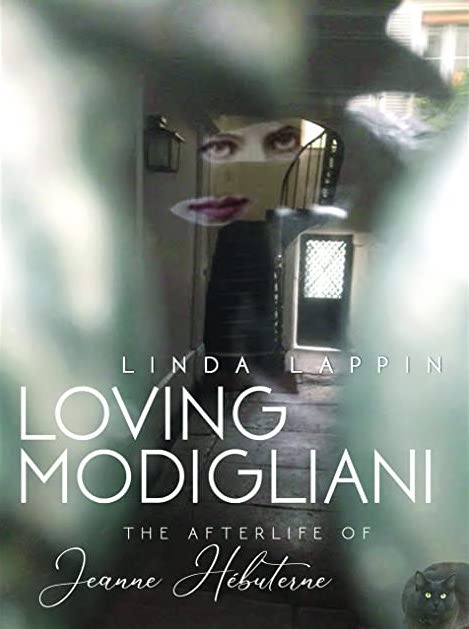
Loving Modigliani: The Afterlife of Jeanne Hébuterne, by Linda Lappin. Publisher: Serving House Books, 2020.
In this novel Jeanne Hébuterne, the young wife and muse of Amedeo Modigliani, dies 48 hours after her husband dies of meningitis. She falls backwards through a window. Now a ghost, Jeanne drifts about the studio she shared with Modigliani—for she was not only his favorite model, but also an artist whose works were later shut away from public view after her demise. Enraged, she watches as her belongings are removed from the studio and her identity as an artist seemingly effaced for posterity, carried off in a suitcase. Thus begins Loving Modigliani, which retells the story of Jeanne Hébuterne’s fate as a woman and an artist through three timelines and three precious objects stolen from the studio: a diary, a bangle, and Jeanne’s self-portrait with her family. A century later, Jeanne Hébuterne’s artwork will be rescued from oblivion.
Dora Maar (1907–1997)
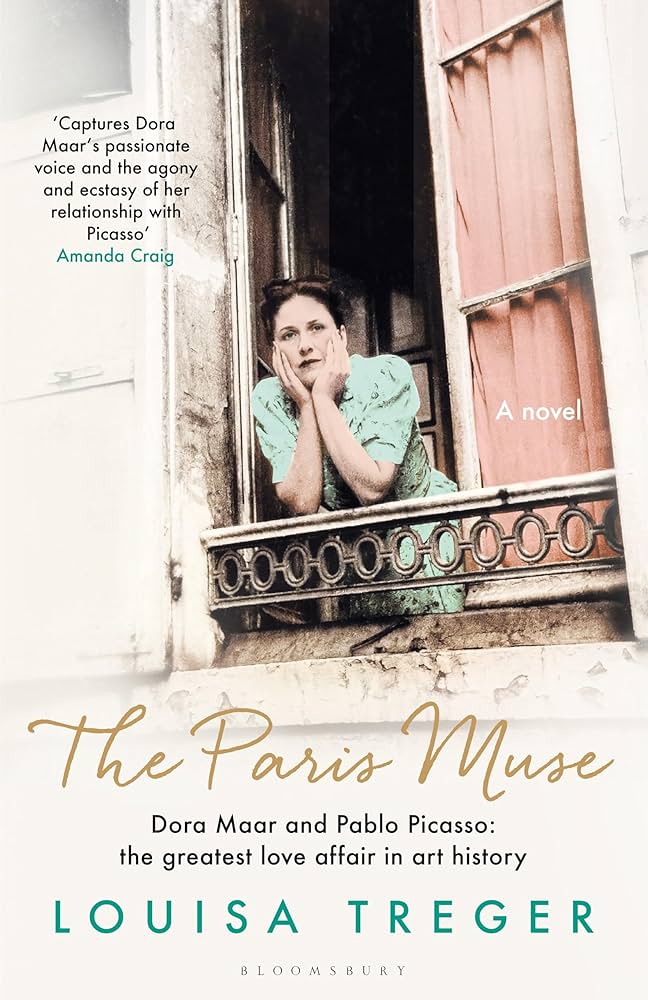
The Paris Muse, by Louisa Treger. Publisher: Bloomsbury, 2024.
Dora Maar is a talented French photographer, painter and poet. When she is introduced to Pablo Picasso, she is mesmerized by his dark and intense stare. Drawn to his volcanic creativity, it isn’t long before she embarks on a passionate relationship with the Spanish artist. Ultimately the liaison pushes her to the edge. Set in Paris and the French Riviera, where Dora and Pablo spent holidays, The Paris Muse is the fictionalized retelling of this disturbing love story. Atmospheric, intense and moving, The Paris Muse is an astonishing read that ensures that this talented, often overlooked woman who gave her life to Picasso is no longer a footnote.
Gerda Taro (1910–1937)
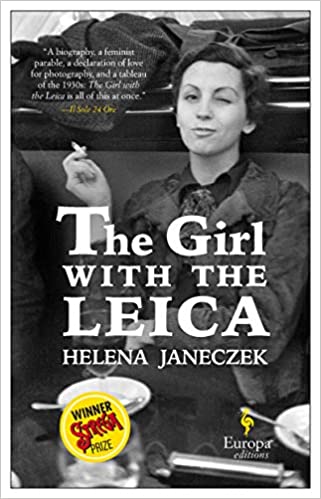
The Girl with the Leica, by Helen Janeczek, translated by Ann Goldstein. English language publisher: Europa Editions, 2019.
This novel is based on the true story of Gerda Taro, a German-Jewish war photographer, anti-fascist activist, artist and innovator. Together with her partner, the Hungarian Endre Friedmann, she was one half of the alias Robert Capa, widely considered to be the 20th century’s greatest war and political photographer. She was killed while documenting the Spanish Civil War. Tragically, she became the first female photojournalist to be killed on a battlefield. In the original Italian version, The Girl with the Leica won the Strega Prize, Italy’s most prestigious literary award and the Bagutta Prize. It was also a finalist for the Campiello Prize.
Leonora Carrington (1917–2011)
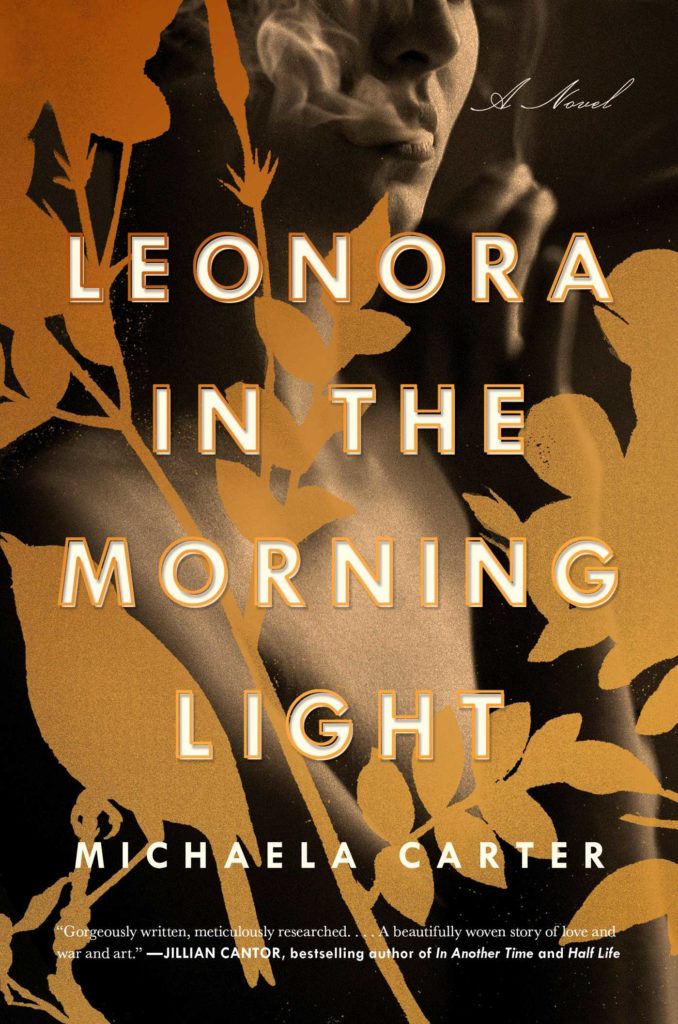
Leonora in the Morning Light, by Michaela Carter. Publisher: Simon & Schuster, 2021.
Leonora in the Morning Light is a page-turning novel about Surrealist artist Leonora Carrington and the art, drama, and romance that defined her coming-of-age during World War II. Based on true events and historical figures, it is an unforgettable story of love, art, and destiny. The novel restores a 20th-century heroine to her rightful place in our collective imagination.
Yayoi Kusama (b. 1929)
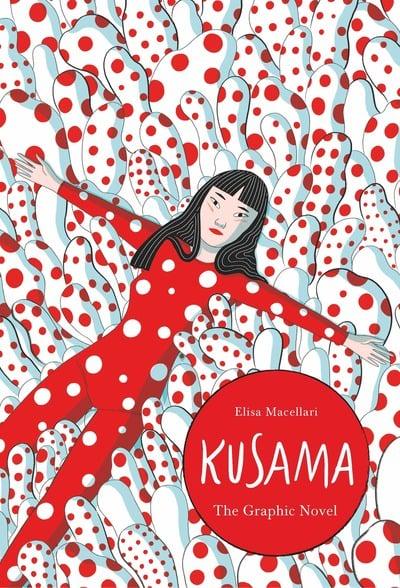
Kusama: The Graphic Novel, by Elisa Macellari. Publisher: Laurence King, 2020.
From rural Japan to international icon, Yayoi Kusama has spent her remarkable life immersed in her art. Follow her incredible journey in this vivid graphic biography. It details her bold departure from Japan as a young artist, her embrace of the buzzing New York art scene in the 1960s, and her eventual return home and rise to 21st century super-fame.
Similar Art Herstory posts
New and Recent Books for Young Readers About Frida Kahlo
New Books About Women Artists | Jan–March 2026
Books for Young Readers About Women Artists, 2018–2024
New Books About Women Artists | Oct–Dec 2025
Recent Books for Young Readers About Women Artists, 2025–Present
New Books About Women Artists | July–Sept 2025
New Books About Women Artists | Apr–June 2025
Ten Intriguing Books About Remarkable Women Artists, a guest post by Carol M. Cram