The Rediscovery of Artworks by an Eighteenth-Century British Portrait Painter
Guest post by Adam Busiakiewicz, art historian, lecturer and lutenist
Introduction—Art at the Auction House
To study art history is to be reminded daily of one’s own ignorance. This is especially the case for an auction house specialist, where any painting between 1300 and 1850 can be thrown at you. Not to mention, the pictures might be from practically any national school in Europe. Attribution, age, sitter, medium, condition, value—these are all questions one is constantly grappling with. It is like being submerged in “the river of art” as I sometimes call it).
Wading through the valuations of old houses and collections makes one aware of just how many paintings there are in the world. It can also be hard at times to reconcile feelings of envy for senior colleagues who had visited such and such collection in the 1980s or 1990s—before the digital era. “This was an age when discoveries could be made,” they would tell the younger cohort, “not like now.”
As envious as I was, the burgeoning interest in female painters has given a new generation the opportunity to make their mark. Women artists, often highly celebrated in their day yet forgotten shortly after (for reasons ad infinitum), are rightly experiencing a resurgence in the world of Old Masters as well as the wider art world. Shedding light on these previously neglected bodies of work, and reattributing them to their rightful hands, is the best part of the job. I will leave it to others to contextualize or politicize their contemporary receptions and subsequent histories. However, one of the joys of being a specialist who focuses on artworks as objects is to go out and seek for them. Searching begins by close looking, from the known to the unknown.
The Artist—Catherine Read
One neglected historic female artist who captured my imagination last summer was the eighteenth-century, Scottish-born artist Catherine Read (1720–1778) (often written Katherine). She was born into a family of Jacobite sympathizers; hardly anything firm is known about her training as a painter. She spent time in both Paris and Rome, where met several leading artists, including the likes of Rosalba Carriera in Venice. Read eventually set up a studio in London shortly after her return to Britain in 1753. Her fame was recognized by contemporary figures, who remarked on the popularity of her portraits amongst the city’s “fine ladies.”
In 1777 she journeyed to India; she died in 1778 on the journey home from Negatapam. Scholars have conducted research on her portraiture in pastel. Neil Jeffares, the sage of pastellists, has filled no fewer than twenty pages discussing her life and work. (Click here to read the free biography, article and list published by Jeffares online.) Her surviving works in oil, however, are rare and remain little understood.
The first picture found
My first encounter with her work in oil occurred while I was cataloguing the following portrait at Sotheby’s (Figure 1). The painting fell through so many of the gaps of my visual knowledge (a daily occurrence). But some detective work into the consignor’s familial history, aided by some old chalk inscriptions on the back, led me to the complicated Wedderburn dynasty.
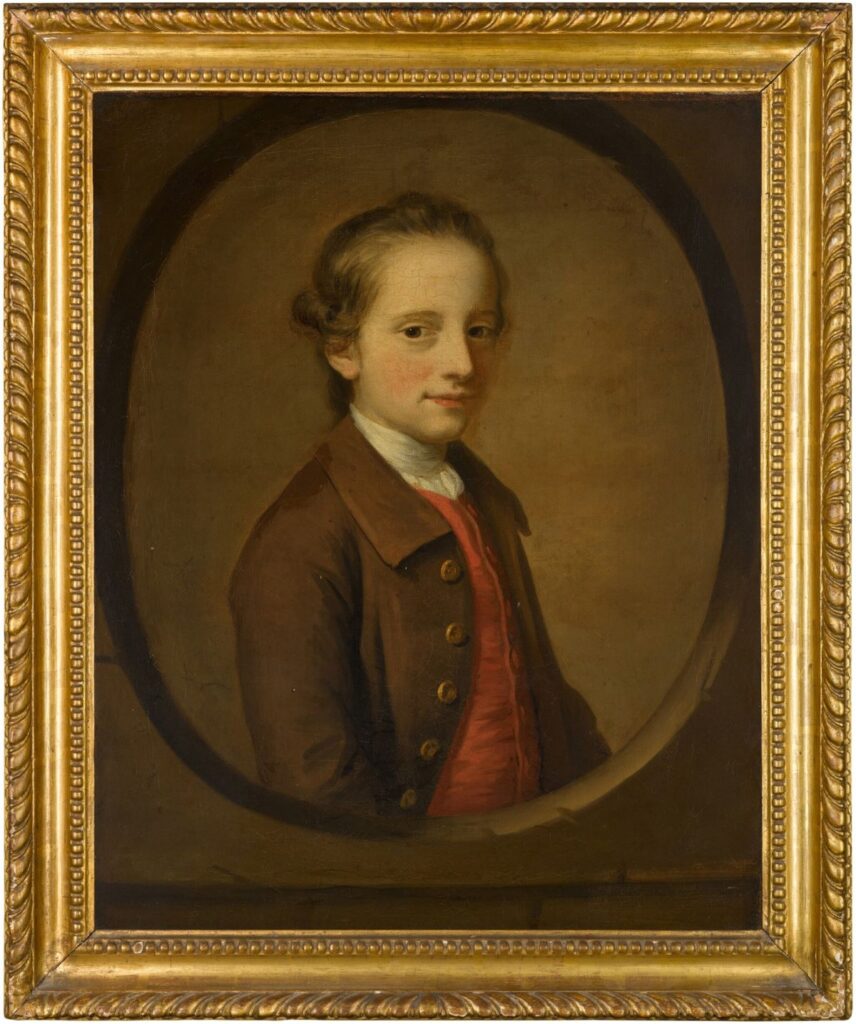
The painting’s French air, mixed in with its most realistically minded British manner, left me searching for names of artists to whom I could plausably attribute the obvious quality of the handsome boy in red. The painted oval too, which is less common during this period in British portraiture, struck me as unusual. Yet this compositional feature (as Jeffares has suggested) may betray Read’s French training (she even referred to artist Maurice-Quentin de la Tour as her “old master”). In this case at Sotheby’s, the pages of a nineteenth-century book about the Wedderburn family led me to Read—who was widely patronized by their ancestors.
Once you have successfully catalogued a painting by an obscure artist, it is likely that the trauma of that hard won discovery will help you the next time you encounter their work. Visual connections, facial features, approaches to brush work, test and probe the memory constantly. Remembering paintings is essential.
A second discovery
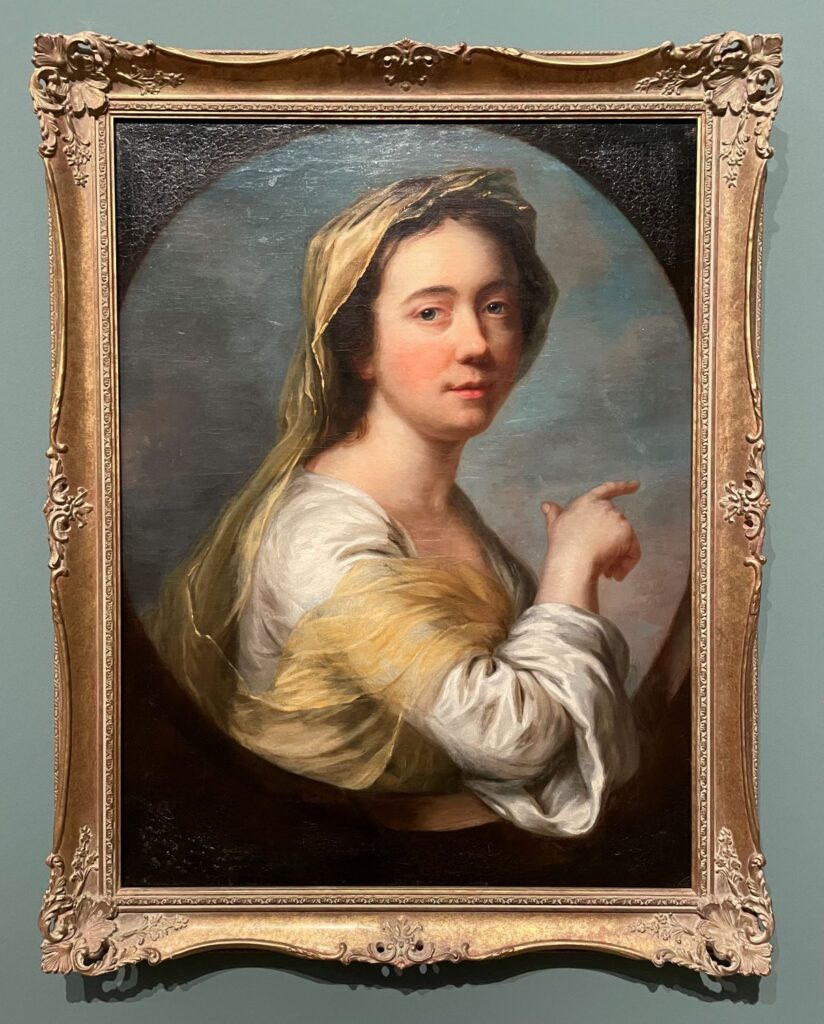
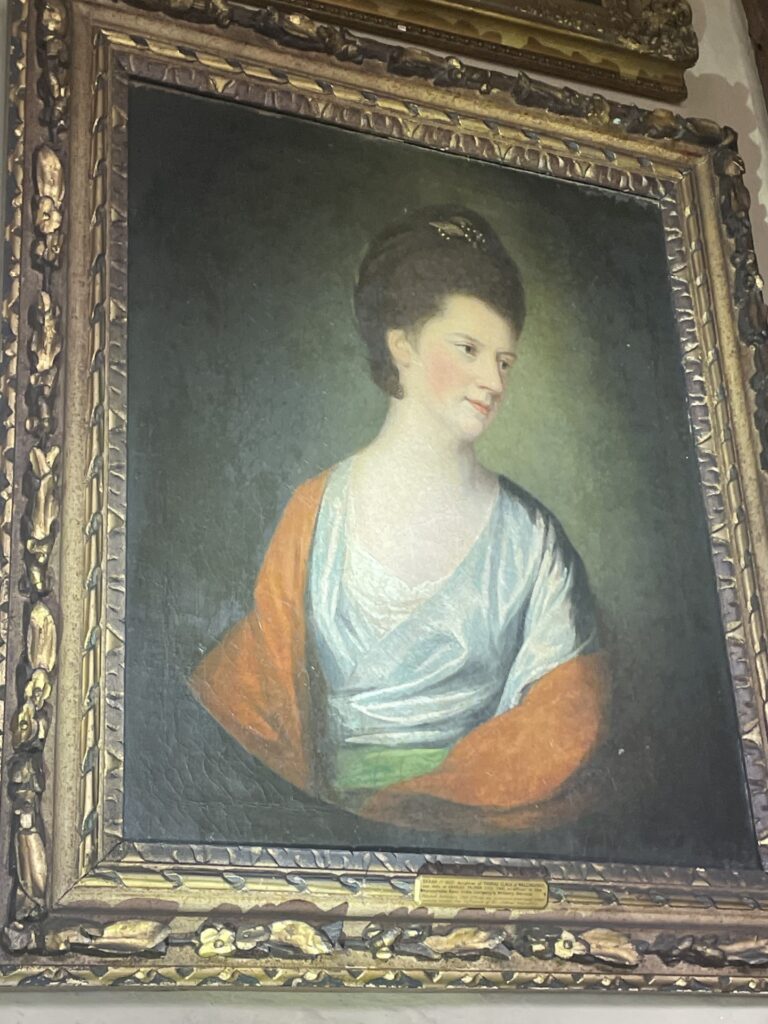
The next time I spotted a Catherine Read oil painting was during a weekend trip to a country house, hanging on the wall of a sixteenth-century great hall (Figure 2). A Berkshire family still owns the ancient house, which often features as the backdrop for period dramas and films. I was instantly reminded of Read’s hand, aided by the rediscovery of a marvelous set of four portraits by the artist that recently resurfaced at Bonhams. The set is now with the Weiss Gallery in London. After an excited email exchange, the owners invited me to return to the house and journey up a stepladder to look at the painting more closely (and subsequently publish a photo of it on this blog for the first time). With restoraration and the removal of the age- varnish, Read’s bold reds, blues and greens would dazzle once more.
Recognizing Read’s Style
As often the case with female artists, looking for the inevitable attributional mistakes and fudges of previous generations in annotated photo archives will always prove helpful. The digitization of the Witt Library, and other such photographic resources, makes the process particularly easy and pleasant. So often wrongfully assigned to her male contemporaries, Read’s paintings appear under all sorts of names that simply do not fit. Her work is not quite comparable to that of artists such as Hamilton Mortimer, Kettle or Cotes. Read’s prolific oeuvre as a pastelist offers clues about what to look for. Her penchant for the slight tilt of her sitter’s heads, the rounded facial features, often dark marble eyes, a flat manner with the odd burst of impasto, and distinctive bright coloring help us to recognize her. Once under your skin, and in your visual memory, you’ll keep spotting more.
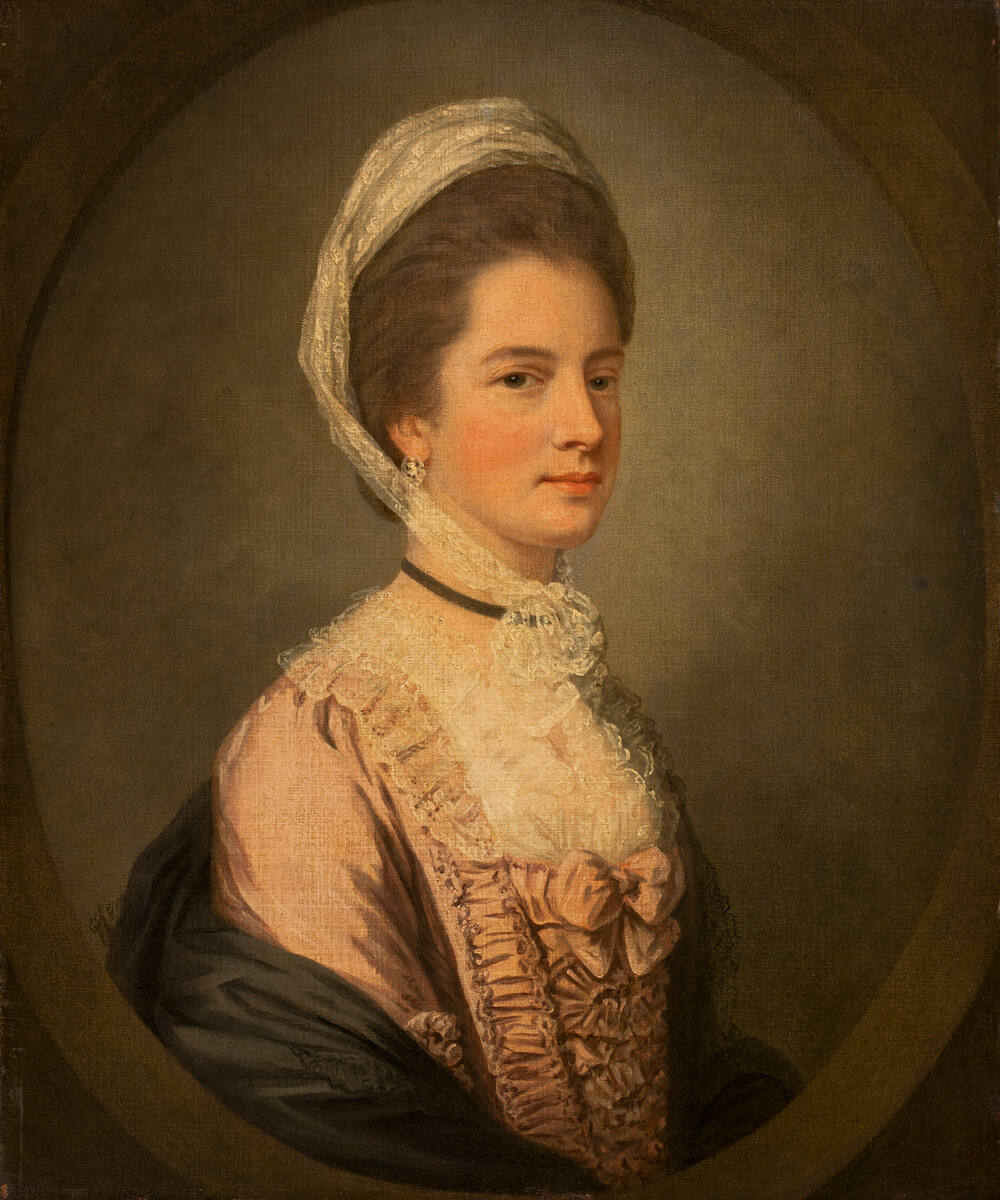
A newly recognized Read in Worcester, Massachusetts
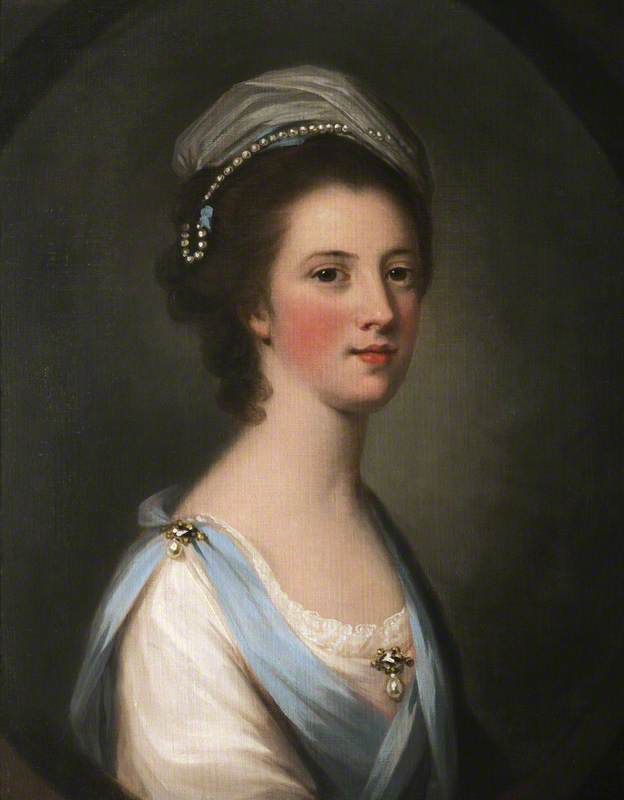
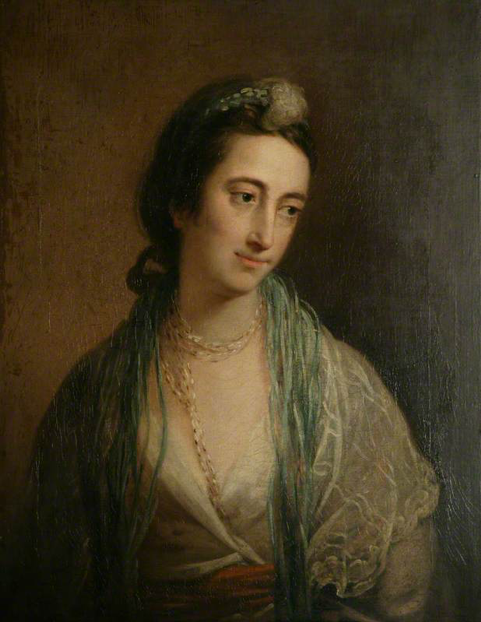
Next, I was led by an old black and white image to a painting in the Worcester Art Museum in Massachusetts. Acquired by the museum as a George Romney back in 1931, this too struck me as undoubtedly by Catherine Read (Figure 3). This type of costume, with the same fussy be-ribboned dress, is found in many portraits by her Scottish contemporary Allan Ramsay. Once studied, artworks stick in the mind, and a casual scroll through the ArtUK website (the public catalogue of the United Kingdom) under the doubtful “attributed to” section of another artist revealed another silvery painting of hers in the Rhodes Trust in Oxford (Figure 4). Even the best of portraitists repeated themselves, and Read was no exception.
Read painting at-length
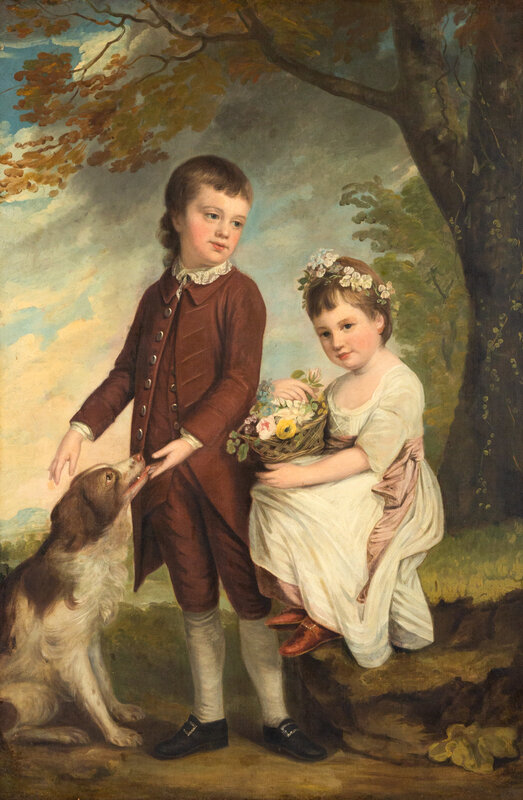
From bust-length to full-length, Read clearly relished in the opportunity to use oils to approach the most demanding of formats in terms of size. The inclusion of her large Sarah, Lady Pollington, Later Countess of Mexborough in Tate’s 2024 Now You See Us exhibition shows that she scaled up the characteristics of her smaller paintings with ease. Scrolling through Artnet yielded up another misattributed painting of the Jacobite Charles and Charlotte Boyd (Figure 5). Sold in an obscure American auction house merely one year ago, the particularly briskly painted in verdure and background is full of bravura. The doll-like face pattern here is unmistakably Read, encountered endlessly in her pastels.
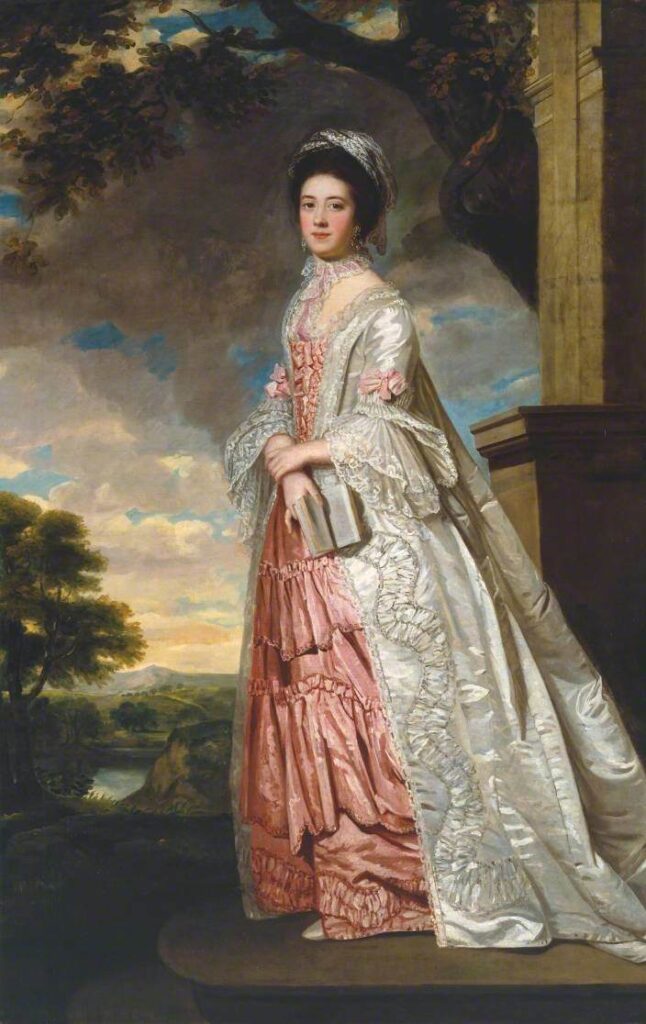
Biographies and dates of sitters will help attributional arguments too, as is the case with Mrs. Cadoux at Tate (Figure 6). Originally gifted to the National Gallery in London in 1923 as the work of Sir Joshua Reynolds (later transferred), the more recent attribution of Francis Cotes can be easily discounted as the sitter, portrayed here as a young woman, was only about eleven years old when that artist died (first pointed out by Jeffares). Again, Read’s flat round face pattern and silvery tones are found here in abundance. Perhaps the Tate had a Read hiding in their collections all along?
Final thoughts
Mysteries will remain. Some paintings will continue to elude. It is impossible to grasp everything. Visiting paintings in-person, and climbing ladders to peer closer, will perhaps be the only way to make sense of some. I’m looking forward to my next trip to Manchester, to have a closer look at Mrs. Hutchinson of Bristol in the city’s art gallery there (Figure 7). The head tilt, eyes, and facial features are too reminiscent of Catherine Read to ignore. The complex costume however, laden with broken brush strokes executed with a great deal of virtuosity, would make this work exceptional within Read’s oeuvre.
Dr Adam Busiakiewicz is a freelance art historian, lecturer and lutenist. He has worked in the Old Master Paintings Department at Sotheby’s and is now a Consultant for Old Master and British Art at the auction house Sworders. His doctoral research focused on the collection and patronage of the Earls and Countesses of Warwick. Adam is a Consultant Lecturer for the Sotheby’s Institute of Art and has presented lectures and talks at The National Gallery in London, The Royal Collection, The Royal Academy and the Victoria & Albert Museum. In addition to his scholarly work, he co-edits Art History News, one of the internet’s most popular art history blogs.
More Art Herstory blog posts you might enjoy
Museum Exhibitions about Historic Women Artists: 2026
Early Modern Women Artists at Auction in 2025, by Erika Gaffney
Exhibiting Women: The Art of Professionalism in London and Paris, 1760–1830, by Paris Spies-Gans
Mary Linwood’s Balancing Act, by Heidi A. Strobel
Angelica Kauffmann: Grace and Strength, by Anita V. Sganzerla
Susannah Penelope Rosse: Painting for Pleasure in Seventeenth-Century England, by Anna Pratley
Angelica Kauffman: Art, Music and Poetry, by Ellice Wu
A Room of Their Own: Now You See Us Exhibition at Tate Britain, by Kathryn Waters
Susanna Horenbout, Courtier and Artist, by Kathleen E. Kennedy
Mary Beale (1633–1699) and the Hubris of Transcription, by Helen Draper
“Black-works, white-works, colours all”: Finding Susanna Perwich in her Seventeenth-Century Embroidered Cabinet, by Isabella Rosner