Guest post by Erich Reich, Studierenden-Kunstmarkt
Paula Modersohn-Becker was born in Dresden on February 8, 1876. This year the art world celebrates her 150th birthday, and she has earned the party. In a career of barely a decade she produced more than 700 paintings and over 1,000 drawings. She painted the first nude self-portrait we know of by a woman artist. She became the first woman honored with a museum devoted solely to her work. Yet she sold only a handful of paintings while she lived. She died at 31, less than three weeks after the birth of her only child. Her story is short, intense, and unfinished. Her paintings are anything but.
A stubborn start in Dresden and Bremen
Paula Becker grew up as the third of seven children. Her father worked as a railway official. Her mother came from an aristocratic family. In 1888 the Beckers moved to Bremen. Her parents valued culture but wanted security for their daughter. Paula took her first drawing lessons in 1892, during a long stay with relatives in London. Back home, she completed a teachers’ training course to reassure her father. She passed her exams. Then she chose painting anyway.
Germany’s official art academies did not admit women in the 1890s. So in 1896 Becker joined the drawing and painting school of the Association of Berlin Women Artists. She studied there for two years. The school gave women what the state refused them: models, teachers, and craft. It gave Becker something more. By 1898 she was ready for a life in art.
Worpswede: Learning to see simply
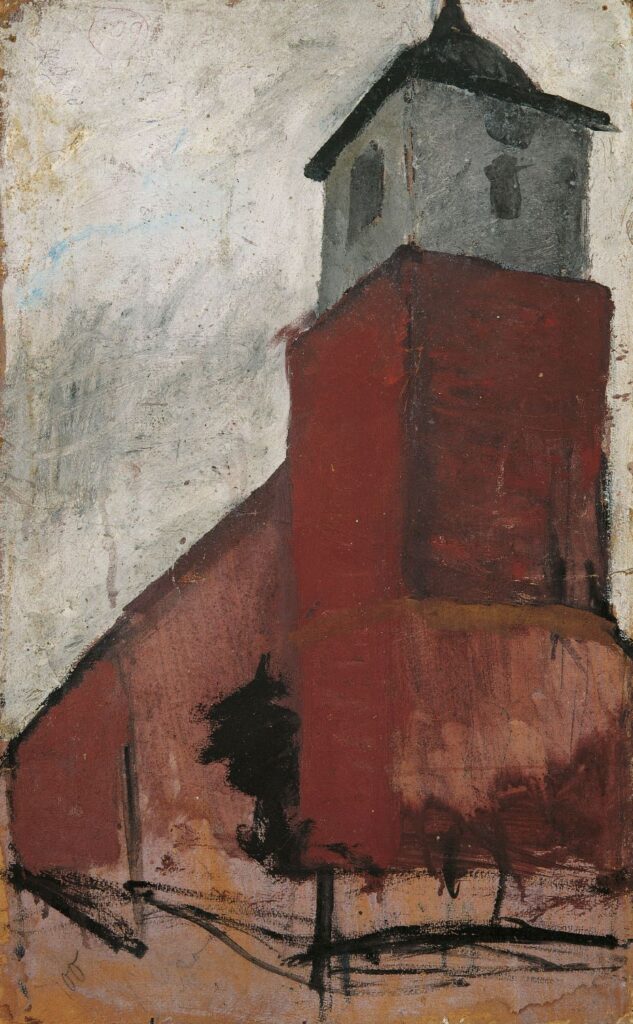
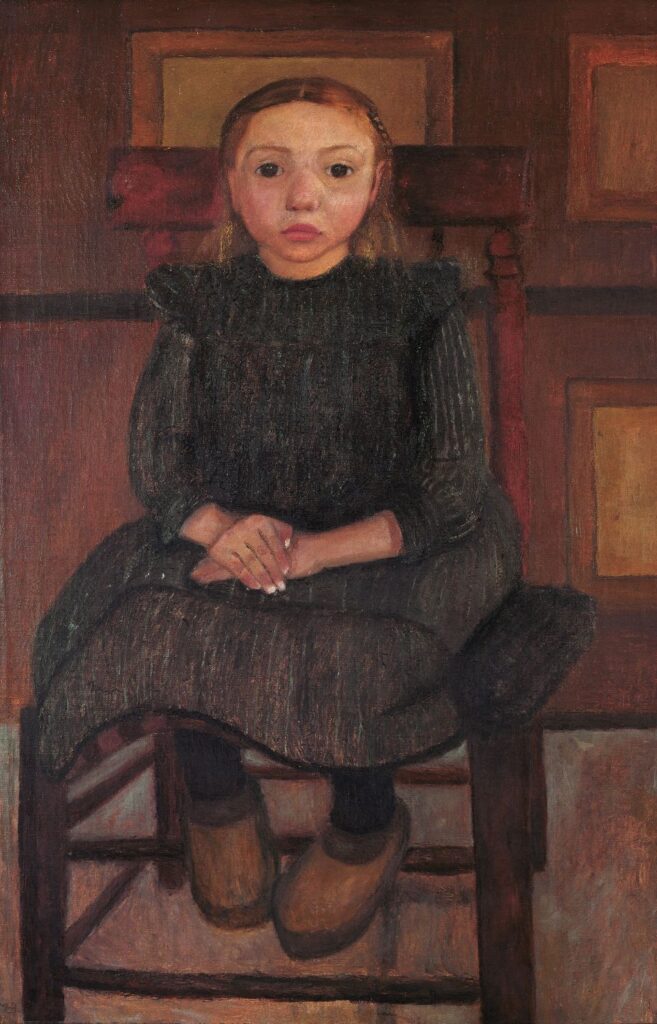
In 1898 Becker moved to Worpswede, an artists’ colony in the peat moors northeast of Bremen. Painters had settled there in 1889 to escape the academies and paint rural life. Becker studied with Fritz Mackensen. She drew the villagers again and again: children, farmers, old women from the poorhouse. The colony’s founders painted the moor with sentiment. Becker did not. She simplified and flattened what she saw. “A great simplicity of form is something marvelous,” she wrote in her journal as early as 1899.
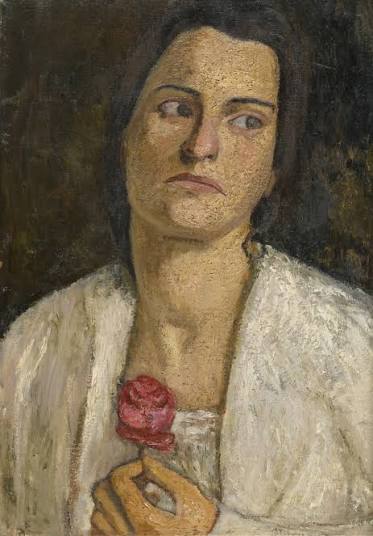
Worpswede also gave her people. She formed a close friendship with the sculptor Clara Westhoff. In 1900 the young poet Rainer Maria Rilke arrived and joined their circle. And she met Otto Modersohn, a co-founder of the colony and one of its most admired landscape painters.
Her hometown, meanwhile, taught her how far ahead she was. In December 1899 she showed early studies at the Kunsthalle Bremen. A local critic advised her, in print, to give up painting altogether. The mockery stung. She drew a hard lesson from it and exhibited almost nothing for the rest of her life. The public saw only a fraction of her work while she lived.
The pull of Paris
On the last day of 1899, Becker boarded a train to Paris. She was 23. The city was preparing the great Exposition Universelle of 1900 and overflowed with new art. She enrolled at the Académie Colarossi, one of the few schools that welcomed women, and took a course in anatomy. She spent her free hours in the Louvre. In the dealer Ambroise Vollard’s cramped shop she discovered Paul Cézanne, then still barely known in Germany. The encounter marked her for life. Clara Westhoff, who stood beside her in front of those canvases, later remembered her friend’s excitement at finding a painter who confirmed everything she was reaching for.
Paris became her habit. She returned in 1903, in 1905, and again in 1906. Each stay sharpened her eye. She studied ancient Egyptian mummy portraits in the Louvre. She absorbed Gauguin’s flat color and the quiet interiors of the Nabis. She understood earlier than almost any painter in Germany where modern art was heading. Art historians today count her among the pioneers of early Expressionism.
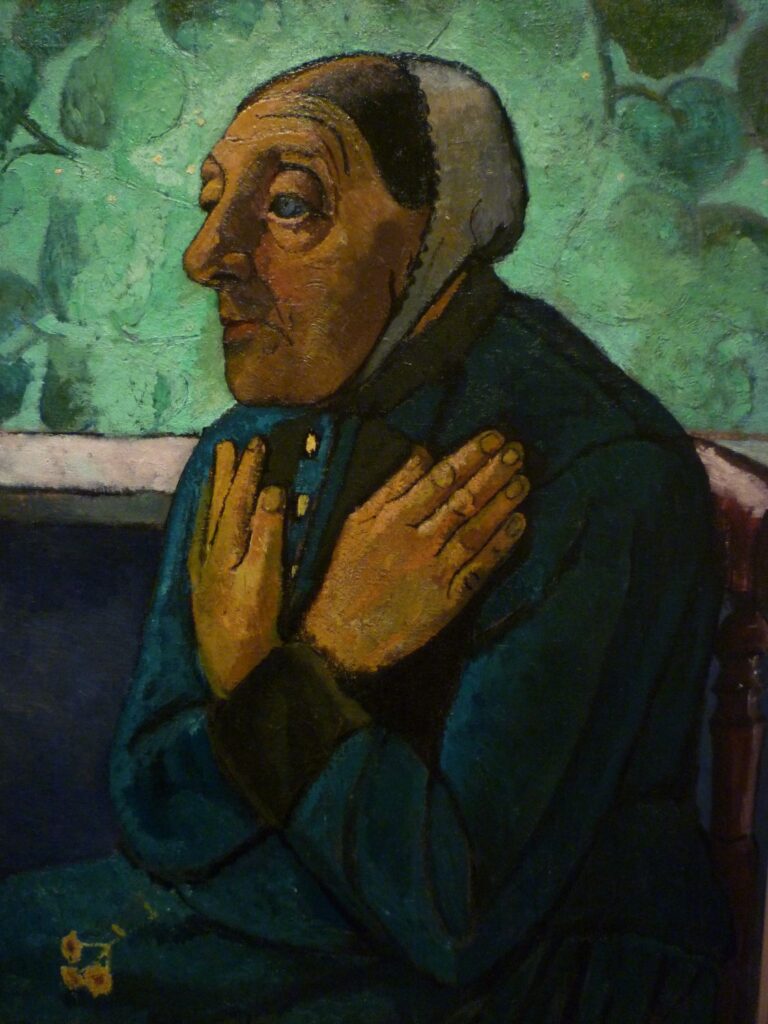
Her Old Peasant Woman, painted around 1905, shows what she brought home. The sitter crosses her hands over her chest. Her face is a landscape of furrows. There is no anecdote and no pity. There is only presence. The painting now hangs in the Detroit Institute of Arts.
Marriage and the double life
Otto Modersohn lost his first wife in June 1900. In May 1901 he and Paula married. She was 25; he was 36 and brought a small daughter, Elsbeth, into the marriage. Paula ran the household, raised the child, and painted whenever the day allowed. She kept a studio of her own at a neighboring farmhouse and defended those working hours fiercely. Her portraits of Elsbeth show her rare gift for painting children without sweetness: the girl stands in the garden as a person, not an ornament.
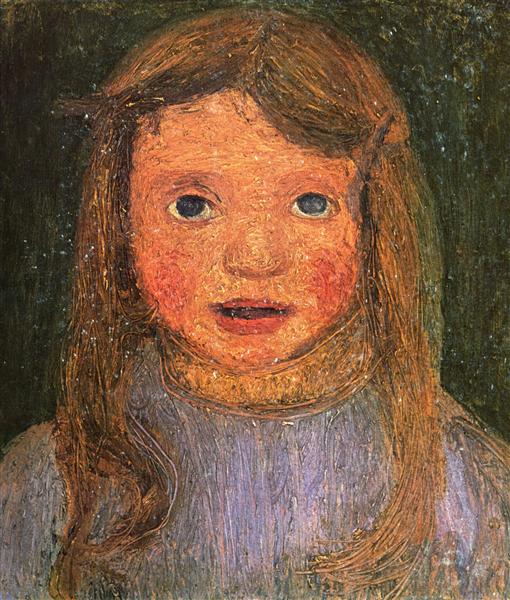
The marriage gave her stability and a fellow painter’s respect. It also confined her. Otto admired his wife’s talent but never fully understood where it was going. Her journals from these years swing between tenderness and frustration. Her ambition, though, never wavered. “The dawn has broken in me and I can feel the day approaching. I am going to become somebody,” she wrote to her mother in July 1902.
1906: The year she painted herself free
In February 1906 Becker made her boldest move. She left Worpswede, and her marriage, and went to Paris alone. She intended to live as an independent artist. Otto, bewildered but loyal, kept supporting her from afar. In Paris the sculptor Bernhard Hoetger saw her new work and told her plainly that she was on the right path. It was the first strong encouragement of her career. She worked with a speed and confidence she had never known. The paintings of that single year would secure her place in art history.
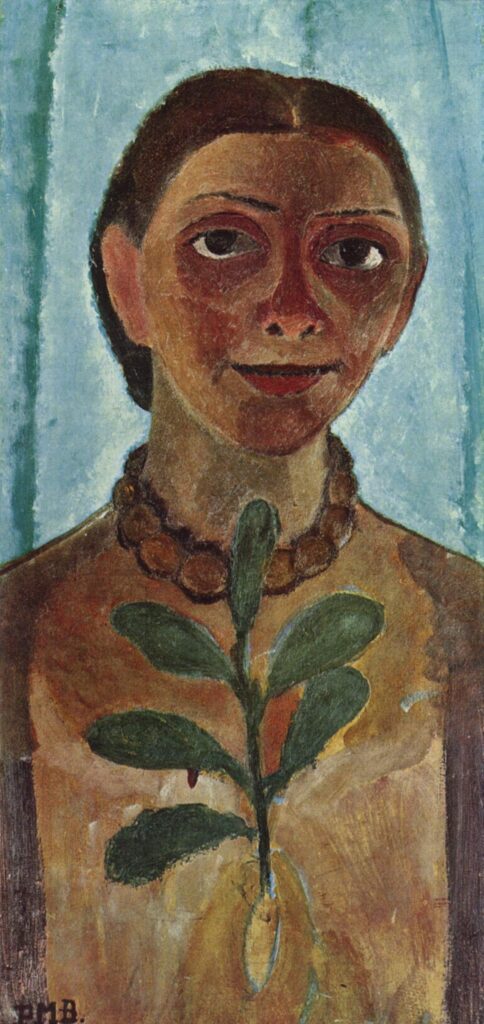
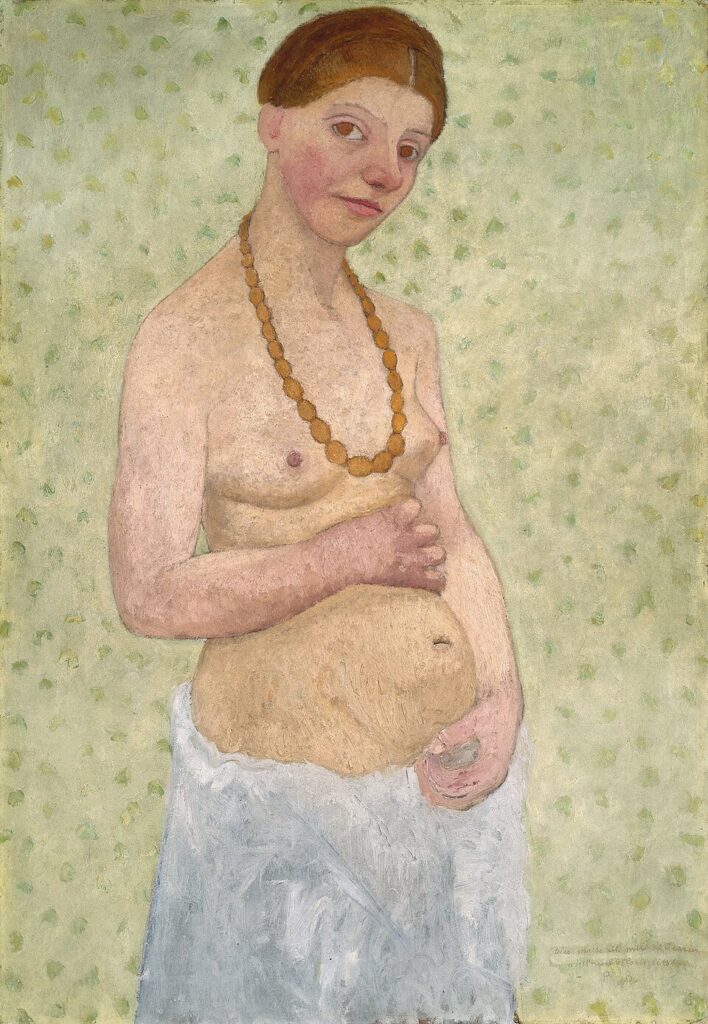
That spring she painted Self-Portrait on Her Sixth Wedding Anniversary, a landmark of modern art. Art historians consider it the first nude self-portrait by a woman painter. She shows herself half-length and undressed, wearing an amber necklace, her hands framing a rounded belly. She was not pregnant. She painted herself as if she were. The picture quietly asks what its maker must choose between: creating art or creating life. In the inscription she dated it to her sixth wedding anniversary and signed it “P.B.” — Paula Becker, her maiden initials.
Mothers, children, and still lifes
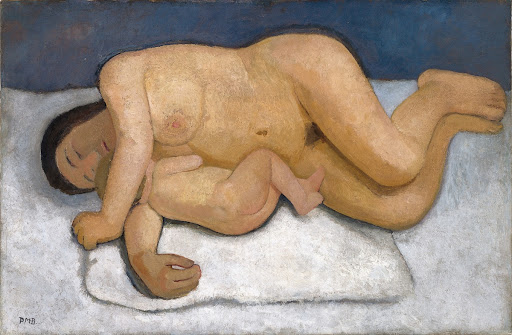
Motherhood gripped her as a subject long before it entered her life. In Reclining Mother and Child II from 1906, a naked mother lies curled around her nursing baby. The two bodies form one monumental shape. European painting had produced countless Madonnas. It had never shown a mother quite like this: heavy, earthbound, and entirely unidealized. Becker painted the body as fact, not allegory. Generations of painters after her would claim that territory. She mapped it first.
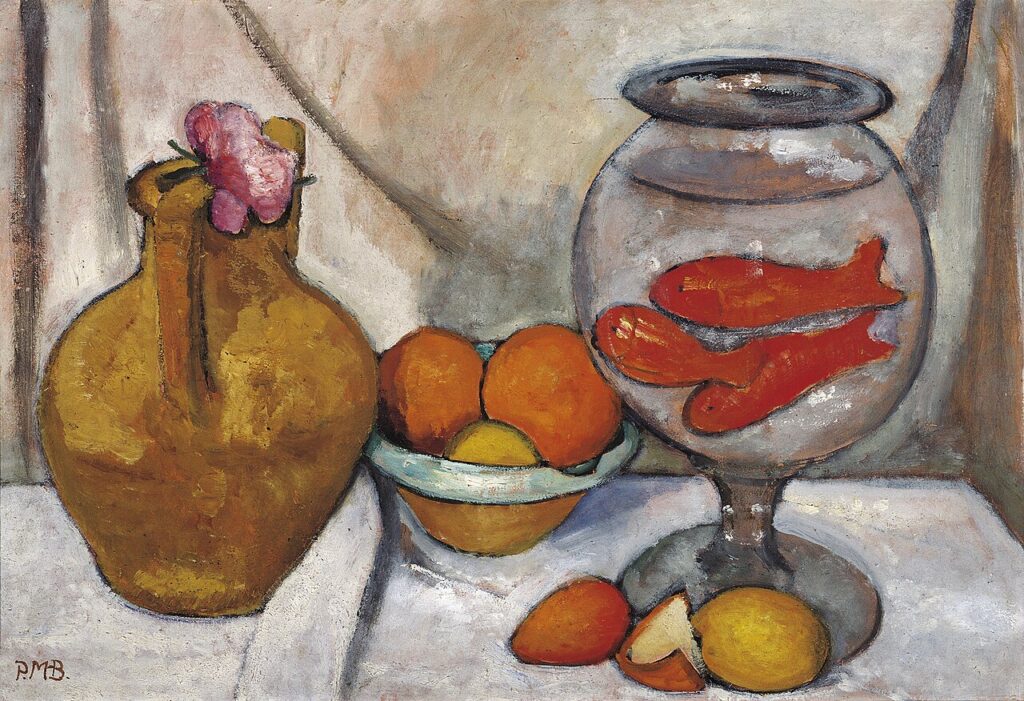
She was just as radical at the table. Becker painted about 50 still lifes in her last three years. She arranged oranges, bowls, and flowers with the seriousness other painters reserved for altarpieces. Still Life with Goldfish Bowl from 1906 compresses its scene into flat, glowing color. Matisse painted his famous goldfish six years later.
The last year, and Rilke’s requiem
Paris tested her independence. Money ran short, and Otto followed her, asking her to return. In the spring of 1907 she went back to Worpswede, pregnant. On 2 November 1907 she gave birth to a daughter, Mathilde. Doctors ordered weeks of bed rest. On 20 November, allowed to stand for the first time, she collapsed and died of an embolism. Those present recorded her last word: “Schade.” What a pity. In one of her final letters she was still urging Clara Westhoff to go and study the Cézannes on view in Paris. She thought about painting to the very end.
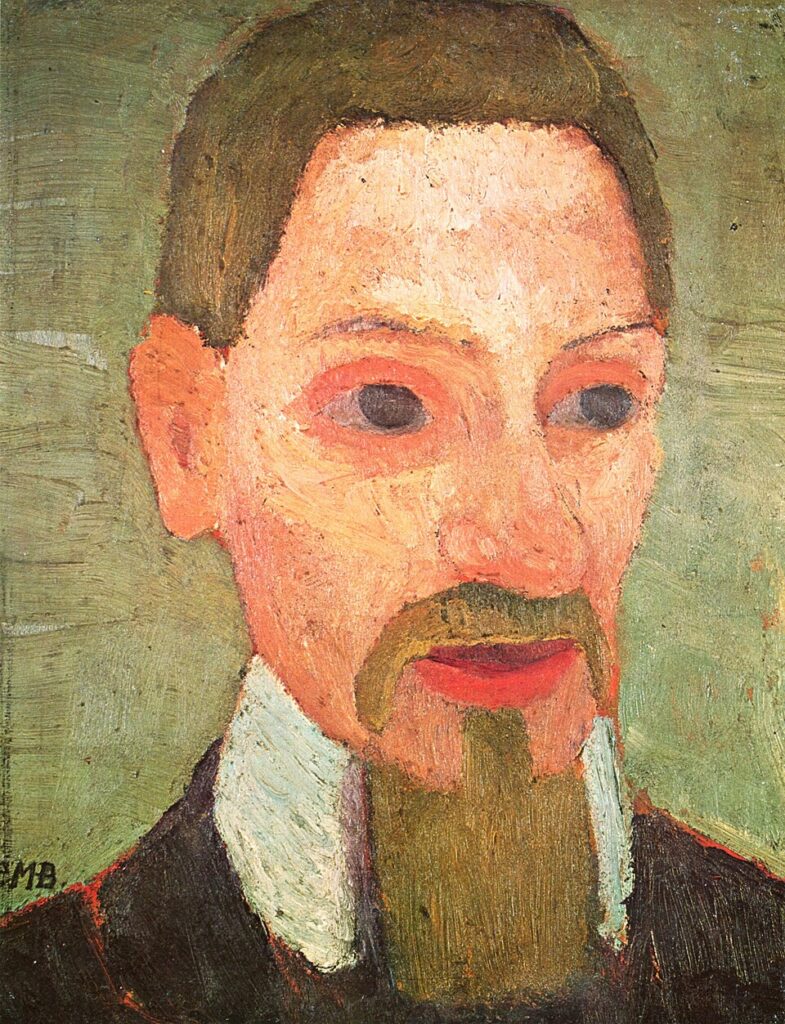
Rilke, who had hesitated for years to champion her painting, poured his grief into the poem Requiem for a Friend in 1908. The poem never names her. It did not need to. She had already answered him in paint: her portrait of Rilke from 1906, all burning eyes and open mouth, remains one of the great poet portraits of the twentieth century.
A museum of her own
Recognition came late, but it came with force. The Bremen coffee merchant Ludwig Roselius collected her work and, in 1927, opened the Paula Modersohn-Becker Museum in Bremen’s Böttcherstraße. It was the first museum in the world devoted to a woman artist. Ten years later the Nazi regime declared her art degenerate and removed around 70 of her works from German museums. Her reputation outlived the regime.
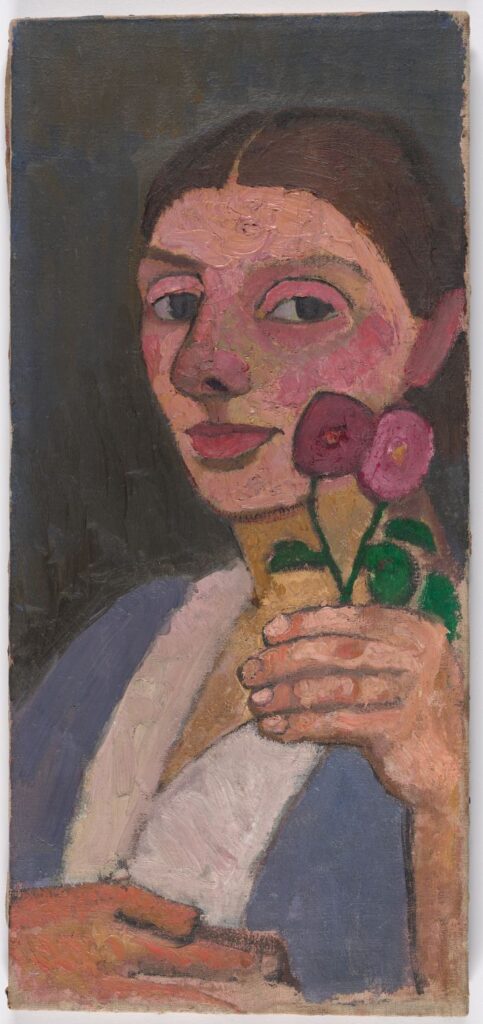
Today the wider world has caught up. In 2017 New York’s Museum of Modern Art and the Neue Galerie jointly acquired her Self-Portrait with Two Flowers, the first of her paintings to enter MoMA’s collection. A major American retrospective, I Am Me, toured New York and Chicago in 2023–24. And in late 2025 one of her nude self-portraits with an amber necklace sold at auction in Berlin for well over a million euros.
Where to meet Paula in 2026
The anniversary year makes her easy to find. Becoming Paula—150 Years of Paula Modersohn-Becker runs at the Paula Modersohn-Becker Museum in Bremen until November 1, 2026. It follows her development through London, Berlin, Worpswede, and Paris in around 70 works. Earlier this year, an exhibition at Dresden’s Albertinum paired her with Edvard Munch in the city of her birth.
If you can get to Bremen by the end of October, go. Stand in front of the self-portraits, in the first museum any woman artist ever received. Then remember that she was 31. At 26 she promised her mother she would become somebody. She kept that promise within five years. It simply took the rest of us more than a century to see it.
About the author
Erich Reich is the founder of Studierenden-Kunstmarkt, an online marketplace for original art by students and graduates of art academies. The platform presents around 7,000 works by more than 350 young artists—painting, photography, drawing, and sculpture—each sold with a certificate of authenticity. Erich founded the project on a simple conviction: talent should not have to wait a century for recognition, and original art should be affordable for everyone. He advises art buyers personally and free of charge, and publishes a magazine on young contemporary art. Paula Modersohn-Becker’s story is close to his heart. She was a radically gifted young painter who sold almost nothing in her lifetime. Marketplaces that connect emerging artists directly with collectors exist so that stories like hers can end differently today.
More Art Herstory posts you might enjoy
Portraying May Alcott Nieriker, by Julia Dabbs
Emma Stebbins, Anne Whitney and Vinnie Ream: American Women Sculptors of the Nineteenth Century, by Maria Ausherman
Sculpture or Suffrage: Alice Morgan Wright, by Jennifer Dasal
A Quiet Eye—The Unique Achievement of Sylvia Shaw Judson, by Rowena Loverance
Esther Pressoir: Imagining the Modern Woman, by Suzanne Scanlan
Women Artists from Savannah at the Telfair Academy Museum, by Julie Allen
Susie M. Barstow: Redefining the Hudson River School, by Nancy Siegel
Celebrating Eliza Pratt Greatorex, an Irish-American Artist, by Katherine Manthorne
The Ongoing Revival of Matilda Browne, American Impressionist, by Alexandra Kiely
The Floral Art of Emily Cole, by Erika Gaffney
Illuminating Sarah Cole, by Kristen Marchetti